
 search

Extremism
Economic Costs of Hate Speech
 2026
2026
In this rage-bait culture, the hidden cost of hate speech is more than meets the eye.


Webinars: Nexus Between Violence and Games
 admin
admin- 2025
Understand the nexus between violence and games.

Webinar – Jemaah Islamiyah One Year On: Dynamics of Adaptation and Reinvention
- admin
- 2025
A year on, what are the implications of JI’s dissolution in the region?

CVE Webinars – 2 Oct 2025
- admin
- 2025
Join CENTINEL and SEARCCT in their two webinars on Countering Violent Extremism on 2 Oct 2025.

When the Feed Feeds Back
- Nawridho A. Dirwan
- 2025
Digital fatigue and emotional vulnerability are making Indonesian youth susceptible to extremist narratives online.

Echo Chambers, Algorithms and Young Women
- Mahmood Hossain
- 2025
Far-right groups in Canada and Malaysia are using social media algorithms to influence young women by targeting identity-based insecurities.

Online Fear Speech and Subtle Incitement
- Mahmood Hossain
- 2025
In a social media landscape, fear speech subtly portrays groups as threats, stoking anxiety and justifying exclusion.

WEBINAR – The Battlegrounds: Online Games & Extremism
- admin
- 2025
Can we truly enjoy our online games without any worry?

Essay: Malaysia’s Economic and Masculinity Crises
- Dina Zaman
- 2025
The “Ordinary Malay” is not part of the upper echelon of society and feels left behind by political promises.

WEBINAR – Behind the Screens: Understanding Digital Hate and Extremism
- admin
- 2025
Learn more about fighting online hate speech and extremism from the esteemed Greg Barton and Adhe Bhakti!

Unfading Threats, Shrinking Funds
- Chaula R. Anindya
- 2025
Despite recording zero terrorism attacks in 2023-2024, Indonesia faces an unfading terror threat as well as shrinking funds for CT and P/CVE

Free Speech and the Freedom to Punch Your Face
- Arief Arman
- 2025
A Qur’an burning incident sparks debate on free speech limits, engineered hate and the profitable “Islamophobia Industry.

Forum: The Future of Islamophobia Research and Engagement: Local Focus, Ummatic Networks
- admin
- 2025
Join us on 24 April 2025.

Webinar: Muslim Perspectives on Islamophobia – From Misconception to Reason (A Response)
- admin
- 2025
Join us on 10 April 2025!

HTI is Resilient. We Need an Alternative Solution.
- Hasbi Aswar
- 2025
HTI remains resilient despite repression; Indonesia needs a new, inclusive approach to address its ideological and political challenges.

When Faith and Mental Health Stigma Clash
- Shankar Thiruchelvam
- 2025
Religious intolerance and stigma in Malaysia negatively impact mental health, emphasising the need for interfaith dialogue and inclusivity.

The Politics of Language: Threat of Hate Speech to ASEAN’s Inclusivity and Sustainability
“Darkness cannot drive darkness; Light can do that. Hate cannot drive out hate; Love can do that.” (Martin Luther King, Jr.)

From Opposition to Participation
- Nawridho A. Dirwan
- 2025
Last year’s political contestations demonstrated the paradigm shift experienced by Indonesia’s reformed terrorists.

“From Hate to Hope – A Holistic Approach to Address Hate Speech” by Dr. Murni Wan Mohd Nor
- admin
- 2025
This is Dr. Murni Wan Mohd Nor’s latest publication.

The Terrorist Narrative is Disinformation, and It is Political
- Nawridho A. Dirwan
- 2024
The unsurprising commonality between terrorist agenda and political campaign: disinformation.

Are We Securitizing Indonesian Mothers?
What are the possible risks of placing mothers as “frontliners” in preventing violent extremism?

Can China and Indonesia Forge Stronger Counterterrorism Collaboration?
China’s harsh treatment of its minorities and unresolved tension over the South China Sea may hamper a closer China-Indonesia collaboration in counterterrorism.

Women Behind Deradicalization Efforts
Women’s role in deradicalization process often goes unnoticed by the public.

Dangers of Dehumanizing Rhetoric and Its Impact on the Palestinian People
Dehumanization is an effective strategy to mobilize the masses and breeds violence. This article explains why this is so and what is needed in the face of it.

Building Resilience through Family and Faith for Malaysian Ex-Detainees Charged under Terrorism-related Acts
Through interviews with Malaysian ex-detainees arrested on terrorism-related charges, this article demonstrates the importance of family.

76 Terror Inmates Pledged Allegiance to Indonesia. What Next?
- Any Rufaedah
- 2023
Scores of terror inmates recently abandoned their radical beliefs and embraced the sovereignty of Indonesia. Is that enough?

Pull Factors of Recidivism within Violent Extremist Groups in Indonesia
- Any Rufaedah
- 2023
Preventing recidivism requires multidimension analyses. In contributing to addressing recidivism in Indonesia, this article aims to contribute.

Webinar – Contemporary Concerns of Malay/Muslim Communities: Implications on Social Cohesion in the Nusantara
- admin
- 2023
stratsea.com, in partnership with PAKAR and SeRVE Indonesia, will host a webinar to discuss how recent and forthcoming events in Indonesia, Malaysia and Singapore may highlight tensions between different segments of the society and how they would impact social cohesion in each country.

BORU BAWA DAMAI (DAUGHTER OF PEACE) – A Documentary on Women and Counter-Terrorism
- admin
- 2023
Through a case study, SRILI underscores the roles Indonesian women play in perpetuating and preventing terrorism.

Desistance: A Novel Tool to Assess Former Terrorists in Indonesia
In light of the suicide bombing in Indonesia on 7 December 2022, preventing terrorist recidivism is crucial. This can be facilitated by developing accurate assessment tools to understand the propensity of former terrorists to reengage in violence and through customized intervention.

The Astana Anyar Police Station Bombing and Recidivism: Questioning the Role of BNPT?
- Chaula R. Anindya
- 2022
The latest suicide bombing incident in Bandung, West Java, calls into question the effectiveness of BNPT-run deradicalization program in Indonesia.

Recidivism in Indonesia: Peering Through the lens of Desistance from Terrorism
The recent suicide attack in Indonesia on 7 December 2022 was conducted by a terrorist recidivist. The author is proposing a new lens to understand why terrorists continue to reoffend.

Suicide Attack on Polsek Astana Anyar, Bandung, Indonesia
- Muh Taufiqurrohman
- 2022
This article provides an update of the suicide attack on 7 December 2022 in Bandung, Indonesia and a profile of the perpetrator.

Family Dynamics: An Important Factor for Returning Filipino Foreign Terrorist Fighters
If allowed to return, the Philippine government must consider that accepting the return of Foreign Terrorist Fighters will create a dilemma for the country. On one end, the government is responsible for its returning citizens; on the other, it increases the risk of Filipino families being recruited into terrorism.

Racial & Religious Harmony in Malaysia: Interview with YB Dato’ Wira Haji Amiruddin bin Haji Hamzah (MP, Kubang Pasu)
- Hafiz Hassim
- 2022
In this article, YB Dato’ Wira Haji Amiruddin bin Haji Hamzah highlights the importance of economic factors in maintaining racial and religious harmony in Malaysia.

The Indonesian Armed Forces’ Involvement in Counterterrorism: Pondering Beyond the Established Debates
- Chaula R. Anindya
- 2022
It has been four years since the ratification of the revised law on terrorism, but the Indonesian government has yet to issue a Presidential Regulation (Perpres) on TNI’s involvement in counterterrorism operations. What is the progress? Why has it been delayed? What are the issues that have yet to be explored?

The Assassination of Shinzo Abe and its Security Impact on Indonesia
Though distant, the successful assassination of Shinzo Abe reinvigorates ISIS supporters in Indonesia to conduct similar feats. Indonesian security forces need to take preemptive measures to ensure that such assassinations do not take place in the country.

Assessing Malaysia’s Current Security Challenges
Malaysia’s current security threats are closely associated with its socio-political structure that it inherited from the colonial period. Simultaneously, the changing international order could also pose mounting challenges to the country’s management of the ever increasing traditional and non-traditional security threats.
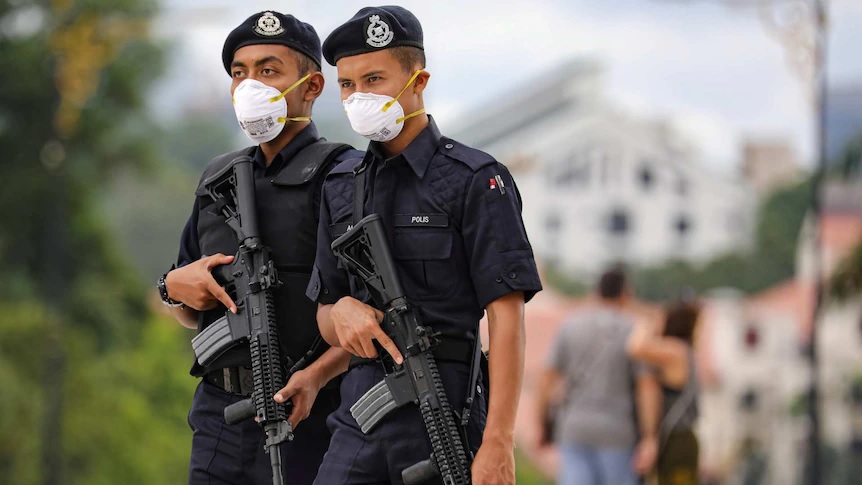
Uncoding the Indonesia Lone Wolf Anarchist
- Muh Taufiqurrohman
- 2022
Although attacks by Indonesian anarchists have yet to cause fatalities, they continue to threaten national and regional security. This is particularly due to their deep connections with international anarchist communities. Unless Indonesia and its neighbours take immediate preventive measures, not only more attacks are expected but would be more lethal than that of February 16, 2022.

Keys to “Hijrah”: Cash and Ideology
- admin
- 2022
In collaboration with PAKAR and SeRVE Indonesia, we are proud to present the third session of our 3-part webinar series.
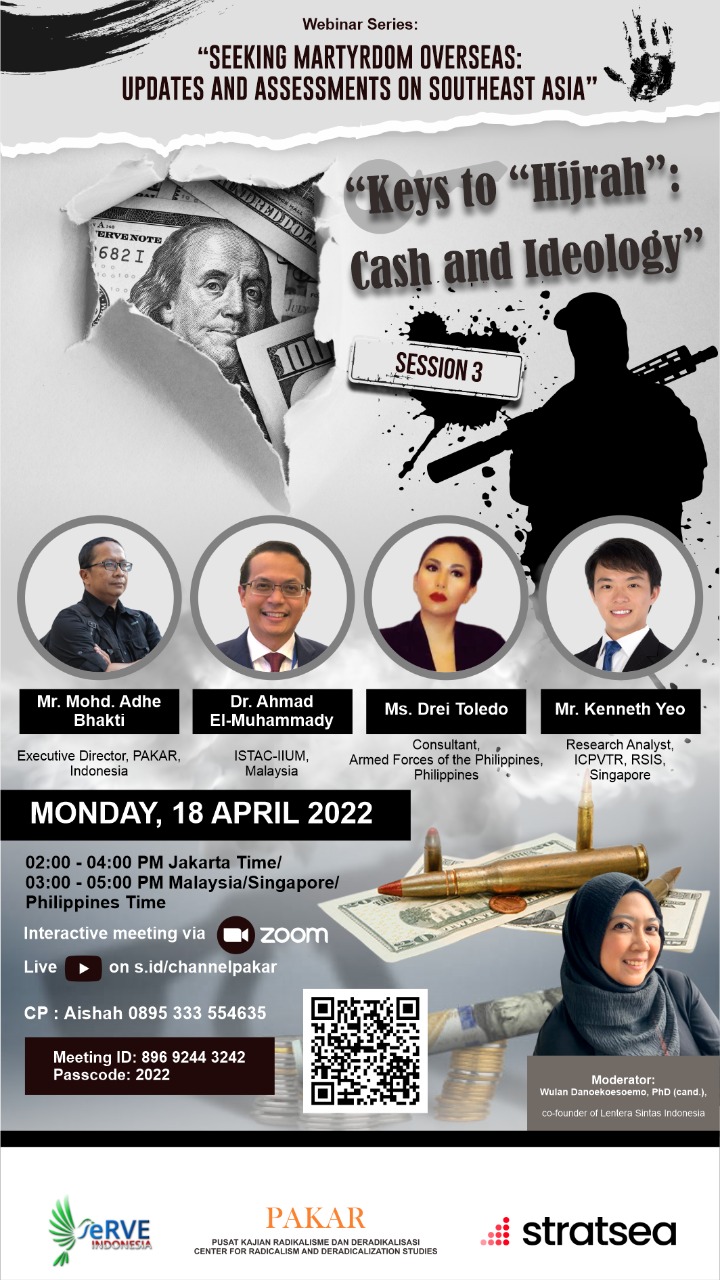
Southeast Asian Militants in Syria, Iraq, and Afghanistan
- admin
- 2022
In collaboration with PAKAR and SeRVE Indonesia, we are proud to present the second of our 3-part webinar series.

Next Generation Afghan Alumni? Assessments From SEA
- admin
- 2022
In collaboration with PAKAR and SeRVE Indonesia, we are proud to present the first of our 3-part webinar series.

Deradicalization Programs in Malaysian Prisons Amidst COVID-19 Pandemic: Limitations & Challenges
- Mohd Mizan Aslam
- 2022
The Malaysian approach to deradicalization is facing significant challenges during the COVID-19 pandemic. The split between public and private entities towards violent extremist rehabilitation jeopardizes the effectiveness of mandatory deradicalization programs in Malaysian prisons.

PAS and Taliban are Not Two Peas in a Pod
- Syaza Shukri
- 2021
Despite vocal support for the Taliban by several PAS leaders, such rhetoric is highly unlikely to translate into any actions beyond the permissible.

Combating Religious Extremism Through a Whole-of-Government Approach: The Bruneian Experience
- Majdey Zawawi
- 2021
Religious extremism continues to loom over Southeast Asia. Notably, the Taliban resurgence may provide fodder for legitimizing extremist religio-political ideologies. This article explores the mechanisms that enable Brunei Darussalam to remain resilient against extremist religious ideologies.

Interview with Febri Ramdani: Author of “300 Days in the Land of Syam” – Part 2
- Febri Ramdani
- 2021
Febri recounts his tribulations to Raqqah and his family’s subsequent escape from IS.

Interview with Febri Ramdani: Author of “300 Days in the Land of Syam” – Part 1
- Febri Ramdani
- 2021
In this candid interview, Febri shares his and his family’s motivations to move from Indonesia to live under the Islamic State’s rule in Raqqah, Syria.

Engaging the Community in Countering Violent Extremism in the Pandemic Era
Despite the pandemic, violent extremism remains a perennial threat. Governments must now integrate non-legal measures with their legal framework to effectively combat this threat.

The Islamic Emirate of Afghanistan: Ideological, Security and Geopolitical Implications for Malaysia
Despite Malaysia’s cautious approach to the recent Afghan development, it could face challenges such as the deepening of socio-religious cleavages and incitement of both violent and non-violent extremism.

MIT: A Sensible Option for Indonesian IS Supporters Striving for the “Cause”
- Arif Budi Setyawan
- 2021
The recent death of Jaka Ramadhan, a MIT member, highlights how this violent extremist group continues to garner support throughout Indonesia.

Taliban’s Power Revival and Its Impact on Malaysia’s Security
The recent Taliban takeover in Afghanistan could reignite a “second front” discourse in Southeast Asia. However, the potential associated threats to Malaysia’s security need to be contextualized with the current threat environment.

From Violence and Trauma to Forgiveness: Case Study of Ali Fauzi Manzi
- Badrus Samsul Fata
- 2021
This article outlines how former Indonesian terrorists become advocates for peace through a case study of Ali Fauzi Manzi.

The Different Sides of Malaysia’s Response to the Taliban
- Syaza Shukri
- 2021
The Taliban’s resurgence has received diverse responses from Malaysians. While other countries are facing security threats from locally-based jihadists seeking to imitate the Taliban’s success, the immediate impact on Malaysia is arguably further social polarisation.

Empowering Indonesian Communities for Effective Reintegration of Terrorists and Their Families
- Rosyid Nurul Hakiim
- 2021
The community plays an important role in the reintegration of terrorists and their families. Recognizing this, ruangobrol.id piloted a “hyper local” project involving individuals of diverse backgrounds.
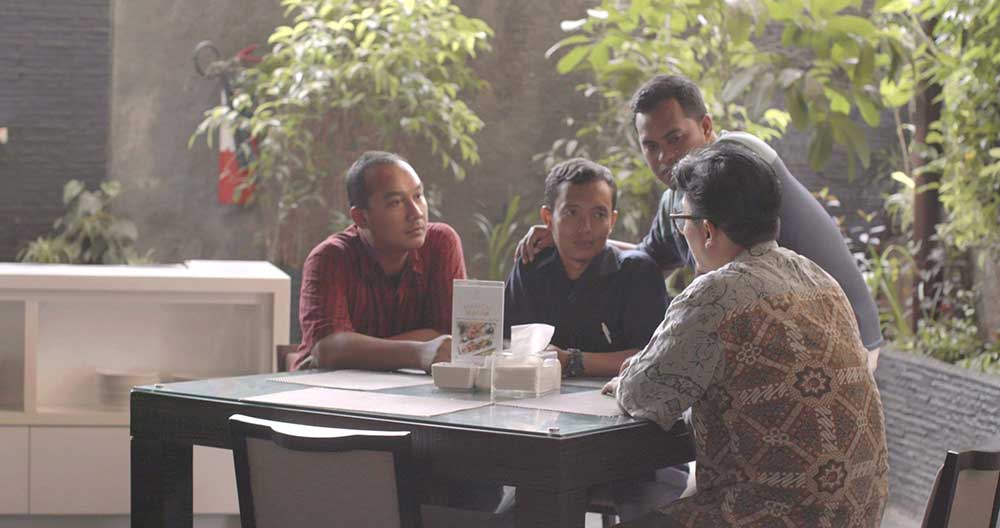
Terrorist Working from Home: Pandemic and The Transposition of Violent Extremism in Malaysia
COVID-19 has not only presented many unprecedented challenges to daily lives; it has changed the violent extremism landscape in Malaysia.

Continued Terror by MIT in Poso: Interviews with BG Farid Makruf and Commissioner Didik Supranoto
- Ruslan Sangadji
- 2021
Poso continues to be terrorized by the East Indonesia Mujahidin (MIT) despite having only nine remaining members.

Women and Kinship Pivotal to JAD’s Future Attacks in Indonesia
Based on recent terrorist attacks in Indonesia, Jemaah Ansharut Daulah (JAD) will continue exploiting women and kinship for future operations.

A Four-Component Post-Release Assessment Essential to Prevent Recidivism in Indonesia
- Robi Sugara
- 2021
Pledging loyalty to the Unitary Republic of Indonesia (NKRI) is an important indicator the government uses to measure the success of terrorist deradicalization programmes inside prisons. However, assessments must continue after an inmate’s release.

Outlawing OPM: A Right Step in Ensuring Lasting Peace in Papua
- Dr. Budi Pramono
- 2021
The Indonesian government has officially labelled the Free Papua Movement a terrorist group. What are the consequences of this labelling and how can the government counter this terrorist threat in Papua?
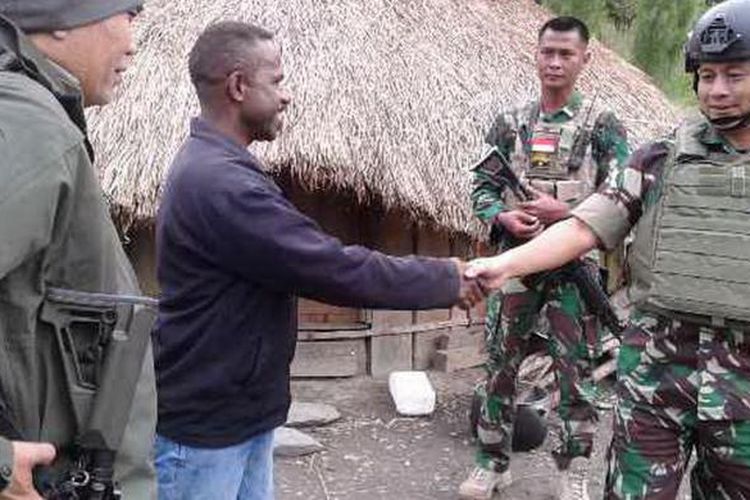
Gendering Countering Violent Extremism (CVE) Initiatives in Malaysia
- Dr. Rabi’ah Aminudin
- 2021
Malaysian women are no longer harmless nor immune to violent extremism. It is thus imperative for gender perspectives to be included in the design and implementation of Countering Violent Extremism (CVE) initiatives in Malaysia.

Thwarting Future Attacks by FPI Splinter Cells in Indonesia
- Mohd Adhe Bhakti
- 2021
A splinter cell of an Indonesian extremist group, Front Pembela Islam (Islamic Defenders Front/FPI), was foiled in their plans to attack the government and businesses. How can Indonesia prevent similar occurrences in the future?

Indonesian Military Under Terrorist Attack
Terrorists continue to attack Indonesia’s security apparatus including its military (TNI). TNI needs to heighten security measures to prevent future attacks on its personnel and installations.

Mothers and the Internet: Indonesian Youths Caught in Between
- Sylvia Laksmi
- 2021
With the increasing roles of mothers in terrorism and the internet as a source of indoctrination, Indonesian youths are caught in between two significant spheres of influence.

A Need for Nationwide Deradicalization Centres in Indonesia to Curb Rising Terrorist Attacks
Despite the pandemic, terrorist motivations to conduct attacks remain unabated. This demonstrates the need for the Indonesian government, assisted by the society and businesses, to set up deradicalization centres throughout Indonesia.

The Dynamics of Terrorist Recruitment Across Online Platforms: Taking it to the Next Level
Trumping traditional media, the Islamic State in East Asia has gone digital to reach the masses.

Online Political Movement and the Emergence of Youth Extremism
Youths are particularly vulnerable for recruitment by extremist groups. Recent findings revealed that such vulnerabilities may be attributed to psychology rather than ideology. We explain how significance motivation may be the key to understand youth extremism.

Linguistic Appeal of Daesh’s Propaganda
Despite their defeat, Daesh’s propaganda is still garnering support globally. Key to this is the linguistic appeal of their messages.

Exclusive Statement by FPI Lawyer, Aziz Yanuar
- Stratsea
- 2021
This is an exclusive statement by FPI lawyer, Aziz Yanuar, sought after its disbandment. The following statement was translated verbatim into English from Bahasa Indonesia.

FPI Disbandment: Setting a Bad Precedence
- Restu Diantina Putri
- 2021
After 22 years of existence and rife with controversies, the Islamic Defender Front (FPI) has finally collapsed during the Joko Widodo (Jokowi) administration. Was the government right in unilaterally disbanding FPI without warning, much less court proceedings?

The Politics of Religion in Indonesia: Exploiting the Islamic Identity in a Fragmented Society
- Dwinda Adrianto
- 2021
The popularity of figures such as FPI leader Rizieq Shihab signals a worrying trend of growing hardline conservatism among Indonesian Muslims.

A More Effective Counterterrorism Strategy for Indonesian Women by Acknowledging Their Motivations and Tactical Contributions
- Sylvia Laksmi
- 2020
The last ISIS-family suicide bombings in Surabaya is a sign for the government to remain vigilant towards the imminent threat of terrorism which targets women and children as potential actors.

Striving for Peace in the Philippines amidst Increased Combat-readiness and Continued Recruitment of Women and Children
- Drei Toledo
- 2020
Female and children combatants of the different terrorist groups operating in the Philippines possess a myriad of skills. For women, this includes identifying safe havens for fighters, while children help provide surveillance activities of the police and military units in the area.

The Invisible Women and Children of Malaysia: The Vulnerability of Stateless Persons to Terrorism and Violent Extremism
- Drei Toledo
- 2020
Since terrorist and violent extremist groups tend to flourish in marginalized areas, no sector in today’s world is at greater risk and remains severely understudied as the stateless women and children targeted for recruitment and radicalization by terrorist organizations.

The Shape of Contemporary Conflict in Southeast Asia: How Violent Extremism has Changed Our Women and Children
Women and children aligned with terrorist groups leverage gender and age dynamics for their benefit by claiming ignorance of terrorist acts so as to minimize their culpability.

Why are CPP-NPA Terrorists Deadlier than Religious Extremists?
- Drei Toledo
- 2020
Armed Forces of the Philippines’ official records show that the NPA communist-terrorist group has killed 13,304 of its troops from 1975 to June 2020. This is four times the soldiers killed by the MNLF and the MILF, and 5.5 times the soldiers killed by the Abu Sayyaf Group.

Arming Community Actors to Combat Violent Extremism in Malaysia
- Akil Yunus
- 2020
The evolving threat of violent extremism has underscored the need for a multi-stakeholder response. In Malaysia, initiatives on Preventing and Countering Violent Extremism (P/CVE) have been predominantly state-led and prioritise reactive or ‘hard’ security measures over lasting prevention.

The Challenges of Preventing Online Radicalization of Indonesian Children during COVID-19
- Mayolisia Ekayanti
- 2020
Indonesian children face an increased risk of online radicalization during COVID-19. This commentary discusses the challenges to prevent such radicalization while proposing how the involvements of social influencers may be a step forward.

The Supply and Demand of Intolerance in Indonesia
- Alamsyah M. Dja’far
- 2020
Why religion continues being integral to Indonesians can be viewed from a supply and demand perspective. State-perpetrated religious discriminations and the potential rise of conservative and hardline groups are concerning. These may lead to a rising tide of intolerance in Indonesia.

Women in The Early Era of Terrorism in Indonesia
- Siti Darojatul Aliah
- 2020
The first of this two-part analysis explores the roles of women in terrorism in Indonesia since the 1950s to 2010s. It describes the limited roles women play in these radical movements and the reasons behind their subordination.

Change in Terrorism Landscape in Indonesia
- Siti Darojatul Aliah
- 2020
The second of this two-part analysis explores the roles of women in terrorism in Indonesia since the ISIS’ declaration of a caliphate in 2013. It describes the expansion of women’s role in terrorism; no longer hiding behind male nom de guerre.

Continued Interest to Employ Chemical Agents by Indonesian Extremists
- Idznursham Ismail
- 2020
The use of chemical agents by Indonesian extremists still poses a security concern based on their continued interest in their usage. Ricin, abrin and chlorine gas would continue being the agents of choice. Reasons include the relative ease to obtain their precursors.

Immortality via News Media? A Case Study of Former Terrorism Inmates in Indonesia
- Idznursham Ismail
- 2020
Employing Terror Management Theory (TMT), this study sought to explore the impact of the symbiotic relationship between news media and terrorism on terrorism perpetrators.

Preventing the Radicalization of Former Terror Inmates’ Children in Indonesia
- Idznursham Ismail
- 2020
Disengagement and deradicalization of individuals convicted of terrorism require a holistic approach that must continue after the individuals release from prison. This is to ensure that violence is not pursued by these individuals and their children.

Unconventional Weapons Plot in Indonesia: Motivation for Agents Selection and Potential Impact of Alarmist Police Statements
- Idznursham Ismail
- 2020
Within two years, Indonesian authorities uncovered plots intending to use unconventional weapons. There is seemingly an inclination to use chemical agents by Indonesian terrorist groups.
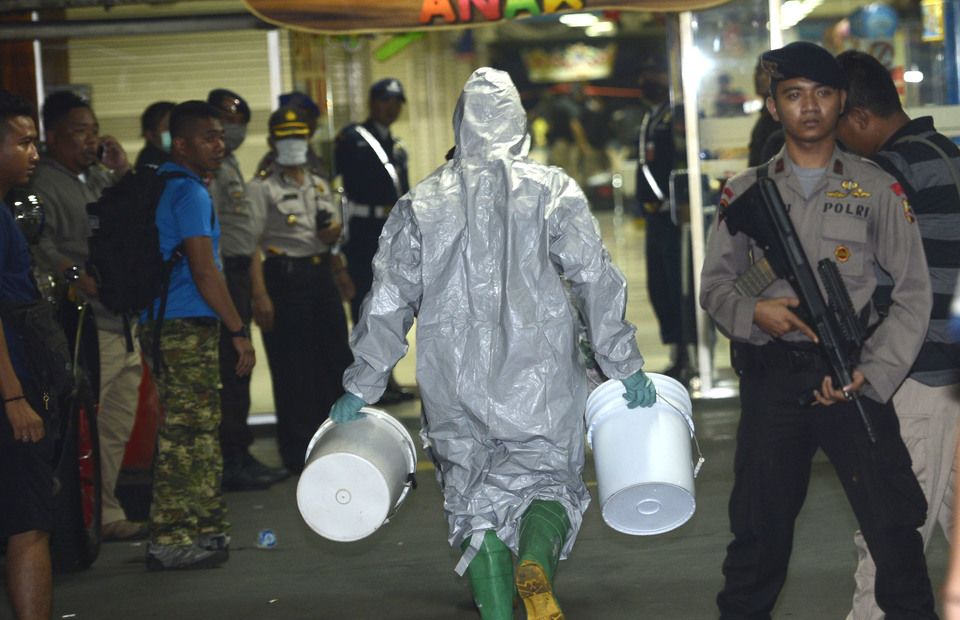
Revoking Citizenship: Not a Step Forward for Indonesian Counter Terrorism
- Idznursham Ismail
- 2020
Proposed changes to Indonesia’s Anti-Terrorism Bill could include revoking the citizenships of its citizens who participated in terrorism overseas. Is this the right way forward?

