search

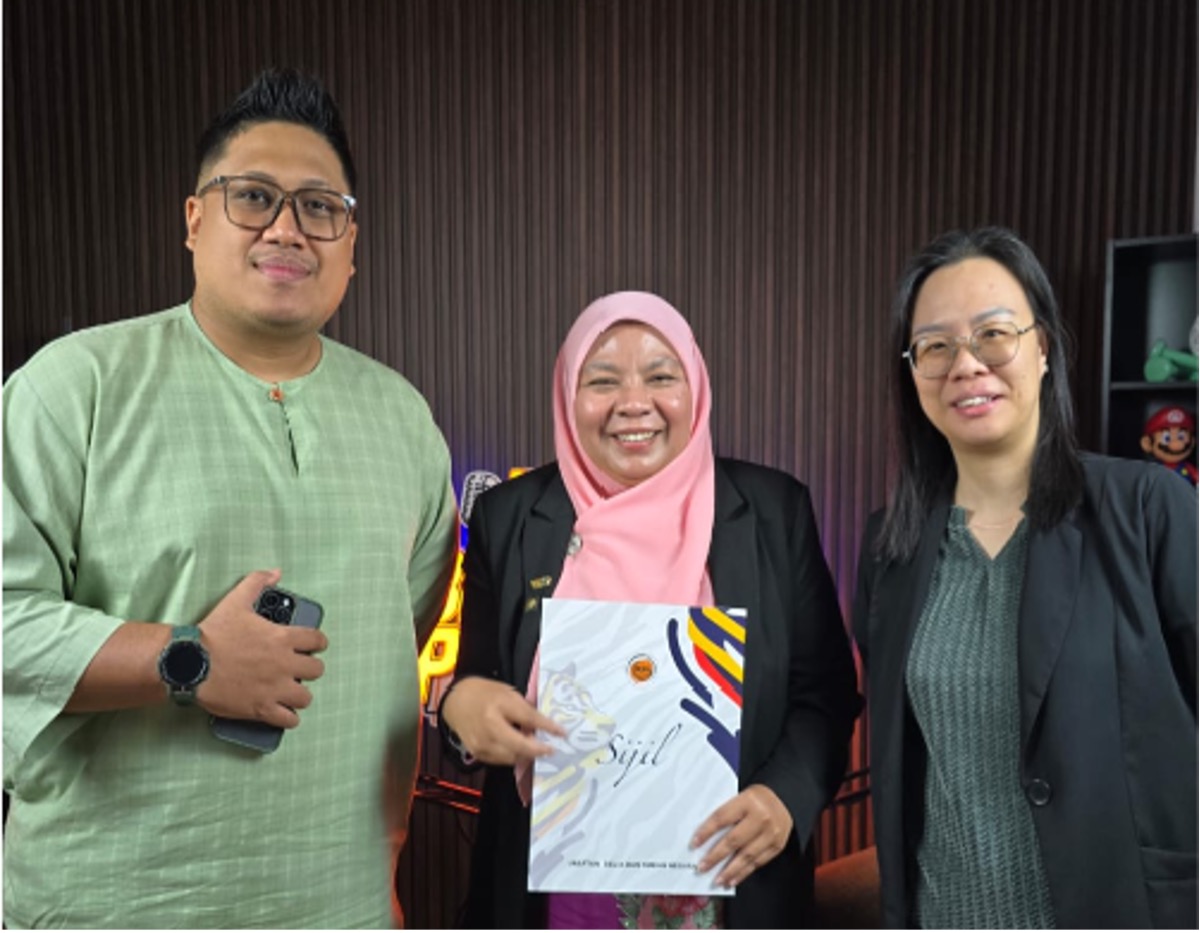
The author (right) in a podcast discussion on job scams. Credit: Author’s collection
Behind the Promise (Part I): How Malaysian Jobseekers are Falling into Cross-Border Job Scams
9 October 2026/10 Minutes of Reading
Prelude
Behind the Promise is a two-part series developed with a rights-based and people-centred approach to migration reporting. This first part draws on interviews with recruitment agencies, migration practitioner and documentary research to examine how recruitment scams and deceptive recruitment practices affect Malaysian jobseekers seeking jobs overseas.
“A growing concern involving Malaysian jobseekers, overseas employment scams and cross-border syndicates, requiring meaningful intermediaries to be part of the long-term solutions.”
Scammed for Jobs
The advertisement seemed perfect—a customer service role in Cambodia offering triple the local salary, free accommodation and a generous relocation package.
Recruiters often approach young job seekers using platforms they are active in: Facebook, WhatsApp, Instagram, TikTok, Telegram and others. Interviews are short, offers are easily put on the table and successful applicants often depart for the job mere weeks after the ads are posted.
This describes how scam operations often begin with a simple job advertisement. Today, stories like the above are no longer unusual.
In 2023, the Malaysian government confirmed that at least 572 of its nationals were stranded across Myanmar, Laos, Thailand and Cambodia, forced to work at cyber scam compounds and subjected to what the United Nations Office on Drugs and Crime (UNODC) describes as “forced criminality“. Their experience reeks of modern slavery and human trafficking.
Sadly, our region has emerged as the latest hub of this type of wicked problem. The UNODC and the Office of the United Nations High Commissioner for Human Rights (OHCHR) have identified Southeast Asia as the primary epicentre of an entrenched transnational cyber-fraud enterprise.
Within fortified, syndicate-controlled compounds, hundreds of thousands of trafficked migrant workers from diverse nationalities, including Malaysians, endure severe coercion and are subjected to forced criminality executing sophisticated financial fraud, illicit investment schemes, and cyber-enabled scams.
The Scale
Malaysia serves as both the origin and transit country for syndicates recruiting and funnelling jobseekers to these cyberscam compounds.
According to the Royal Malaysia Police’s Commercial Crime Investigation Department (CCID), 66,204 cases of online scams were recorded in 2025 alone, double from the previous year. These figures include various types of commercial crime, including online fraud, commercial scams and other offences.
Figure 1. Trends in Reported Commercial Crime Cases in Malaysia, 2010-2024

Source: Author’s compilation from the CCID source (2010-2021), Department of Statistics Malaysia (2022-2023) and The Star.
Note: Bars represent reported cases by offence type, while the line represents the total number of reported commercial crime cases. Offences numbered 1-5 are governed by the Penal Code (Sections 403-489); number 6 refers to cybercrime offences under the Computer Crimes Act 1997 and Communications and Multimedia Act 1998; number 7 refers to offences under the Moneylenders Act 1951; number 8 refers to offences related to uncertified VCD/DVD cases under the Film Censorship Act 2002, Copyright Act 1987, and Printing Presses and Publications Act 1984, and; number 9 comprises other offences under legislation, such as the Minor Offences Act, Immigration Act, National Registration Act, Passport Act, Central Bank of Malaysia Act, Customs Act, and Legal Profession Act.
This has turned an increasingly serious national problem into a growing concern, raising alarms even among local recruiters who struggle to distinguish real clients from scammers.
A comment by the owner of a recruitment agency in Cheras exemplifies this.
“Even we (licensed agencies) receive emails, sometimes 10 requests a day, asking us to supply workers (Malaysian or migrant workers) or collaborate in recruiting. If they are not our regular clients or we cannot verify them in any way, we will ignore them. As agencies, we have also become more cautious about fake agents and job scams.” [sic]
Numbers of Malaysian job-scam victims only tell half of the story. Trafficked individuals face multiple instances of “resale” whereby they are being resold or transferred from one criminal syndicate to another. Furthermore, they are also subject to physical abuse and coerced to scam others, creating a vicious cycle in this illicit industry.
Double-Edged Sword
Migration intermediaries, encompassing both legitimate recruitment agencies and illicit traffickers, are all parts of the ecosystem that facilitates job-scam operations.
Rightfully, intermediaries are facilitators and operators in the labour market. They assist employers and workers alike to navigate complex recruitment systems, liaise with training centres and assist with regulatory as well as immigration requirements.
While the mechanism of labour broking is intended to enable safe mobility and employment, traffickers systematically manipulate this function by masquerading as licensed agents to deceive and exploit vulnerable jobseekers. They may impersonate licensed agencies and legitimate employer companies on social media, manipulate and place job seekers in illegal jobs and criminal activities, and abandon workers or victims abroad when problems arise.
Traffickers’ exploitation of this infrastructure turns it into a double-edged sword, serving as a powerful conduit for deceptive recruitment practices.
On the one hand, legitimate recruiters streamline procedures and enable overseas employment for aspiring job seekers who would otherwise struggle to manage formal channels independently.
On the other hand, traffickers weaponise the trust placed in the recruitment system for profit and crime.
Unfortunately, traffickers often have an upper hand because job seekers often cannot distinguish legitimate recruiter actors from fraudulent ones, especially when recruitment occurs through social media.
Legitimate recruiters are increasingly frustrated: while they operate under strict regulations, traffickers move freely across digital platforms, exploiting the trust job seekers place in the recruitment system and changing the rules of the game.
The same owner of a Cheras-based recruitment agency offered their comment. “Do you think the problem (job scam) is that we (intermediaries) exist? It’s that anyone can pretend to be us (an agent). The fake ones (scammer) copy our licence numbers, use my agency name, and workers cannot tell the difference. That’s how scams happen.” [sic]
The Routes
The following flowchart visualises two parallel pathways for a Malaysian jobseeker pursuing overseas employment—one legitimate channel (blue solid line) and one risky/scam route (dashed black line).
The blue solid line represents the formal recruitment process through a licensed agency.
Each step has a verification process and is documented, beginning with responding to job advertisements, conducting interviews, signing employment contracts, obtaining a Certificate of Good Conduct (CGC), completing medical checkups, applying for a working visa and reporting placements to the Malaysian Embassy in destination countries.
The regulated process mandates intermediaries to conduct pre‑departure briefings, flight and logistics arrangements, arrival monitoring, as well as welfare and legal compliance assurance. This pathway is documented and traceable under Malaysian labour‑migration frameworks.
Meanwhile, the dashed line details how traffickers operate based on survivors’ reports.
Traffickers exploit the formal route by engaging with job seekers independently and advertising fake vacancies on social media or messaging apps. They skip interviews or conduct unstructured ones, use unclear contracts or bogus offer letters to lure victims, omit any form of reporting to authorities, and often promise fast placement as well as high salaries.
Victims are often convinced to travel on tourist visas without medical or legal verification. They are also vulnerable to fraud and kidnapping for ransom.
Another owner of a recruitment agency, based in Cyberjaya, shared his thoughts on this. “The fake ones (scammers) even use deepfake to impersonate others, create a fake company on the internet or on-site, unclear job details, and applicants only care about the offer (salary) and the ease of getting the position (kesenangan). That’s how scams happen.” [sic]
This shows that traffickers do not shy away from the latest technologies to conduct their operation. Digital impersonation, such as manipulating open-source information or employing deepfakes, makes it extremely difficult for jobseekers to verify whether an agency or employer is real.
Figure 2. Recruitment Process and Red Flags Identified Through Interviews with Recruiters and Supporting Sources
The Route Feedback from the Interviews

 Pre-recruitment Stage
 Recruitment & Arrival Transit & Border Crossing
Note: Figure 2 maps common recruitment red flags identified through interviews with Malaysian recruiters, supplemented by guidance from PERKESO and the World Sustainable Hospitality Alliance (WSHA). These flags are warning signs jobseekers should verify before accepting an overseas job offer, and the next section explains them in detail. Selected recruiter observations also illustrate how some agencies approach recruitment differently at various stages of the recruitment process.
Red Flags
But what kind of job vacancies do these traffickers post on social media?
Across Asia Pacific, Administration & Office Support is the single most targeted job category for fraudulent ads (29%), followed by Manufacturing, Transport & Logistics (16%) and Sales (7%). Traffickers heavily impersonate these roles due to their high applicant volumes.
Due to high cases of trafficking, it is pertinent for jobseekers to exercise caution and recognise red flags across different recruitment stages. Some pointers provided by Pertubuhan Keselamatan Sosial (Social Security Organisation – PERKESO) and World Sustainable Hospitality Alliance (WSHA) could illuminate us on this.
In the pre-recruitment stage, jobseekers who receive an initial screening request and interview invitation should always ask for an official email. This is a vital step that allows jobseekers to determine what the recruiters’ position is and obtain details about companies or employment agencies.
Recruiters contacting candidates via phone calls or messages must also follow up with an email for tracking purposes. A Malaysian recruiter in Butterworth shared that when foreign firms contact her to start recruitment, she requires their human resource division or general manager to conduct “on-site” screening and recruitment activities. This allows both recruiters and jobseekers to verify that the employer, job vacancy and benefits offered are legitimate.
Malaysians enjoy visa-free travel within ASEAN countries and to more than 100 countries around the world. However, this does not mean applicants should utilise tourist visa when travelling to their employment destination countries or use social-visit pass if instructed to do so by traffickers.
Applicants should also be aware of common visa fraud indicators, such as promises of conversion from a tourist visa to a work permit upon arrival or temporary substitutes for a valid work visa, which are either impossible or illegal. These false promises could easily land jobseekers in a legal conundrum in destination countries.
Moreover, flight arrangements and logistical handling are among the clearest red flags. Among the indicators of trafficking are onboarding applicants with round-trip tickets or itineraries featuring more than two departure plans, as well as hotel or accommodation arrangements with layovers that are far from the airport.
A Bukit Bintang-based recruiter shared that workers relocating overseas for three to four years are typically issued a one-way ticket, with the return scheduled only after their contract ends. For layovers or transit cases, individual and group accommodation should be located near the airport to facilitate catching the next day’s flight.
As a rule of thumb, applicants should stay close to the airport so they can seek help immediately if they sense something is wrong during their journey.
In Need of Protection
Malaysian jobseekers are particularly at high risk of falling victim to cross-border recruitment scams. Even with growing public campaigns, many jobseekers, particularly those from rural areas or without overseas work experience, remain unfamiliar with the warning signs of recruitment fraud.
White-collar professionals and blue-collar workers are equally susceptible to this type of deception. This is because syndicates understand which job categories can attract highly vulnerable applicants and know how to mimic legitimate hiring processes to avoid suspicion.
While Malaysian institutions have intensified their counter-trafficking efforts, the rapid proliferation of deceptive part-time and remote employment models continues to outpace regulatory and law enforcement responses.
Additionally, awareness raising campaigns must go beyond urban centres to reach rural Malaysians and recent graduates who are more vulnerable to high-paying overseas job offers. This means embedding job-scam literacy into the education structure and community programmes to directly address key red flags.
Recruiters interviewed for this story suggested that increasing scam awareness and establishing stronger bilateral agreements with key destination countries are recommended to adapt swiftly to syndicates’ shifting tactics.
Understanding recruitment scams is only one part of the challenge. For migrant workers entering Malaysia, recruitment-related vulnerabilities often begin before the recruitment process.
The second story in the Behind the Promise series explores how Nepali workers also face recruitment risks and highlights practical guidance that may help them make safer migration decisions before coming to Malaysia.
Acknowledgement: The author thanks all the interviewees for their helpful comments, which enriched knowledge of migration intermediaries through interactions during collaboration. Interviews were conducted in a language other than English and translated into English by the author. Quotations have been lightly edited for clarity. This story was developed under the Migration Journalism Grant of the International Organization for Migration (IOM) Malaysia as part of a project supported by the Malaysia-United Nations Sustainable Development Goals (SDG) Trust Fund.
The views expressed are those of the authors and do not necessarily reflect those of STRAT.O.SPHERE CONSULTING PTE LTD. This article is published under a Creative Commons Licence.
Republications minimally require: 1) credit authors and their institutions, and; 2) credit toSTRAT.O.SPHERE CONSULTING PTE LTD and include a link back to either our home page or the article’s URL.