search

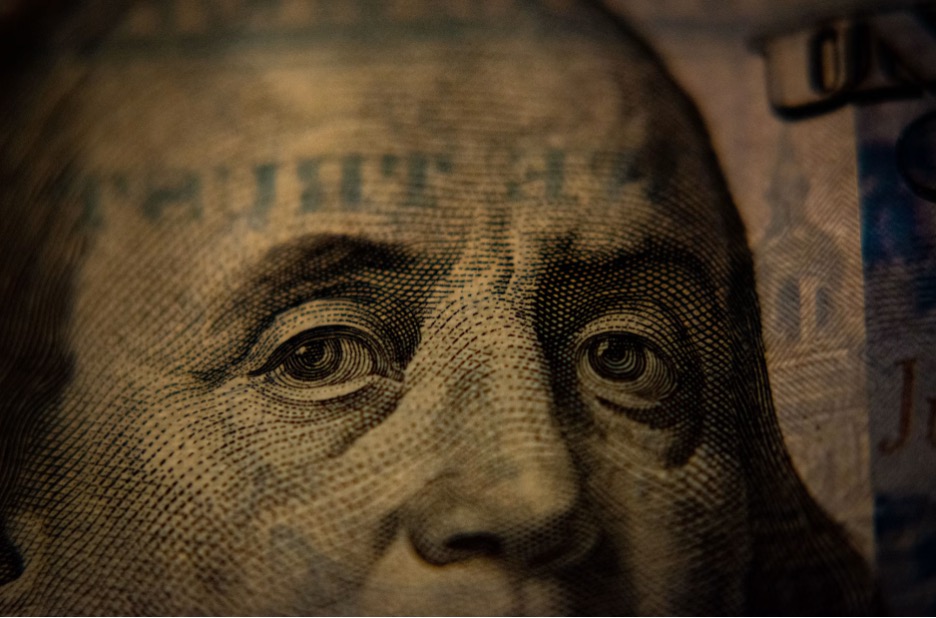
As the US dollar faces mounting pressure from global debt and BRICS trade alternatives, where does that leave Singapore? Credit: Unsplash/Adam Nir
Is a Weakened US Dollar Affecting Singapore?
29 September 2026/5 Minutes of Reading
Double Pressures
BRICS leaders concluded their 18th summit in New Delhi on 13 September 2026, adopting a 140-paragraph declaration that directs the bloc’s payment task force to keep building ways for members to trade without touching the dollar.
Three days later, the US Federal Reserve raised interest rates for the first time since 2023, lifting its benchmark to a range of 3.75% to 4%, with most officials projecting another increase before year-end. The hike arrived weeks after the US national debt crossed US$40t, with annual interest payments now exceeding the entire US defence budget.
Both developments mark two pressures converging on the same currency: a bloc of emerging economies building alternatives to the dollar and a fiscal position in Washington that makes defending the dollar pricier with every rate increase.
Singapore, which has thrived as the hub of dollar finance in Asia, is now experiencing the cumulative impact of both pressures.
The Scope of the Decline
The decline is happening in some functions of the dollar and not others, and the difference determines what Singapore should prepare for.
For moving money, the dollar remains dominant, carrying about half of the value flowing through SWIFT – the messaging network behind most cross-border bank transfers – and over 81% of trade finance as of June. Those shares have barely moved in a decade.
For storing wealth, the picture is different. The dollar’s share of the reserves that governments hold in foreign currencies has fallen to 57.13%, down from 72% in 2001. Central banks also bought 289 tonnes of gold in the second quarter of 2026, the largest second-quarter total on record.
The preference is not difficult to read. Gold stored at home cannot be frozen by a foreign government and is nobody else’s debt, and World Gold Council surveys show 74% of central banks expecting to hold fewer dollars within five years. The second-quarter buying arrived during gold’s steepest quarterly price decline in a decade, which confirms that the buyers driving this market are not chasing yield or momentum.
The scale of the shift is now contested at the highest level. World Gold Council and European Central Bank data indicated gold had overtaken US Treasuries as the largest official reserve asset. The Federal Reserve answered this month with a research note arguing that gold’s lead reflected price gains rather than governments actively switching and that Treasuries had regained the top position by June.
Whatever the ranking, the issuer of the world’s reserve currency now publishes research defending the standing of its own debt, an exercise no previous decade required.
The two functions also move at different speeds. Shifting savings takes a few quiet quarters, while moving actual trade payments requires new systems, willing partners and legal certainty that take years to build. Savings lead, payments lag and the gap between them measures how far this transition still has to run.
Singapore’s Three Exposures
Singapore’s stake runs through three channels, and all three depend on decisions made in Washington.
The first is the national savings. Official foreign reserves stood near S$551b in August. GIC has lifted the Americas to 49% of its portfolio, and Temasek’s S$518b portfolio holds another 17% there.
Returns on these holdings feed the Net Investment Returns Contribution, the slice of investment earnings the government spends each year, estimated at S$28.48b and among the largest single sources of state revenue. A lasting fall in the value of dollar assets would show up in Singapore’s budget within a single cycle.
The second is the middleman role. Singapore clears dollar funding, trade finance and wealth flows for the region while its own currency accounts for under 1% of global payments, which means the city-state earns fees on money it controls at neither end. Every deal that settles Asian trade in local currencies takes a small slice of that traffic away, and no single slice is large enough to make headlines.
The third is sanctions exposure. Washington’s Operation Economic Outcast, announced on 24 August, threatens penalties against firms in any country that trade Iranian oil, gold or digital assets, and the opening round of designations already included an entity based in Singapore.
US officials have described the campaign as an opening move with more to follow, and gold and digital assets happen to be two industries Singapore has spent the past decade building up.
What New Delhi Delivered
The summit’s financial outcomes reward close reading, because the substance sits below the headlines.
India’s foreign ministry confirmed there is no proposal for a common BRICS currency. BRICS Pay remains a pilot project, and the head of India’s central bank described plans to link national payment systems as still at the discussion stage a month before leaders met.
What survived into the declaration was the unglamorous work of connecting national payment systems and settling trade in local currencies, with the text conceding that no single approach suits every member.
The caution is itself informative. Members keep converging on connections between their own systems because that path does not require anyone to trust another country’s money, which is why it can move forward where a shared currency never could.
Work of this kind chips away at dollar transaction volumes gradually, without ever producing the single dramatic rupture that would trigger a coordinated response. Currency transitions have historically happened this way, through small decisions accumulating in one direction.
Infrastructure for Both Systems
Singapore’s response does not require choosing between the dollar system and its alternatives. It requires staying essential to both, and much of the construction is already underway.
The payments side is furthest along. PayNow already connects to India’s UPI, Thailand’s PromptPay and Malaysia’s DuitNow. Meanwhile, Project Nexus, a five-country scheme headquartered in Singapore with a 2027 target, would link Asian instant-payment systems under one framework. Whichever payment channels grow fastest, the connection point sits in Singapore.
The gold side arrives next month. As argued in these pages in July, the vaulting services for foreign central banks launch from October, and the gold clearing system anchored by six major banks follows by the end of the year, giving reserve managers a neutral Asian home for the asset they are buying most aggressively.
The Monetary Authority of Singapore’s (MAS) own return to gold buying this year, its first purchase since September 2025, means the authority now practises what it is preparing to sell. Its reserve management can extend that logic through gradual diversification, at a pace that keeps full access to dollar markets, which remain the deepest in the world.
The currency framework needs no change. MAS steers the Singapore dollar against a basket of trading partners’ currencies rather than through interest rates, and the slight tightening in April and July shows the mechanism still works under imported inflation.
The same logic supports the rupiah settlement arrangement launched with Bank Indonesia on 31 August. It argues against any shared ASEAN or BRICS currency because controlling its own money is what lets Singapore stay neutral in the first place.
Outlook
Four indicators will determine the assessment through 2027: 1) the next IMF reserve release and whether the dollar’s share keeps falling once currency swings are stripped out; 2) whether the Fed follows through on the second hike its officials have pencilled in; 3) the pace at which local currency deals multiply across ASEAN, and; 4) any US enforcement action against a Singapore-based financial institution.
The client list for Singapore’s new vaults provides the cleanest measure of the city-state’s own bet. Neutral storage either attracts foreign central bank gold from October or it does not, and the answer will arrive within months.
The broader transition will not resolve quickly, and Singapore does not need to predict its end state. The city-state’s position has always rested on being trusted by parties that do not trust each other. A fragmenting monetary order raises the value of that position, and the infrastructure decisions of the next 18 months will determine whether Singapore collects it.
The views expressed are those of the authors and do not necessarily reflect those of STRAT.O.SPHERE CONSULTING PTE LTD. This article is published under a Creative Commons Licence.
Republications minimally require: 1) credit authors and their institutions, and; 2) credit toSTRAT.O.SPHERE CONSULTING PTE LTD and include a link back to either our home page or the article’s URL.