search

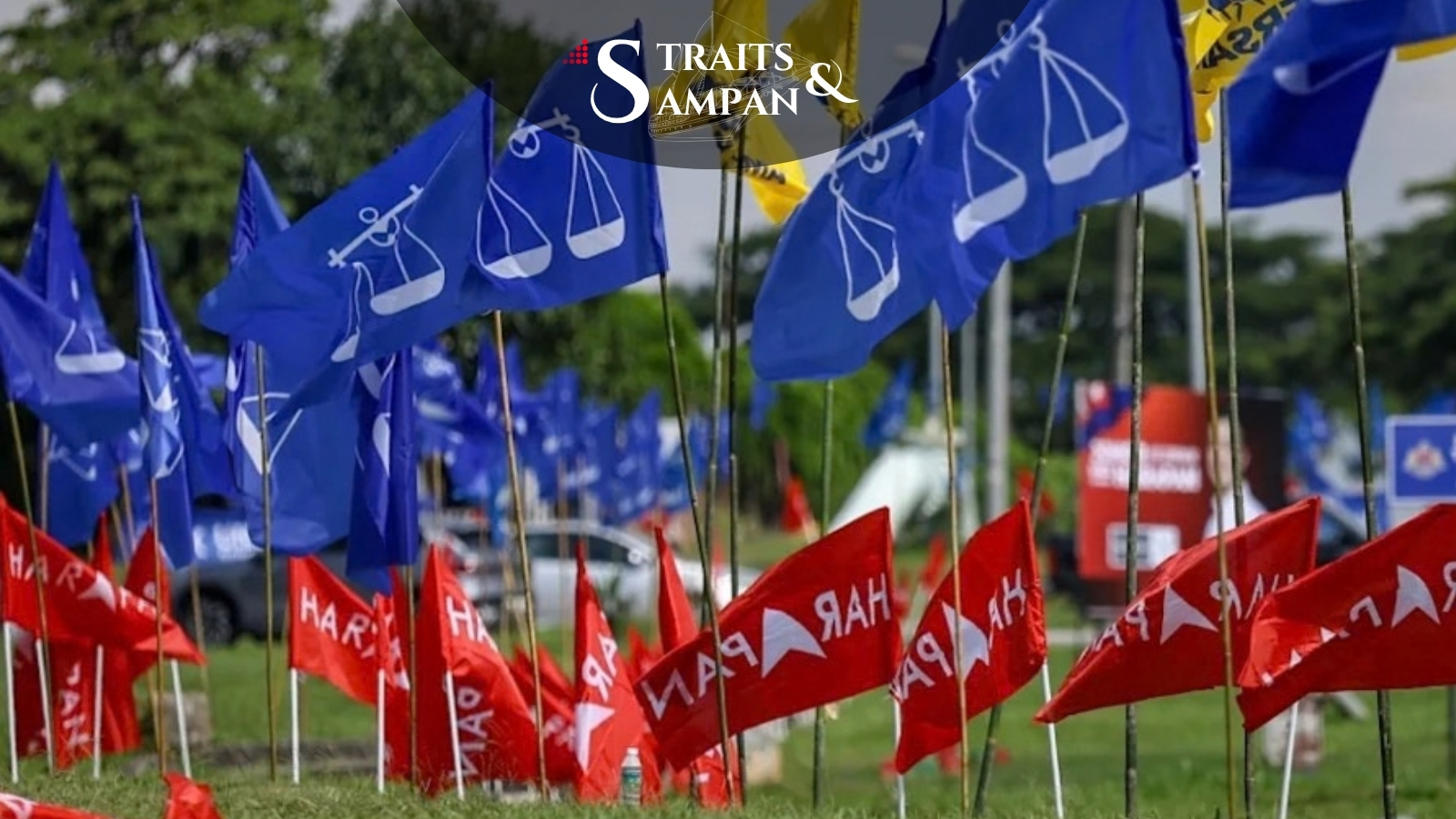
Heading into GE16, which party actually needs to foster a coalition with other parties? Credit: Malay Mail
Ahead of GE16, Who Needs Whom?
29 September 2026/5 Minutes of Reading
Testing the Waters
Malaysia’s 16th General Election (GE16) could be around a year and a half away if the current Parliament runs close to its full term, but the political ground leading to it has already been shifting for some time.
The latest development comes from Melaka, where the state assembly was dissolved on 23 September 2026, opening the way for another state election and another round of negotiations over who will work with whom.
It follows Johor and Negeri Sembilan, where relationships among the major parties took very different forms from those in Putrajaya.
This is the first in a series examining the road to GE16, beginning with the states because they are where parties are already testing alliances, bargaining power and voter support.
The growing fluidity of Malaysia’s coalitions is rooted in deeper changes to the structure of electoral competition, which have taken shape since 2018.
The collapse of Barisan Nasional (BN)’s long-standing dominance changed the terms of political competition in Malaysia, with no single coalition having been able to assume the position BN once held, either electorally or in government, ever since.
Parties now have to deal with a more fragmented electorate, very different levels of strength from one state to another and a federal-state political relationship that is far less uniform than before.
The fragmentation is most visible in the Malay electorate. Malay support is now contested across the United Malays National Organisation (UMNO), Parti Islam Se-Malaysia (PAS), Parti Pribumi Bersatu Malaysia (Bersatu) and the parties within Pakatan Harapan (PH).
Meanwhile, non-Malay support remains much more concentrated around PH.
An analysis drawing on Merdeka Center surveys conducted around GE15 estimated that about 57% of Malay voters in Peninsular Malaysia supported Perikatan Nasional (PN), while more than 80% of non-Malay voters supported PH.
The figures are specific to GE15, but they point to a broader shift in the electorate, with Malay support becoming divided among several competing political choices while non-Malay support remained heavily concentrated around one coalition.
This has weakened the older electoral logic in which BN could bring together different communal constituencies under one dominant coalition. As support has become more fragmented, where those votes are concentrated has become even more consequential.
A coalition may attract substantial support across the country while remaining weak in particular constituencies, and the distribution of those votes matters greatly under Malaysia’s first-past-the-post system.
Pragmatic Pacts
This also gives parties a reason to limit competition among themselves. When several parties are seeking support from overlapping groups of voters, a three-cornered contest can alter the result even without a substantial increase in support for the eventual winner.
For instance, GE15 showed how the division of Malay support between BN and PN could work to PH’s advantage in some constituencies where its own support was more consolidated.
Parties, therefore, have reasons to cooperate even when they agree on little beyond avoiding electoral losses. Seat negotiations allow them to decide where to compete and where to avoid contesting against one another. Such cooperation does not have to develop into a permanent alliance to be useful, which helps explain the growing use of electoral understandings that allow parties to work together in particular contests while remaining separate elsewhere.
Negeri Sembilan is a good example.
BN and PN negotiated seats to avoid contesting against one another and together won 25 of the 36 seats in August. The arrangement reduced direct competition between BN and PN in the constituencies they had divided between them. It also allowed BN and PN to cooperate in the state without changing their very different positions at the federal level.
Johor produced a different result because BN entered the election from a much stronger position.
It had already won 40 of the 56 seats in 2022 and increased that number to 48 in July 2026, leaving PH with eight and PN with none. BN, therefore, had little electoral incentive to reproduce its federal partnership with PH if that required conceding seats in a state where it already held a commanding position.
The contrast between Johor and Negeri Sembilan helps explain much of the apparent inconsistency in coalition politics.
Parties do not carry the same bargaining power from one state to another. Organisation, incumbency, local leadership, demographic composition and previous electoral performance all change the terms of negotiation. A party that needs an ally in one state may regard the same ally as an unnecessary competitor in another.
This is an important departure from the political order that existed under BN dominance.
BN was also a coalition built through negotiation, seat allocation and compromises among parties with different constituencies. Its dominance, however, kept those negotiations within a relatively fixed political structure. Component parties bargained largely within a coalition that expected to govern federally and in most states, while opposition parties organised themselves against it. In this sense, coalition bargaining itself is not new.
After GE14, that structure no longer held. The Sheraton Move in 2020 demonstrated that governing arrangements could change between elections, while the hung Parliament after GE15 made post-election bargaining part of government formation itself.
The relationship between the coalition contesting an election and the coalition eventually governing has consequently become much less fixed.
Loyalty Strain
Party leaders also cannot assume that voters will follow every new agreement. The PH-BN arrangement after GE15 brought previously competing parties into the same federal government, but it did not immediately turn their supporters into a common voting bloc.
UMNO and the Democratic Action Party (DAP), for example, spent decades as political opponents, and their supporters do not simply put that history aside because the two parties now govern together.
Parties, therefore, have to balance the advantages of cooperation against the need to retain their own political identity and voter base.
This leaves parties with a difficult balance to manage. They may need cooperation to avoid splitting support, but they also need to retain enough distance to protect their own political identity and voter base.
That is why limited electoral understandings can be more attractive than permanent alliances. Parties can cooperate where necessary, compete elsewhere, and leave open the possibility of different arrangements in another state or another election.
The increasingly separate timing of state and federal elections has widened the room for parties to adjust their relationships from one contest to the next.
Under BN dominance, federal and state elections were usually held at the same time, with Sarawak as the main exception. This was not a constitutional requirement, but BN’s control of the federal government and most states helped keep their electoral cycles aligned.
Since 2018, more states have gone to the polls on their own schedules, and each election now gives parties another measure of their strength, voter loyalty and the willingness of supporters to back an allied candidate. The results then feed into the next round of bargaining.
A party that performs well can resist seat concessions and negotiate from a stronger position, while a poor result can make cooperation harder to avoid. Separate election cycles, therefore, give parties more opportunities to test their relationships and renegotiate them before GE16.
Accountability Deficit
Malaysia’s federal structure also gives state politics room to develop differently from Putrajaya, which is why these arrangements do not have to be reproduced in the same way across every state.
For voters, this raises a question of political clarity. Coalitions have traditionally given some indication of which parties intend to govern together and where responsibility should lie after an election. Different arrangements across states are part of political competition, and voters are capable of acknowledging those differences.
But they should also be able to make an informed choice about the relationships they are voting into power, especially when parties compete in one state, cooperate in another and govern together at the federal level.
The flexibility available to parties, therefore, comes with a question of accountability. If governing relationships can differ across elections and be negotiated again afterwards, voters have less certainty about what their votes eventually deliver. Furthermore, it also raises questions as to where responsibility should lie once that government is formed.
The state elections before GE16 will help shape the wider bargaining leading into the general election. They will show which parties can afford to contest alone, which need partners, how much leverage they carry into seat negotiations and whether their supporters will follow the arrangements made by party leaders.
By GE16, voters may know which party they want to support, but have less certainty about who that party will eventually govern with.
The views expressed are those of the authors and do not necessarily reflect those of STRAT.O.SPHERE CONSULTING PTE LTD. This article is published under a Creative Commons Licence.
Republications minimally require: 1) credit authors and their institutions, and; 2) credit toSTRAT.O.SPHERE CONSULTING PTE LTD and include a link back to either our home page or the article’s URL.