search



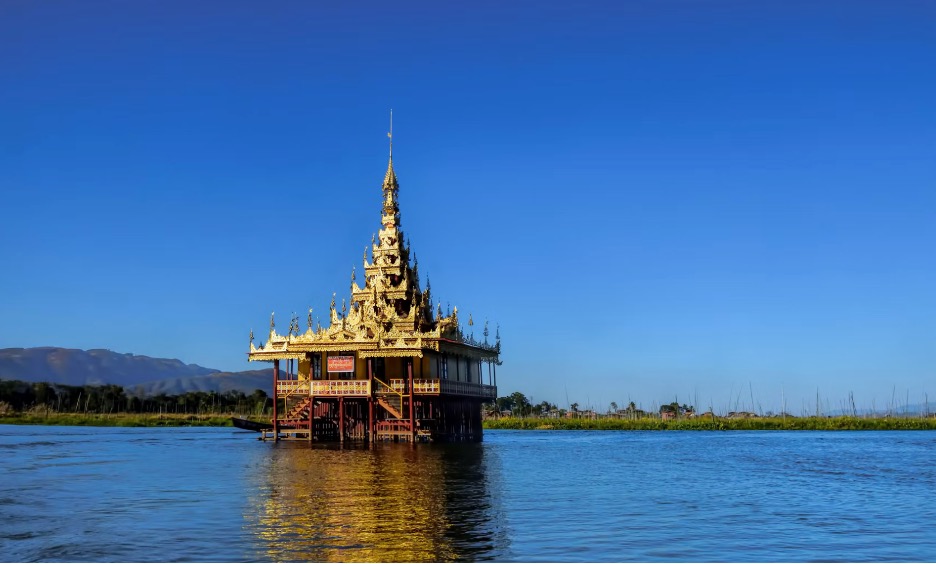
Off-grid forest communities need reliable clean energy to turn raw harvests into sustainable livelihoods. Credit: Unsplash/Ahmad Ahrur
Power to the Forest Villages
6 November 2026/6 Minutes of Reading
Clean Energy vs Restorative Economy
In Wae Sano, a village in West Manggarai, Flores, the coffee harvest is the busiest time of the year.
Beans must be picked, dried, sorted and packed while they are fresh—every hour counts. Since solar panels were installed, families can process their beans longer – even after dark – thus raising their income.
This snippet holds a bigger lesson for Indonesia, where local communities often resort to forest clearing to make up for lost income from traditional farming. While economically rational, deforestation is morally questionable and hampers national climate goals.
Normally, villages have two options. The first is adapting clean energy: solar, water, wind or geothermal—again, more energy means more productivity. The other is embarking on the restorative economy: a livelihood earned by repairing nature instead of exploiting it, such as growing coffee under shade trees, harvesting forest honey or replanting trees.
Across Southeast Asia, however, they are usually planned by different people, paid for from different budgets and judged by different targets. Sometimes they even pull in opposite directions.
The result is a gap: villages lacking power to process their forest yields, while energy projects add little value to local livelihoods. This demands scrutiny.
(Un)Electrified
Wae Sano demonstrates this tension between energy policy and lived realities.
The village sits on a geothermal field that the government seeks to harvest. However, residents have opposed such a plan for fear of land and water pollution, in addition to threatening the sanctity of their sacred sites. A provincial report on the potential was rejected, and a World Bank-funded project exploration was cancelled.
When energy policies are drafted without the people’s involvement, they might lose their livelihoods and ways of life.
But Indonesia’s struggle with energy supply remains. While the government claims that 99% of households are electrified, the energy minister admitted that about 10,000 villages – many are situated remotely – are lacking access.
In Nanga Bere, also in West Manggarai, 14 households paid a staggering Rp49m (US$2,700 in today’s rate) for the installation of solar power metres in 2022. Two years later, they were still waiting for it.
Conditions are harsher elsewhere. In Kampung Uper, West Papua, students had had to study under kerosene lamps before a micro-hydro plant was inaugurated last year. Meanwhile, North Sulawesi villages that sit at the sea border with the Philippines have access to neither the national grid nor clean energy installations.
Without power, forest-based enterprises that the restorative economy relies on cannot scale up operation. Daylight is limited, while diesel generators are expensive.
What about the Restorative Economy?
Restorative economy is already taking shape in Indonesia. The think tank Center of Economic and Law Studies (CELIOS) estimates that about 23,470 villages have high restorative potential.
In West Java’s highlands, coffee cooperatives grow shade-grown coffee on land once stripped by short-cycle crops—they report more tree cover and steadier income. In Pati, Central Java, a social forestry group has exported tonnes of petai, jengkol, chilli and jackfruit to Japan, generating hundreds of million rupiah in revenue.
Yet these enterprises struggle to grow. The coffee cooperatives describe ventures like theirs as “too complex for small grants and too small for banks” and note that farmers do not control the processing that would let them capture more of the value.
CELIOS also found no dedicated state budget line for restorative economy, with funding scattered across peat, mangrove and waste programmes. About 80% of related policies are not fully or effectively implemented.
This is where the two agendas meet. Turning a harvest into income requires processing, and processing needs energy: dryers for coffee beans, cold storage for fruit, phones to reach buyers. More energy means more harvest value that stays with the village.
The restorative economy – without reliable power – stays stuck selling raw produce, while clean energy that ignores these livelihoods misses its chance to give communities a stake in keeping the forest standing.
Regional Problem, Regional Answers
Indonesia is not alone. ASEAN’s remote forests and upland communities face a similar gap between the elite-drafted energy policy and the people’s lived realities.
In Borneo, the Sarawak Alternative Rural Electrification Scheme has brought solar power to almost 8,000 households in more than 270 remote villages. Communities participated in the process (from planning to installation), trained for system maintenance and obtained ownership certificates upon project handover.
In Cambodia, a farm near Siem Reap provides solar dryers to 25 small farms to dry moringa leaves, avoiding losses of up to 30% when fresh leaves are transported.
While these exemplify best practices in the energy-restorative nexus, they are still the exceptions. Sarawak’s scheme is designed as a stopgap measure to light homes until the grid arrives. Meanwhile, the Cambodian dryers were built by a private entity and not a part of any public energy plan.
What is missing is a habit of formulating an energy policy or plan around the life of the village communities, particularly those living near forests.
Divergence
The problem is institutions, not technology. Energy projects are planned by engineers and power companies who measure success in megawatts and new connections. Meanwhile, restorative economy programmes are run by forestry offices, civil society groups and cooperatives who count trees, farmers and product sales to gauge success.
Each side has its own budget, targets and reporting format. Consequently, there is a mismatch in the expected outcome.
A solar panel project may light houses in an entire village, but powering a coffee dryer is not part of its performance benchmark. Meanwhile, a coffee-based restorative programme may train farmers to sort beans efficiently but ignore the energy generation component necessary to run a grinder or bag sealer.
The Indonesian government’s social forestry programme, which gives villages legal rights to manage state forest, has supported more than 15,800 community forest businesses. However, they rarely appear in any energy plans, and village electricity projects rarely address their business needs.
Convergence
When an energy project is planned around people’s lives and livelihoods, it pays back faster.
For instance, solar panels can run machines that remove coffee skins and dry beans evenly, even in the rainy season. It powers refrigerators useful for cold storage—fish, fruit or milk can last longer. It can also charge phones so farmers can check prices, connect with buyers or sell online.
All of these mean higher efficiency and effectiveness. They also shift the communities’ view about clean energy: not as a project to them, but as an economic means.
Furthermore, if this logic is applied to the restorative economy, the impacts could be manifold. The communities would be incentivised to preserve the forest, because it would mean higher income from shade-grown crops, forest honey and other products that standing forests provide. This means less pressure to clear new fields.
Indonesia now has a chance to act at scale. The government is pushing for up to 100 gigawatts of solar power and has pledged to bring electricity to every village by 2030.
If even part of that effort is designed around village livelihood, it could do more for forests than many conservation projects.
Ways Forward
Four steps can help close this gap.
First, before a clean energy project begins, planners should sit down with the local cooperative or villagers and ask one question: what work would you do more if you had more power? The answer should shape the size, place and timing of the system.
Second, funders should be aware of the socioeconomic and entrepreneurship programmes the villages already run, so that their energy projects can feed directly into them. A solar panel with nothing productive to run, or a dryer with no power, is only half a project.
Third, the community should own the system, as exemplified in the Sarawak case. A village enterprise can manage it, and small fees from business users can pay for repairs. This will instil a sense of ownership in the villagers and induce them to care for its maintenance in the long run.
Fourth, success should be measured by increase in income, forest cover and the size of degraded land restored, not only by kilowatts or how many households have access to electricity.
These steps are not exclusive to Indonesia. ASEAN Member States (AMS) share forests, rivers, air and land, and they increasingly share energy plans.
ASEAN, developmental organisations and financiers can assist by commissioning clean energy projects that feed into village livelihood. AMS must also share best practices, in addition to sharing data about the restorative economy and forest management.
Conclusion
Forest protection and clean energy are two halves of one task. The restorative economy gives forest communities a reason to keep trees standing, but it depends on reliable power to dry, store and sell what the forest yields.
The two must be planned in harmony. Nanga Bere and Kampung Uper show the gap, while the Sarawak and Siem Reap cases demonstrate how to close the gap.
With COP31 opening in Antalya, Turkiye, on 9 November 2026, AMS should bring a practical message: that clean energy and restorative economy agendas can converge harmoniously when target communities are involved in the planning and execution.
Southeast Asia’s energy transition and its forest restoration plans should focus on bringing small energy into the community and helping them earn more. That will only happen when the energy planners and the communities cease working in silos and collaborate.
The views expressed are those of the authors and do not necessarily reflect those of STRAT.O.SPHERE CONSULTING PTE LTD. This article is published under a Creative Commons Licence.
Republications minimally require: 1) credit authors and their institutions, and; 2) credit to STRAT.O.SPHERE CONSULTING PTE LTD and include a link back to either our home page or the article’s URL.