search


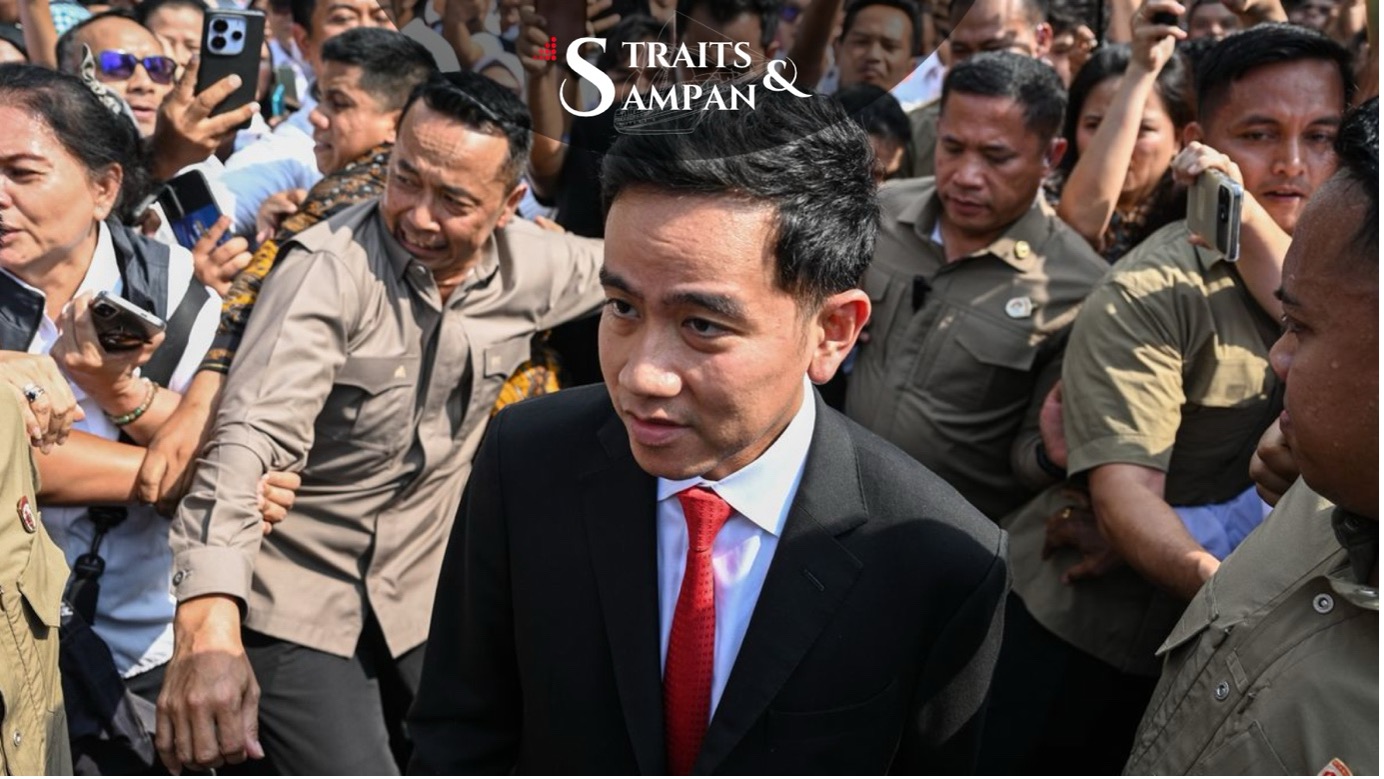
Gibran Rakabuming Raka resigned as Indonesia’s vice president on 12 November 2026. Credit: Antara Foto/Fauzan
The Gibran Dilemma, Explained
25 November 2026/5 Minutes of Reading
Convergence
The resignation of Gibran Rakabuming Raka as Indonesia’s vice president may be the country’s ultimate political news of the year.
While this undoubtedly will have multifaceted ramifications for the political landscape for years to come, an aspect of the event merits closer inspection: the convergence between public opinion and that of the political elite—a process three years in the making.
Three years ago, when Mahkamah Konstitusi (Constitutional Court – MK) changed the minimum age requirement for candidates, it effectively made an exception for the then 36-year-old Gibran to run on the same presidential ticket as Prabowo Subianto.
The verdict was highly controversial for the circumstances in which it had been made.
Controversies
First, it had the appearance of being tailor-made to suit Gibran’s vice presidential aspiration while his father, Joko “Jokowi” Widodo, was still the incumbent president, leading to the assumption of a power overreach.
Second, critics highlighted the instance of nepotism in the case.
The word “nepotism” has a Latin root of nepos, meaning “nephew” or “grandson”. Historically, it was first coined to describe the common practice among Roman Catholic popes and cardinals who elevated their own relatives to occupy high-ranking church offices.
The word struck a chord with the Indonesian public because Anwar Usman – then chief justice of MK and also married to Gibran’s aunt – had not abstained from the court deliberations out of conflict of interests.
Rather, as a subsequent hearing by MK’s ethical board discovered, he had actively abetted the processes which led to the court’s final ruling on the presidential or vice presidential minimum age.
While the ethical board eventually dismissed Anwar from his post for a breach of conduct, the constitutional ruling that he expedited cannot be reversed.
At the time, a public poll conducted between late October and early November 2023 found that approximately 41% of Indonesians were aware of MK’s verdict, with 55% of whom knew Anwar’s marital status to Gibran’s aunt. Out of that 41%, almost two-thirds of them deemed the ruling to be unfair.
Although striking for recording public repudiation on the issue, the survey also revealed that 59% of the populace had been unaware of the impact of MK’s verdict on allowing Gibran’s nomination to sail through unimpeded.
The controversial ruling compelled university students and civil society forces to take to the streets, demanding that the verdict be overturned, though to no avail. Under the constitution, a ruling by MK represents the high judicial ruling on any given matter.
Third, many Indonesians saw the nomination as a gambit by Jokowi to extend his political lifespan beyond two tenures and to consolidate his political dynasty.
The public, as borne out by Gibran’s own digital footprint, still remembered how Jokowi had claimed in 2018 that his children “weren’t interested in politics”. Indonesians also recalled how in 2020 Gibran ran for the office of the mayor of Solo, a position Jokowi had also held and won.
Two years on, amid diminishing public approval ratings, steep currency depreciation and persistent scandals over the administration’s flagship programmes, Gibran decided to resign.
It is important to note that between his inauguration and resignation, public disapproval of Gibran did not dissipate.
On social media, Indonesians often jeeringly referred to him as the “anak haram konstitusi” (illegitimate child of the constitution), a sentiment that reputable publications such as Tempo have also echoed. Other popular sobriquets included “wapres (vice president) giveway” or “nepo baby”, which are appropriated even by the likes of Al-Jazeera.
As if to put a cherry on top, 70.7% of comments on X were supportive of an impeachment against Gibran.
Perhaps haunted by this labelling, of which he was indubitably aware, Gibran struggled to fit into his role as vice president. It did not help that Prabowo and his allies actively sidelined him from important briefings and sought to curtail his influence.
Checkmate
However, just as one major judicial ruling made his candidacy viable, two consecutive others rendered his vice presidency constitutionally untenable.
The first originated from the same court which had lent him legitimacy to run, MK. On 6 October 2026, the court made another contentious ruling on a judicial review of Gibran’s nomination based on the illegality of his education qualifications.
The case petitioners – CSOs and figures headed by Denny Indrayana – had argued that because Gibran did not have any legal diploma equivalency to Sekolah Menengah Atas (SMA) at the time of his candidacy, his post as vice president was therefore technically null and void.
Crucially, MK declared their petition inadmissible, given that the petitioners lacked legal standing as non-participants of the 2024 election. However, it also made another legal observation that during its proceedings it had failed to verify Gibran’s diploma equivalency.
Separately, a few weeks later, Mahkamah Agung (Supreme Court – MA) also nullified Gibran’s secondary school diploma equivalency. The verdict was significant because MA had overridden earlier decisions by lower courts which had ruled in Gibran’s favour.
The two verdicts by the two highest courts in the land eventually led members of the House of Representatives (DPR) to start a process in early November called “the right to question”, a preliminary action to a full-blown impeachment.
By the evening of 11 November, 120 parliamentarians had signed the petition, adding further pressure on the vice president.
Earlier in the morning, Gibran had a two-and-a-half-hour meeting with Prabowo in which he told the president he was intent on resigning his post.
Significantly, there were two differing versions of how the meeting had unfolded.
Minister of State Secretariat Prasetyo Hadi had emphasised that Prabowo “had not rejected Gibran’s resignation”, while Gibran had told reporters that Prabowo “had urged him to fight on” by appealing MA’s ruling in Pengadilan Tata Usaha Negara (State Administrative Court – PTUN).
However, Gibran’s momentary defiance was soon undercut by further denials by two figures from the administration: Coordinating Minister for Law, Human Rights, Immigration, and Correctional Institutions Yusril Ihza Mahendra and the Chief of Badan Komunikasi (Government Communications Agency – Bakom) Syahganda Nainggolan.
The former, a constitutional expert, ruled out any appeal of MA’s decision on legal grounds, calling it “futile”. The latter dismissed outright that Prabowo had encouraged Gibran to make the appeal.
Despite the warm send-off Prabowo gave Gibran later on, it was evident that he, in collaboration with other political elites, had been eager to press Gibran to step down.
Gibran opted to relinquish his position upon being presented with a political checkmate in the form of converging legal, legislative and executive pressure.
Nevertheless, a tense-looking Gibran was almost mobbed by enthusiastic crowds as he arrived at the parliamentary complex at Senayan to submit his resignation letter.
Sympathetic comments were aplenty on social media, thanking him for his service. The following day, as he went on a walkabout in South Jakarta, a young boy asked him, “Does it hurt (to have to resign)?” to which Gibran smirked jovially before laughing.
For a moment, it seemed as though he had been forgiven.
Perhaps, inadvertently, by appearing to mengalah or concede, the embattled former vice president had started to redeem himself in the eyes of many. He may have become an underdog, a position familiar to most Indonesians who love to champion one.
Epilogue
Gibran’s resignation has been interpreted by many political analysts as a major blow to Jokowi’s dynastic aspirations. It has also been viewed as a palpable signal of a political rupture between the former president and his successor, Prabowo, a perception strengthened by the resignations of three cabinet members from a party associated with Jokowi’s family.
Two names, Andi Amran Sulaiman and Sugiono, both ministers in the cabinet, have been nominated by Prabowo for an unprecedented midterm election of a vice president by Majelis Permusyawaratan Rakyat (People’s Consultative Assembly – MPR).
Amran is a renowned figure from the east related to Andi Syamsuddin Arsyad – better known as Haji Isam – a powerful businessman in Prabowo’s orbit. Meanwhile, Sugiono is a protégé of the president, holding a special honour of being in his inner circle.
The Gibran dilemma tells us that a partnership based on electoral needs without personal trust is ultimately bound to flounder. One of the two names will succeed him as a vice president, but it is the president himself who will come out on top.
The views expressed are those of the authors and do not necessarily reflect those of STRAT.O.SPHERE CONSULTING PTE LTD. This article is published under a Creative Commons Licence.
Republications minimally require: 1) credit authors and their institutions, and; 2) credit to STRAT.O.SPHERE CONSULTING PTE LTD and include a link back to either our home page or the article’s URL.