search

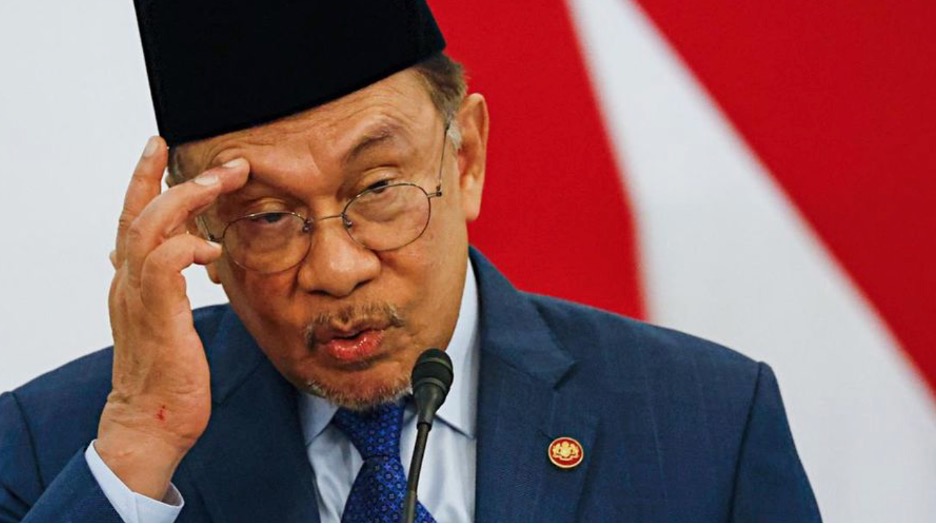
Prime Minister Anwar Ibrahim, a stout champion of human rights, recently decided to send back hundreds of Rohingya refugees back to Myanmar. Credit: REUTERS/Ajeng Dinar Ulfiana
Late to the Party
6 October 2026/5 Minutes of Reading
Window to the World
Malaysian Prime Minister Anwar Ibrahim is trying to play catch-up with other ASEAN Member States (AMS) as they shifted from a collective stance on Myanmar and began to press what they want under the guise of bilateral relations with the trouble-plagued country.
This domino effect started with the “official” visit to Thailand by the Myanmar junta chief-turned-president Min Aung Hlaing. The general was given the red carpet treatment and the famous Thai hospitality.
Informed sources said Min Aung Hlaing wanted a “state visit”, which would include an audience with His Majesty the King and a state dinner, but decided not to push his luck too hard given the fact that Thailand has agreed to be the window to the world for his war-torn country under the so-called dual-track policy.
Critics like Supalak Ganjanakhundee said a “working visit” would have sufficed, given the fact that Bangkok was not able to pin the Burmese president down on any commitment to the ASEAN Five-Point Consensus (5PC) or Thailand’s bilateral concerns. The latter include the expansion of scam compounds along the common border in areas under the control of pro-Myanmar ethnic armed organisations.
Other issues include drug trafficking, toxic chemicals coming from gold and rare earth mines in Shan state that flow into Thailand, and border intrusion by Myanmar jet fighters and shellings that rattled the villagers along both sides of the border.
Malaysia Joins the Chat
Today, the same criticisms once levelled at Thailand for being too soft on Myanmar are being directed at Malaysia, as critics urge Anwar not to give away too much to Myanmar when there is little sign that the Naypyidaw government is willing to accommodate the ASEAN 5PC.
Anwar only has to look at how Naypyidaw responded to the Philippine Foreign Secretary Theresa Lazaro, the current ASEAN chair’s top diplomat, when she called for the release of opposition leader Aung San Suu Kuyi and all political prisoners.
Naypyidaw equating the demands as unwarranted “interference in Myanmar’s judicial process” and adding that the general election held late last year – dismissed as a sham by ASEAN and the world – has already delivered a civilian-led presidency. Thus, according to its logic, the 5PC is no longer needed.
While the 5PC remains the official ASEAN roadmap, the regional grouping faces structural challenges and outright pushback from the military regime.
In his podcast posting, Anwar said, “I invited him (Min Aung Hlaing) to say we can be friends, we can trade, we can accept Myanmar, but Myanmar must accept them [Rohingya refugees] back.”
While not to the extent of Singapore, Malaysia has been one of the most vocal critics of Myanmar and repeatedly expressed frustration at its refusal to cease hostilities and take back the Rohingya and other refugees.
“To me, that’s better diplomacy than just shouting angrily at Myanmar. Who’s going to take them? Where do we send them? They don’t even have Myanmar citizenship,” Anwar said, adding that a different approach was needed to resolve the issue.
Anwar’s statement was not directed at the international community only, but the local constituency,where Rohingya and Myanmar refugees are high on the minds of the voters.
Foreign Minister Mohamad Hasan said in January 2026 that ASEAN would not endorse Myanmar’s phased election: “We didn’t send observers, and by virtue of that, we don’t certify the election.” This was the bloc’s first flat refusal to recognise the results.
Conundrum
Domestic politics aside, critics could reasonably ask whether rolling out a state-adjacent invitation squares with that position or quietly abandons it.
Malaysia’s balancing act is sharper than Thailand’s because of the Rohingya aspect, a Muslim minority group. Anwar faces pressure both from anti-migrant domestic sentiment – which he leans into rhetorically – and from Malaysia’s international standing as a Rohingya champion.
Lucky for Thailand, the calculus is purely border-security/economic, with no comparable religious-solidarity constituency pulling the other way. With the exception of the Malay-speaking people in the south, Muslims in Thailand are extremely patriotic and have shown no desire to pressure the government to stick their neck out for the Rohingya, one of the most prosecuted Muslim minorities in the world.
Members of the international community equate the all-out offensive to push Rohingya out of Rakhine state as genocide. Myanmar continues to deny them a place in the country, referring to them as Bengali.
Talks of repatriating Rohingya and other refugees back to Myanmar from Malaysia have been around for some months now, but observers said if Anwar could get Min Aung Hlaing to accept that these refugees are Myanmar nationals, they would consider it a breakthrough.
Does Myanmar Care?
Since coming to power, Min Aung Hlaing has been touring Asia to build international recognition and legitimacy for his new government. Regional affairs expert Kavi Chongkittavorn said ASEAN is expected to maintain the 5PC for the time being but added Myanmar has a time frame of its own as to when it believes it can fully participate in official high-level ASEAN meetings.
Kavi said it is very unlikely that Myanmar will make enough measurable progress to get Min Aung Hlaing a seat at the ASEAN Summit in Manila later this year or in Singapore the next. But Myanmar is eyeing the 2028 summit in Thailand.
Given its long, porous border with Myanmar, Bangkok embraced a more flexible approach as it sees itself as carrying more responsibility than other AMS. The two also share common issues, including six million Burmese migrant workers, cross-border trade, energy dependency, scam centres, illegal migration, cross-border shellings and violation of Thailand’s airspace by Myanmar jet fighters.
Thailand has agreed to act as a bridge between Myanmar and ASEAN – and the rest of the world, for that matter – while staying engaged through the bloc’s 5PC.
So far, however, Myanmar has yet to show Thailand that it is willing to give something in return. Some even said Myanmar is indifferent to Thailand’s concerns.
Within two days after Min Aung Hlaing’s visit to Thailand, fighting escalated sharply, with the Myanmar Air Force bombing Karen National Liberation Army (KNLA) positions near Minlapan/Phalu villages directly across from Mae Sot district of Thailand’s Tak province, as ordnance and stray rounds repeatedly crossed into Thai territory, striking homes in the Huay Maha Wong area.
Since the start of the 2021 coup in Myanmar, Thailand has sent at least 70 letters to the Naypidaw government about land and air intrusions, but none of them have been answered.
For the time being, all eyes are on the Lazaro, who will be leading a humanitarian visit to Myanmar in October to assess the overall situation. How the visit plays out and what she reports back to ASEAN could help decide which way member states of this regional block will deal with Myanmar.
The views expressed are those of the authors and do not necessarily reflect those of STRAT.O.SPHERE CONSULTING PTE LTD. This article is published under a Creative Commons Licence.
Republications minimally require: 1) credit authors and their institutions, and; 2) credit toSTRAT.O.SPHERE CONSULTING PTE LTD and include a link back to either our home page or the article’s URL.