search


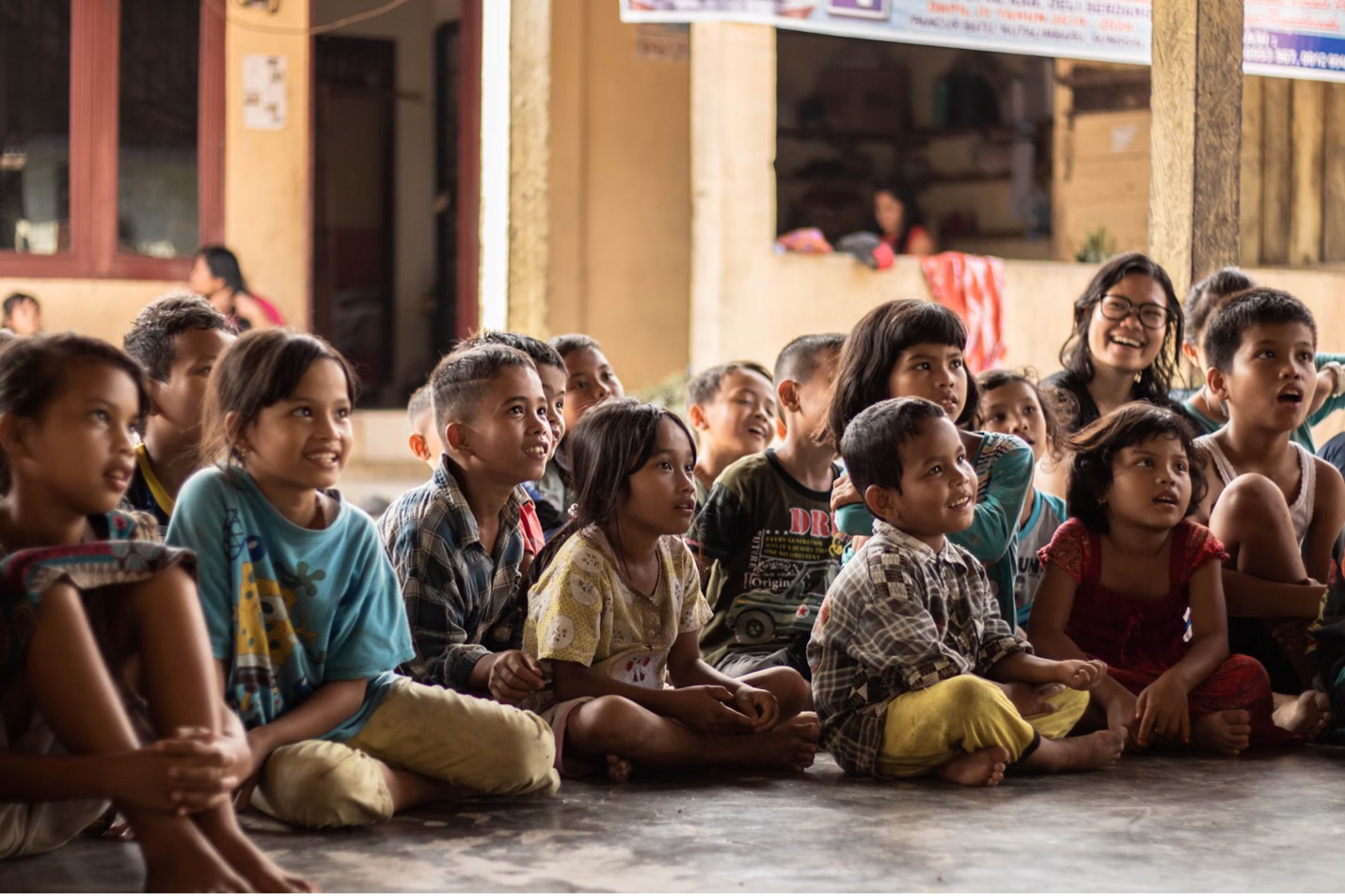
From slashed library budgets to digital distractions, PISA scores reveal that Indonesia needs human-centered education reform, not just higher test ranks. Credit: Unsplash/Yannis H
Beyond the Scoreboard
11 November 2026/6 Minutes of Reading
Stagnant Scores
The latest Programme for International Student Assessment (PISA) results by the Organisation for Economic Co-operation and Development (OECD) have once again stirred debates in the education sector, and Indonesia is no exception.
The country’s latest PISA scores are a mix between improvement and decline. It ranks 73rd in science (score: 389, up by six points from 2022), 78th in mathematics (364, down by two points from 2022) and 74th in reading (365, up by six points from 2022).
Looking at the global data, some aspects from the results need to be considered.
Firstly, students’ performance in science, mathematics and reading across participating countries has declined compared to 2022. Mathematics and reading scores fell by 22 and 28 points, respectively, pointing to a serious problem in academic performance.
These declines bear considerable impacts on students’ everyday skills. For example, despite their ability to read, students nonetheless struggle to interpret data, identify key information in graphs and understand simple texts.
They are also unable to explain the relationship between units and values used in everyday transactions, such as when engaging in economic activities like purchasing goods.
Secondly, for Indonesia specifically, its own results emphasise the urgency to create significant breakthroughs in improving its pedagogy quality.
Kementerian Pendidikan Dasar dan Menengah (Ministry of Primary and Secondary Education – Kemendikdasmen) has responded by introducing four strategies. These include improving teachers’ competence, upgrading learning quality, aligning national assessment with the PISA framework and strengthening the role of families in children’s education.
While these could solidify the foundation of Indonesia’s education system, they require effective implementation, consistent support and honest evaluation to ensure meaningful progress.
The Digital Paradox
Consider the first strategy, for instance. It aims to enhance teacher competency through increase in academic qualification, professional education, and pedagogical skills, including those in coding and AI.
While teachers equipped with such technology can improve students’ tech-savviness and position them as creators of technology (instead of merely as users), technologies can also undermine their reasoning skills, particularly in information evaluation and critical thinking.
For example, chatbots and virtual assistants such as ChatGPT, Gemini and Claude can encourage hasty reading habit that leads to inaccurate comprehension.
The consequences of digitalisation are also hard to control in the domain of education. A survey by Komisi Perlindungan Anak Indonesia (Indonesian Child Protection Commission – KPAI) discovers that 73.3% of pupils use digital devices for a considerable long time but not necessarily for learning; they are hooked onto these devices for social media and online games.
Some studies show that the pattern of children’s gadget use raises questions about the (im)balance between educational and recreational screen time.
As many as 90% of children use gadgets to watch videos on YouTube, while 50% play games and 40% use educational applications. Meanwhile, 20% use gadgets to make video calls with family members.
These figures suggest that entertainment-oriented activities are common, although they do not indicate how much time children spend on each activity or how long they use gadgets each day.
The imbalance between screen time for learning and for entertainment points out that the issue is not merely about encouraging children to learn and use technology responsibly but also about regulating their use of it and teaching them to use it wisely.
The third strategy also deserves our attention. While aligning national assessment and aptitude tests with PISA’s reasoning-based competencies could help schools understand students’ needs, it risks encouraging teachers to “teach for tests”.
It means an emphasis on higher test scores over strengthening students’ reasoning skills. In fact, assessments should serve as a mirror for improving learning, not as a new source of pressure on teachers and students.
Reading, Interrupted
Literacy is another concern, considering numerous obstacles today. The OECD itself has stated that reading is the gateway to other types of learning. Thus, when there is a disruption, its effects cascade.
The budget of Perpustakaan Nasional (National Library – Perpusnas) for 2026 was slashed by almost half, affecting the procurement and distribution of books. This is despite the body’s vital role in ensuring children’s access to books.
Our interviewee Anis, a library manager in Tebo, Jambi, revealed that books donated by Perpusnas are of high quality and that the pupils enjoyed reading them. A disruption in book distribution, therefore, truly affects the children at the grassroots level.
Eastern Indonesia is especially affected. Ganeswara from Morotai, North Maluku, shared the long waiting period between her online book purchase and her books’ arrival. This was despite her ordering from Gramedia, Indonesia’s largest bookshop. Meanwhile, her distant residence meant a higher shipping cost—nearly half the value of her eight books.
These two examples paint the picture of today’s struggle to read, which adds another disadvantage to children hoping to raise their PISA score.
If personal reading is too much trouble these days, community reading can be a solution. Here, Kemendikdasmen could also consider channelling support towards Indonesia’s growing network of reading communities.
Through social media, the influence of these reading communities has expanded. Groups such as Silent Book Club Jakarta, Kumbang Book Club and Buibu Baca Buku Book Club have organised group reading events in several regions across Indonesia.
Schools should complement grassroots initiatives like these by running creative campaigns such as a “reading from school” instead of focusing solely on school enrolment, activities and promotion. A widespread reading culture could lighten the load on schools to increase children’s literacy.
Outside Formal Structure
Thirdly, besides revealing challenges in the education sector, PISA scores also point to the need to strengthen the role of parents in children’s education.
Parents are children’s first educators, teaching them not only basic skills such as eating, drinking and walking but also thinking, interacting socially, and behaving responsibly.
Studies indicate that reading at home plays a significant role in children’s literacy development, underscoring parents’ critical contribution to their children’s cognitive development.
However, parents in Indonesia may not always be adequately equipped or actively engaged in supporting their children’s learning at home.
In Yogyakarta, for example, parents reportedly lined up as early as dawn to enrol their children in private tutoring centres. While this phenomenon has been interpreted as a sign of declining trust in the school system, it also raises questions whether parents understand and exercise their own role in supporting children’s education beyond formal schooling.
It is, therefore, incumbent upon Kemendikdasmen and Kementerian Pemberdayaan Perempuan dan Perlindungan Anak (Ministry of Women’s Empowerment and Child Protection – Kemen PPPA) to collaborate on initiatives that help parents cultivate reading habits and support learning at home.
The foundation for such efforts has already been laid by Kemendikdasmen’s Gerakan 7 Kebiasaan Anak Indonesia Hebat (7 Habits of Great Indonesian Children Movement), which seeks to strengthen positive habits among children and the role of families in nurturing them.
These efforts should be complemented by accessible parenting resources and initiatives that encourage parents to read with their children, engage them in meaningful conversations, and make learning part of everyday family life.
Beyond family, communities also have an important role to play in creating an environment that supports children’s learning. Initiatives such as “one village, one library” and community reading clubs could complement parents’ efforts by extending learning opportunities beyond the home and school.
Such initiatives are particularly important for children whose families have limited access to books, educational resources or supportive learning environments.
However, these programmes should not become conventional development projects that involve third parties and spend substantial sums on constructing buildings without ensuring meaningful community participation.
Instead, they could make use of existing spaces, such as schools, neighbourhood offices, and places of worship, equipping them with bookshelves and reading materials.
By involving community members, these initiatives could foster a shared commitment to improving literacy at the neighbourhood level. Transparent management and community ownership would also help prevent wasteful spending and reduce opportunities for corruption.
Ultimately, the objective should not be to build more facilities but to cultivate a sustainable culture of reading and collective responsibility for children’s education.
Humanising Education
Hopefully, the investment required to participate in PISA – comprising an international participation fee of EUR195,000 over three years and estimated national implementation costs of approximately EUR350,000 per year – will yield more than scores for international comparison.
What matters most is how these results are translated into meaningful and sustained improvements in Indonesia’s education system, not only in students’ intellectual development but also in their emotional and social growth.
As Buya Ahmad Syafi’i Maarif once emphasised, education should be human-centred. In his 2018 essay, Buya Syafi’i highlighted the loss of maturity across generations due to an educational system that tends to prioritise cognitive skills while neglecting the affective aspect.
For him, a humanising education is measured not merely by numerical achievement but by its ability to strike a balance between rational intelligence and emotional sensitivity, thereby fostering a generation of autonomous and civilised individuals.
Education is everyone’s responsibility and should not be measured solely by PISA scores. The government must improve its education policies, families must play a stronger role and communities must be empowered to cultivate children’s love of learning.
Through these collective efforts, we can build an education system that fosters a civilised, knowledgeable and dignified nation, as Buya Maarif once dreamed.
The views expressed are those of the authors and do not necessarily reflect those of STRAT.O.SPHERE CONSULTING PTE LTD. This article is published under a Creative Commons Licence.
Republications minimally require: 1) credit authors and their institutions, and; 2) credit to STRAT.O.SPHERE CONSULTING PTE LTD and include a link back to either our home page or the article’s URL.