search

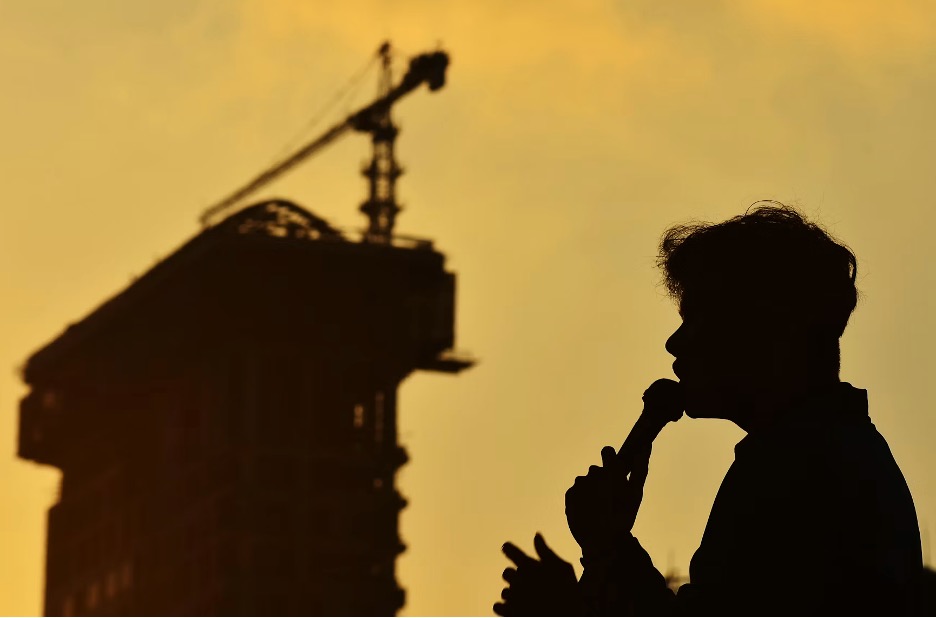
The latest unrest in Jakarta displayed the involvement of a non-state organisation in a public order operation. Credit: Unsplash/Iqro Rinaldi
Blurred Lines
18 September 2026/5 Minutes of Reading
Another Unrest
The late August unrest in Jakarta creates a conundrum about how public authority is exercised when a politically connected non-state organisation operates in the same space as a formal security body.
The issue is not simply whether such an organisation can be present near a protest, but whether the boundary separating political mobilisation and the exercise of formal authority remains clear.
A demonstration outside the parliament building in Senayan on 27 August 2026 later developed into unrest, claiming the life of a 59-year-old mirror merchant named Bambang Setiyawan. Though police investigation is ongoing, netizens have pointed fingers at Gerakan Rakyat Indonesia Bersatu Jaya (United Indonesian People’s Movement – GRIB Jaya), which was conducting an operation to maintain public order at the location.
GRIB Jaya, nonetheless, has denied involvement.
The broader question is why GRIB Jaya, a mass organisation, was performing a security function during an active demonstration. The group’s leader, Hercules, was present in the area and recorded urging protesters to disperse. The organisation later said his presence was intended to monitor the situation and maintain public order and described its members’ involvement as a form of pengamanan swakarsa (community-based security) intended to assist the authorities. This is despite police units already operating in the area.
Furthermore, videos circulating afterwards prompted claims that vehicles carrying people associated with GRIB Jaya were moving alongside vehicles from the police’s Korps Brigade Mobil (Mobile Brigade Corps – Brimob). Polda Metro Jaya – the Jakarta police – denied netizens’ insinuation that Brimob was escorting the group and maintained that the vehicles were conducting regular patrols.
Whether there was indeed a coordination between the police and GRIB Jaya is a factual question for the authorities to establish. However, these videos, alongside GRIB Jaya’s presumption that it was conducting a public order maintenance, foist to the fore the question as to why a politically connected mass organisation could present itself as a security enforcer.
The events of 27 August underscore neither a state weakness nor a return to New Order’s disproportionate security protocols. The state was visibly present as the police were conducting operations. Meanwhile, there was no demonstrated presidential directive assigning GRIB Jaya a security role.
Instead, the episode reveals a boundary problem, an ambiguity in the way a security operation was conducted. Though this does not automatically establish that the organisation in question is a state proxy, it nonetheless raises the question whether the group’s activities were authorised, supervised, merely tolerated or entirely independent.
Informal Organisation and Formal Authority
GRIB Jaya’s political proximity to President Prabowo Subianto should be taken into consideration.
Hercules and Prabowo have known each other for decades, with GRIB Jaya backing Prabowo’s political ambitions through multiple election cycles. In May 2026, Hercules even publicly pledged that GRIB Jaya would continue to support Prabowo’s government through the end of its term.
None of this demonstrates that Prabowo instructed GRIB Jaya to take part in events on 27 August. Such a focus is too narrow for understanding how groups exercise informal power in Indonesia.
In the absence of a formal chain of command, informal groups gain benefits from political proximity. They claim “legitimacy” through access, public association, consistent interaction and tacit approval that come from their constant engagement with the state. These signals can shape expectations about what kinds of conduct are accepted, challenged or treated as legitimate.
This does not mean that every civilian role in security is inherently improper. Indonesia’s legal framework recognises forms of pengamanan swakarsa that can assist the police. A police regulation places such arrangements within a system of police guidance and defines their role as assistance in maintaining security and public order within a specified environment or area of responsibility.
This legal framework contextualises the activities of GRIB Jaya in the above episode. If the organisation was operating under a recognised form of pengamanan swakarsa, the public was entitled to know that it had acquired such status, the scope of its role, the parameters of its activities and which police unit was responsible for supervision.
If it did not obtain the pengamanan swakarsa status prior to the operation, then describing its actions as such after the fact risks blurring the lines between the police’s and the organisation’s activities.
Even if the objective is to de-escalate tension, overlapping roles can make it difficult for citizens to distinguish between an instruction backed by law and one backed primarily by political or organisational influence.
The distinction matters for accountability. Police personnel operate through identifiable institutions, regulations and command structures. A mass organisation does not automatically obtain the authority to conduct the same function simply because its members claim they are helping to maintain order.
This issue also intersect with the government’s own police reform agenda. Prabowo established the Commission for the Acceleration of Police Reform in November 2025 with a stated focus on institutional improvement, professionalism and the rule of law.
Against that background, clarity over who may exercise security functions during demonstrations is not a peripheral issue. It is part of the broader question of whether reform can make police authority more transparent and accountable.
Coercive Power after Reformasi
The involvement of politically connected mass organisations in public life is not unique to the Prabowo administration. Gangs, militias and mass organisations that were active during the New Order have survived and adapted to democratisation, decentralisation and electoral competition in the post-Reformasi era.
Some became intermediaries between informal street politics and formal political institutions, offering mobilisation, territorial networks and other political resources to elites. This places GRIB Jaya in a wider context without treating it as an extension of the state.
Post-Reformasi Indonesia did not simply replace informal coercive actors with formal institutions. Instead, it created a more fragmented political environment in which organisations outside the state could develop legal identities, implement social programmes, maintain electoral relationships and establish local constituencies while retaining the ability to mobilise people on the street.
The result is not necessarily a redistribution of the state’s formal coercive powers. The police and other state institutions still possess the legal authority, personnel and organisational capacity to maintain public order.
What is redistributed informally is the access to influence, the ability to exercise coercive power and the perception that some actors have greater room to operate because of their proximity to officeholders.
This means that holders of informal power do not require a written instruction from a president, minister or police commander. They can claim to have obtained “permission” by the virtue of their proximity to political actors or the state’s approval of their actions after the fact, tacit or otherwise.
When their conduct is clearly rejected, investigated or regulated, the boundary of authority becomes more visible. When the response is ambiguous, political proximity can be interpreted as a source of informal permission even if no permission was actually given.
Addressing the Ambiguity
Three steps could be considered to address this issue.
Firstly, the government and the police should publicly clarify whether mass organisations can participate in security measures around demonstrations under the pengamanan swakarsa framework and, if so, under what legal criteria, supervision, and territorial limits.
A clear rule would protect both the police and civilian organisations from speculation about informal arrangements.
Secondly, the Jakarta police should publish a factual operational account of the 27 August events as soon as it can be done without compromising the ongoing investigation. The police should clearly identify the units deployed, their operational areas and whether any communication or coordination occurred with GRIB Jaya or other civilian groups.
Such disclosure would directly address the competing narratives surrounding the vehicles, the presence of Hercules and the role claimed by the organisation.
It might also clarify as to who assaulted Bambang Setiyawan. While the criminal aspect of his death is beyond the scope of this article, his case nonetheless highlights the risks involved when formal policing and civilian mobilisation coexist in the same space.
Thirdly, the police reform process should establish clearer protocols for politically affiliated mass organisations during demonstrations. Any allegations of violence should be investigated under the same standards regardless of an organisation’s political connections.
At the same time, any legitimate community-security role should have an identifiable legal basis and line of supervision. The aim is not to exclude civil society from contributing to public safety but to make the source and limits of coercive authority legible to the public.
For Prabowo’s administration, the central question is less about disproving a direct link between the state and informal organisations than about defining the boundaries of public authority.
Politically connected organisations can continue to function as political actors rather than as alternative security bodies if those boundaries are clearly defined and enforced. If the boundaries remain ambiguous, proximity to power can be increasingly and mistakenly read as permission, leaving citizens uncertain about where formal law ends and informal influence begins.
The views expressed are those of the authors and do not necessarily reflect those of STRAT.O.SPHERE CONSULTING PTE LTD. This article is published under a Creative Commons Licence.
Republications minimally require: 1) credit authors and their institutions, and; 2) credit toSTRAT.O.SPHERE CONSULTING PTE LTD and include a link back to either our home page or the article’s URL.