search

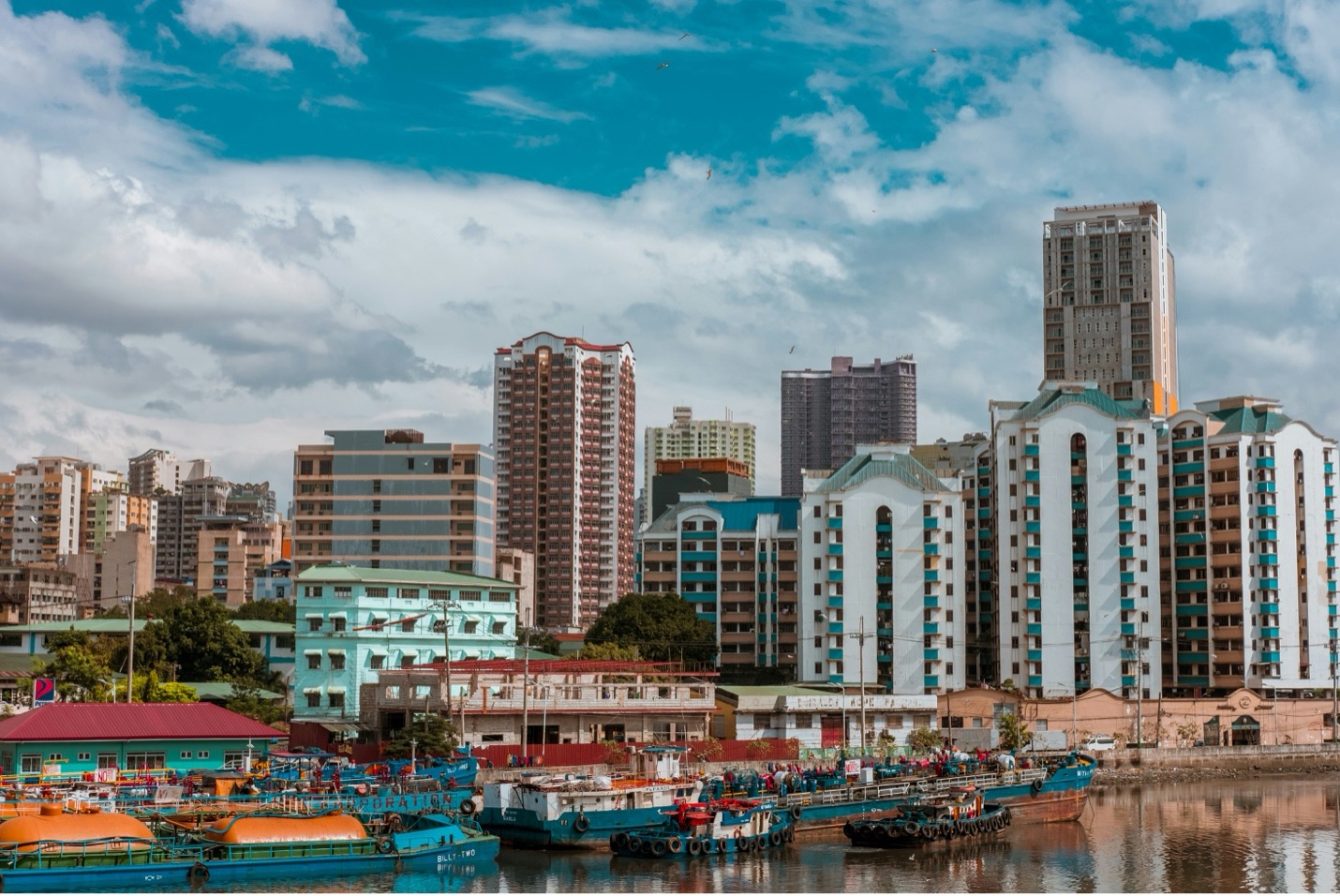
Fort Santiago, Manila, the Philippines. Credit: Unsplash/Michael Buillerey
Manila’s Energy Emergency and Calls for Regional Response
30 June 2026/7 Minutes of Reading
Introduction
The crisis in West Asia brought by the war between Iran, the United States and Israel has left Southeast Asian governments scrambling for options to secure their energy interests.
As a net importer, the Philippines is heavily dependent on energy imports from West Asia. Around 30% of the country’s primary energy supply comes from oil.
In addition to the resource dimension, the region is also home to approximately 2.5 million overseas Filipino workers (OFWs) who earn an estimated US$15b a year and send a significant portion of this income back to the Philippines as remittance.
Therefore, any disruptions to the region and supplies transiting through the vital chokepoints of the Indian Ocean would have significant consequences for the Southeast Asian nation. The Philippines is critically exposed to the strategic shifts taking place in West Asia today, given the consequential relationship between high demand and resource shortages.
With generally modest incomes in the Philippines, the cost of moving goods across the archipelago has grown exponentially.
In response, the Ferdinand “Bongbong” Marcos Jr’s administration declared a state of energy emergency on 24 March 2026.
Energy Secretary Sharon Garin confirmed on 13 April that the Philippines has approximately 60 days of in-country diesel supply. This falls short of the International Energy Agency’s (IEA) recommended 90 days of net import cover for major oil importers, leaving a narrower buffer for critical energy resources.
Furthermore, the country has limited refining capacity, with only one refinery, Petron. Consequently, the Philippines is forced to increase its dependency on refined oil products from regional suppliers, including South Korea, China and Singapore.
National Efforts amid Political Tensions
By declaring the state of energy emergency, the administration intended to mobilise the needed resources to address the unfolding crisis more effectively. However, this decision has polarised opinion among the country’s legislators.
While the president’s allies in the Senate supported the declaration – claiming it would provide Manila with more capacity to deal with socioeconomic shocks – critics, including Marcos Jr’s sister, Senator Imee Marcos, warned that such a move is merely a temporary band-aid solution that lacked a long-term consideration.
Following the declaration, Manila has embarked on a series of policies to ease the effects of the energy crisis. Indeed, the Philippines’ diverse and comprehensive policy responses across seven categories (e.g. targeted assistance, price monitoring and the pursuit of alternative trade routes, among others) have earned the praiseof the Asian Development Bank (ADB). Some of these measures are discussed below.
First, one of the government’s first courses of action was to limit workdays to four per week to conserve energy across various industries.
Second, an important dimension of the government’s assistance has been directed towards the welfare of OFWs. Currently, more than 24,000 OFWs have received aids that include financial, relocation and livelihood support.
Apart from that, over 10,000 OFWs, along with their dependents, have been repatriated from West Asia through the joint efforts of the Department of Migrant Workers (DMW) and the Overseas Workers Welfare Administration (OWWA).
However, the assistance provided to OFWs has also gained criticism from the Philippines’ Vice President Sara Duterte, who questioned the alleged lack of urgency coming from the administration in alleviating the concerns of overseas Filipinos in West Asia.
She has also leveraged various protests across the country as an opportunity to blame the Marcos Jr administration for continuously pursuing an impeachment case against her, instead of focusing on how to address rising oil prices.
Nonetheless, this has not impeded the government from moving forward with various relief efforts, partly in order to stabilise the domestic situation amid political turmoil.
Third, the government has extended support to individuals in vulnerable sectors. These include over 977,000 public utility vehicle (PUV) drivers who received assistance under the Department of Social Welfare and Development’s (DSWD) Aid to Individuals in Crisis Situation programme.
In April, the country’s Department of Labor and Employment (DOLE) and Department of Transportation (DoTr) launched the Tulong Panghanapbuhay sa Ating Disadvantaged/Displaced Workers (TUPAD) Tuloy Pasada Program, which aims to provide 15 to 20 days of income support to PUV drivers affected by high fuel costs. Targeted recipients – as many as 425,000 drivers in Metro Manila alone – received the equivalent of the regional minimum wage.
Moreover, on 27 May, the DSWD began distributing cash assistance to more than 150,000 Private Express and Messengerial Delivery Service drivers outside Metro Manila affected by rising fuel prices.
Fourth, efforts to keep food prices manageable are also ongoing, with over 402,000 beneficiaries accessing rice at PHP20 per kilogramme across 661 sites.
Fifth, in terms of oil diversification, the Philippines has also engaged in discussions with India, Japan, South Korea and Brunei to broaden supply options. Manila is also considering Russian crude imports under a temporary US sanctions waiver to bolster efforts in this area.
However, it is equally important to note the institutional and political challenges of the Philippines throughout the crisis. One can recall that – despite clear indicators in official data pointing to an increase in domestic energy insecurity – it took several weeks for Manila to admit there was indeed a crisis.
In addition, while most current initiatives are short- to mid-term solutions, there must be a more steadfast focus on long-term alternatives, particularly in the renewable energy sector.
This is one area that policymakers in Manila should seriously consider. The Philippines possesses one of the region’s most uniformly distributed solar resources, but solar power currently accounts for only 3% of electricity generation. The transport sector, in particular, remains almost entirely petroleum dependent.
Collective Regional Response
This dependency on non-renewable energy is likely to persist, and national efforts alone will not be enough to close the gaps. It is in this light that the Philippines has also turned to regional efforts to supplement its individual limitations.
The clearest illustration of this effort has been Manila’s intent to leverage its position as ASEAN chair to pursue collective action for energy sustainability in the region.
ASEAN’s latest joint statement indicates that the bloc will continue monitoring the West Asia situation and emphasises the right of transit passage in straits used for international navigation and trade. This was evident given that the Strait of Hormuz – through which over 20% of global oil supply passe – is currently constrained amid the conflict.
The document further calls for key energy-centric initiatives on petroleum security and cross-border electricity trade.
With most ASEAN Member States (AMS) being net energy importers, the region is in a reactive position in the face of such structural shocks as the Iran war. Therefore, the most practical step for ASEAN would be to invest seriously in forward-looking mechanisms that can soften the blow of threats beyond its control.
While the ASEAN Leaders’ Statement on the Response to the Middle East Crisis outlines certain initiatives, these plans will still take some time to become operational. For instance, the ASEAN Petroleum Security Agreement (APSA) is a practical framework that would allow AMS to share energy resources during times of supply chain disruptions.
In fact, the new 2025 APSA expands its scope to include natural gas, making it even more vital given the region’s high demand for the commodity. While an ASEAN declaration during the Summit called for its swift ratification, the realities on the ground are much more complex.
The varying capabilities of AMS to store, process and share energy products constitute the most significant obstacle to such an agreement materialising. Unless there is an integrated reform in each AMS’ energy sector based on the APSA it is unlikely that a collective position will be taken anytime soon, further adding to the region’s energy vulnerability.
While new initiatives have their challenges, the same goes for existing mechanisms. The ASEAN Plan of Action for Energy Cooperation (2026-2030) is an ambitious roadmap whereby AMS aim to achieve a 30% share of renewable energy in total primary energy supply and a 45% share in installed power capacity by 2030. However, due to policy heterogeneity, financing gaps, infrastructure constraints and growing reliance on fossil fuels, such ambitions will be challenging.
This is where regular evaluations from ASEAN are needed. A common problem with ASEAN mechanisms is that they lack effective, rigorous reviews, making it difficult to meet targets within specified timeframes. Thus, alongside introducing initiatives, ASEAN must prioritise thorough and regular reviews of established mechanisms – especially in the areas of energy resilience – to identify and address short- and mid-term gaps.
Conclusion
The Iran war has disrupted the global oil market and left nations exposed to bear the brunt of the costs. This crisis has led to both socioeconomic and political implications for the Philippines and the rest of Southeast Asia.
The views expressed are those of the authors and do not necessarily reflect those of STRAT.O.SPHERE CONSULTING PTE LTD.
This article is published under a Creative Commons Licence. Republications minimally require: 1) credit authors and their institutions, and; 2) credit to STRAT.O.SPHERE CONSULTING PTE LTD and include a link back to either our home page or the article’s URL.