search

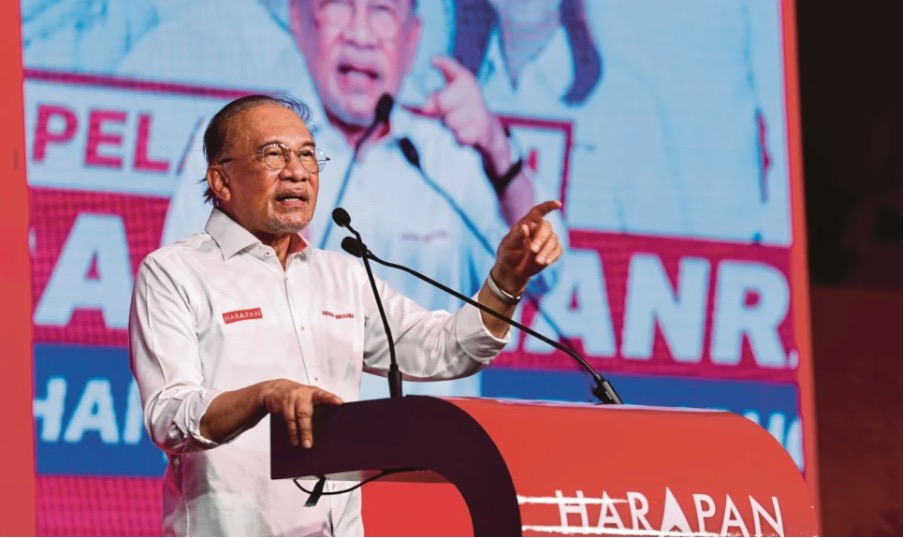
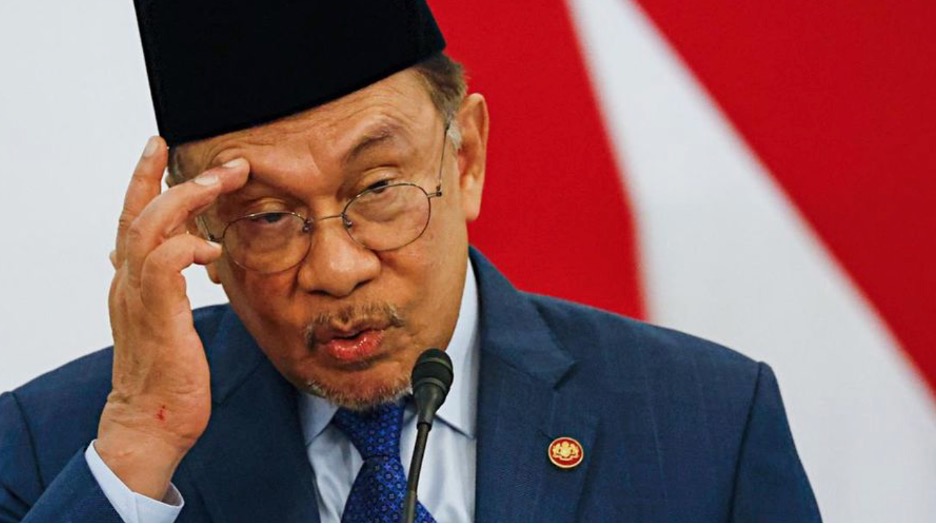
For Malaysia’s Anwar Ibrahim, the Iran war could not have come at a worse time. Credit: Bernama
Bombs Dropped in Iran Affect Anwar’s Political Survival
30 June 2026/6 Minutes of Reading
Anwar’s Confidence
A literal bomb somewhere can become a metaphorical bomb somewhere else.
It has been more than three months since Ayatollah Khamenei was assassinated and the United States launched its attempt at regime change in Iran before pivoting the war to be about opening the Strait of Hormuz and later Iran’s nuclear programme.
In Malaysia, as in many Muslim-majority countries, the so-called Iran war was another heartbreak following the seemingly endless conflicts in Gaza and Lebanon since even before 2023.
In a rare moment of unity, Malaysian members of parliament from both the government and opposition benches came together to condemn the joint US-Israel military campaign against Iran.
Yet, as the West Asian conflict drags on, a foreign policy headache becomes a calculation for political survival at home.
Prime Minister Anwar Ibrahim entered 2026 with renewed political confidence. The ringgit was the best-performing Asian currency in 2025. Muhyiddin Yassin had resigned as chairman of the opposition Perikatan Nasional, and the coalition sluggishly spent months debating his succession before finally settling on Terengganu Menteri Besar Samsuri Mokhtar of Parti Islam Se-Malaysia (PAS) as its new chairman.
At the same time, Anwar promised to deliver four major institutional reforms by the end of 2026: a term limit for the prime minister, the separation of the offices of attorney general and public prosecutor, the creation of a Malaysian Ombudsman Act, and a Freedom of Information Act.
Taken together, these developments gave the impression of a government with momentum.
Unfortunately, the first major setback arrived on 2 March 2026 when the constitutional amendment to limit the prime minister’s tenure to 10 years fell two votes short of the required two-thirds majority in Parliament. It was the first significant dent in what had seemed like a smooth path towards a second term.
Energy Shock
The second challenge proved far more serious. As the Iran war intensified, global oil and gas prices surgedfollowing disruptions to energy supplies caused by the closure of the Strait of Hormuz and attacks on regional oil and gas infrastructure.
Malaysia was not immune to the impact. While Anwar celebrated the successful passage of seven Malaysian vessels through the strait in early April, the broader consequences of the energy crisis quickly became apparent. The ensuing energy shock – displayed through rising petrol prices – has had a greater impact on Malaysian politics than the foreign policy dimension of the Iran war.
This is because voters rarely punish governments for failing to stop wars abroad, especially a middle power such as Malaysia, but they often punish governments when the cost of living rises at home.
The political problem for Anwar is that the energy crisis arrived just as his government had begun implementing a petrol subsidy rationalisation programme called BUDI95, which allows Malaysians to benefit from subsidised 300 litres (initially) of RON95 petrol per month.
Part of Pakatan Harapan’s reform agenda was to ensure that fuel subsidies were targeted towards those who genuinely needed assistance rather than benefiting wealthy households, a problem found during years of blanket fuel subsidies. Former premier Najib Razak floated petrol and diesel prices in 2014, but a decade later, the top 20% of income earners continued to receive approximately 53% of the total subsidy benefits.
No government has fully dismantled a subsidy that had become deeply embedded in the expectations of Malaysian voters. Instead, the policy that the Anwar administration pursues is to place a cap on the subsidised price of RON95 at RM1.99 per litre.
That decision, however, may prove one of the government’s biggest political mistakes.
Once RM1.99 is established as the benchmark for “affordable” petrol, any increase above RM2.00 will leave a significant psychological imprint and, with it, considerable political consequences.
It does not matter that consumers would still be paying below market rates or below prices paid in neighbouring countries. Politically, crossing the RM2 threshold would feel like a price hike.
The result is that Anwar now faces a dilemma entirely shaped by political timing. When BUDI95 was introduced in September 2025, Malaysia’s fiscal health looked good. However, the ongoing crisis has forced the government to pay up to RM7b per month just for fuel subsidies.
Instead of removing the subsidy altogether and replacing it with a targeted cash transfer programme, the government took the less politically risky route of cutting the allocation from 300 to 200 litres of subsidised petrol per month per Malaysian.
The reason? Malaysia is entering election season.
Everything Changes
Before the start of the war, there was widespread speculation that Anwar might call a snap general election in the second half of 2026. Eid al-Adha has since come and gone, yet Malaysians remain uncertain about whether a general election is on the horizon.
Perceptions, rather than economic fundamentals, often determine the outcome of elections. Even if Malaysia’s macroeconomic indicators remain relatively healthy, voters are unlikely to reward a government that presides over rising inflation, especially when today’s rate is at its highest since October 2024.
Meanwhile, events at the state level have begun moving independently. On 1 June 2026, Johor dissolved its state assembly. Less than a week later, Negeri Sembilan followed suit after months of political tension surrounding the status of the Yang di-Pertuan Besar and disagreements with the state’s Undang (customary chiefs).
Ironically, earlier in the year, most observers assumed Malacca would be the first state to head to the polls because its assembly term expires before the others. Instead, the state government has insisted that it wants to complete several policy initiatives before considering dissolution.
Anwar has adopted a similar position. When asked about the possibility of a snap election, he repeats that now is not the right time and that he is “focusing on [his] job”.
This is where the bombs falling on Tehran begin creating political bombs in Kuala Lumpur. If Anwar calls a general election now, critics will ask why the government is spending millions on an election while simultaneously spending billions to cushion the impact of rising fuel prices. Yet if he refuses to call a general election, another criticism emerges. Why hold multiple elections separately and incur even greater costs?
There is, at present, no politically comfortable answer. The Election Commission’s decision to hold the Johor and Negeri Sembilan state elections three weeks apart on 11 July and 1 August, respectively, has invited criticism, including from within the Unity Government.
As long as Anwar postpones a general election, meaningful subsidy reform becomes politically dangerous.
Malaysia remains heavily dependent on private vehicles. In the Klang Valley especially, cars are a necessity. Any attempt to significantly reduce subsidies risks provoking backlash among middle-class voters who already feel squeezed by rising living costs.
Many economists have long argued that fuel subsidies continue to disproportionately benefit middle- and upper-income households because they consume more fuel. However, cutting subsidies from the top 20% of earners may not produce the political or fiscal impact policymakers hope for. Many wealthier Malaysians are already transitioning to electric vehicles and becoming less dependent on petrol subsidies altogether.
Anwar’s challenge is balancing fiscal responsibility against electoral survival, and that calculation is increasingly dependent on a variable over which he has no control: the global price of crude oil.
Thus, will Malaysia hold a general election in the third quarter of 2026?
At this point, it seems unlikely. Following resumed attacks on all sides in the second week of June, it has been announced that a peace deal has been agreed and confirmed by both the United States and Iran. As negotiations continue and prices of crude oil fall, the government has announced a revised diesel subsidy that could reduce national spending by RM2b annually. However, Economy Minister Akmal Nasrullah Mohd Nasir pointed out that restoring global oil supply to the pre-war global level would take time.
Anwar may not have time.
Political Survival Before Fiscal Discipline
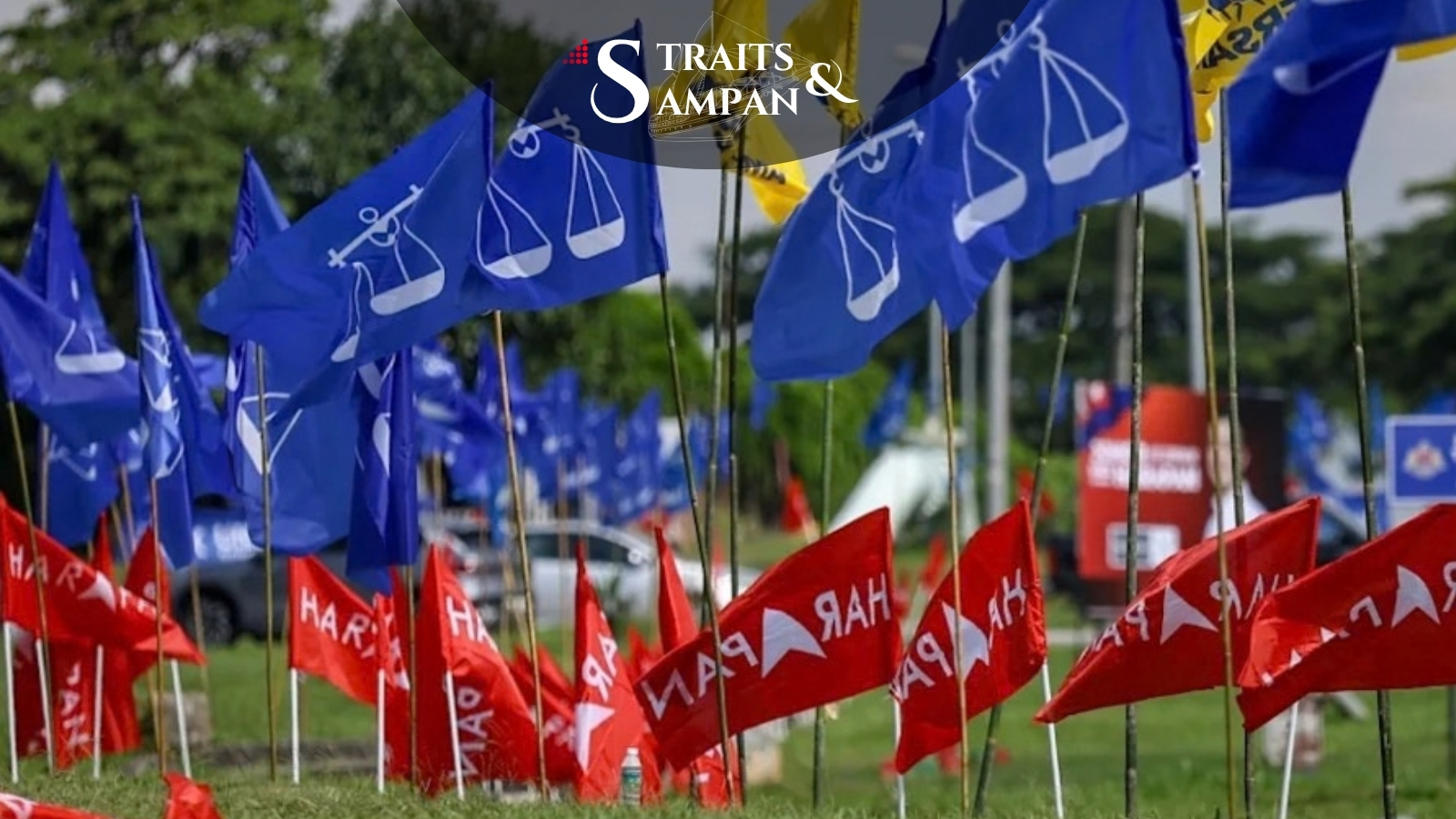
Anwar may prefer to wait and observe the outcomes of the Johor and Negeri Sembilan state elections first. The stakes are particularly high because Barisan Nasional and Pakatan Harapan have chosen to contest separately.
If Pakatan manages to defend its existing support bases, Anwar may regain confidence and consider a general election in the fourth quarter of 2026, perhaps after tabling Budget 2027 and announcing additional assistance for households affected by rising costs.
If, however, Pakatan performs poorly, the government may decide that absorbing a larger budget deficit is preferable to risking an early election defeat.
Anwar’s greatest political challenge in 2026 may not come from Samsuri Mokhtar, Muhyiddin Yassin or any opposition leader. It may come from events taking place thousands of kilometres away in the Strait of Hormuz and the broader West Asia.
For decades, Malaysian politicians have treated petrol subsidies as a domestic policy issue. The Iran war demonstrates that they are also a foreign policy issue. The price Malaysians pay at the petrol station is no longer determined solely in Putrajaya but increasingly by decisions made in Tehran, Washington, Tel Aviv and global energy markets.
Whether Anwar calls a general election this year may ultimately depend less on developments in Johor or Negeri Sembilan than on those in West Asia. After all, in politics, survival usually comes before fiscal discipline.
The views expressed are those of the authors and do not necessarily reflect those of STRAT.O.SPHERE CONSULTING PTE LTD.
This article is published under a Creative Commons Licence. Republications minimally require: 1) credit authors and their institutions, and; 2) credit to STRAT.O.SPHERE CONSULTING PTE LTD and include a link back to either our home page or the article’s URL.