search


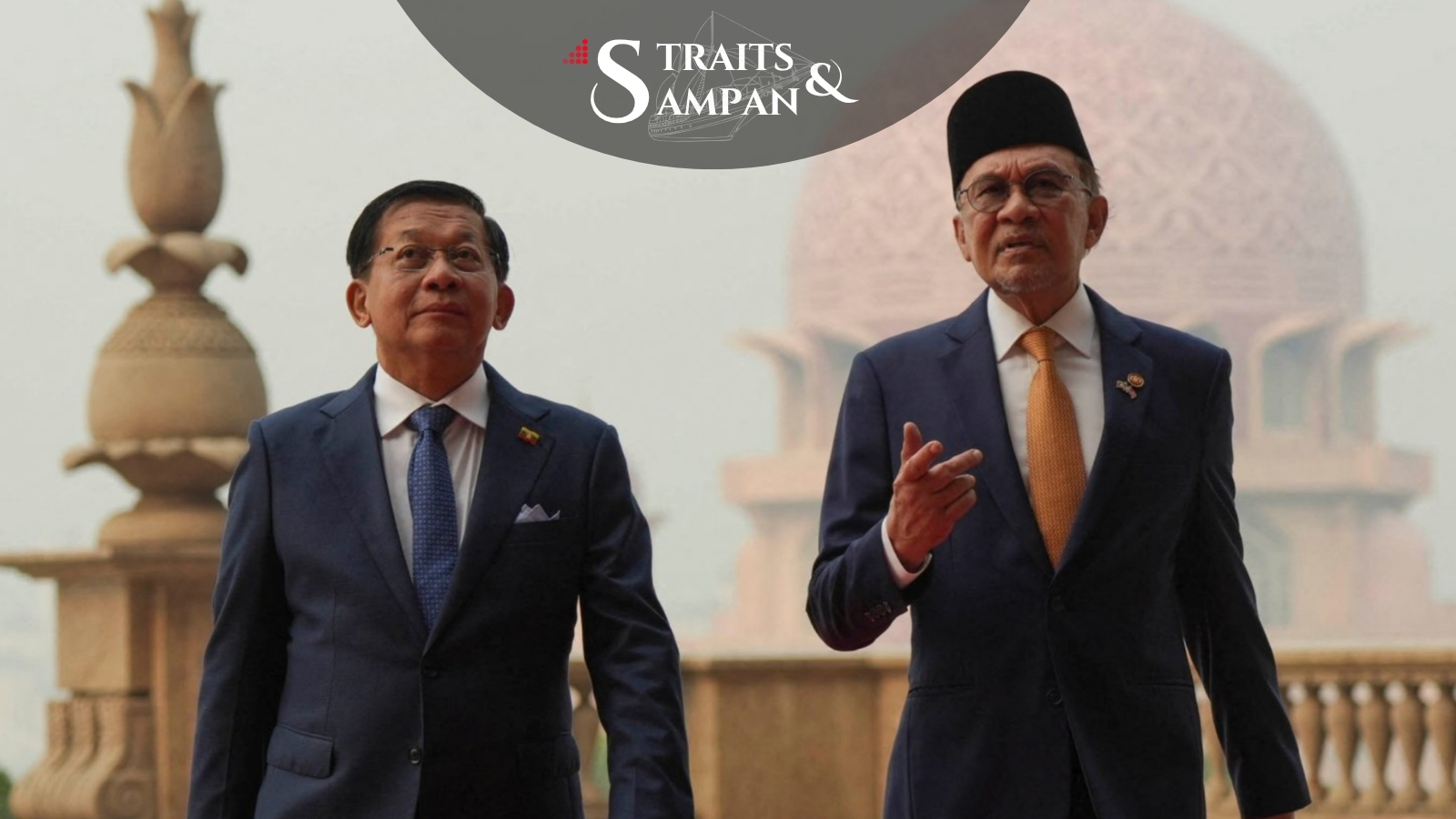
Prime Ministers Xanana Gusmao and Anwar Ibrahim at the 46th ASEAN Summit in Kuala Lumpur. Credit: Mohd Rasfan/Associated Press
What Does an ASEAN Membership Mean for Timor-Leste?
- October 14, 2025
- 7 minute of reading
Opening Doors
Timor-Leste is set to become a full member of ASEAN at the 47th ASEAN Summit in Kuala Lumpur this October, terminating its longstanding accession process.
While there is an air of optimism and positive expectation – at least from the official perspective – the general reaction is more subdued. There is an uncertainty as to how an ASEAN membership can contribute to Timor-Leste’s development and improve the wellbeing of its people.
Since its formal application in 2011, Timor-Leste has been consistent and certain about opportunities and potential for development brought forth by an ASEAN membership based on economic and sociopolitical calculations.
To begin with, Timor-Leste sees that the region’s economic trend has been on an increase, from an economy valued at US$24 billion in 1967 to the fourth largest economic bloc with US$4.13 trillion of GDP in 2024, spurred by trade and foreign direct investment (FDI). This is further reinforced by the fact that ASEAN hosts a massive market (676.6 million people in 2023) that can open doors for new businesses, transfer of knowledge and technology, as well as employment opportunities.
With further growth to be achieved by tapping into other potential areas, including blue and digital economies, ASEAN offers boundless prospects for Timor-Leste.
Along with its vast market, the cultural diversity of the region provides a unique opportunity for Timor-Leste to showcase its unique culture and arts, giving more chances for the locals to connect with their regional peers to initiate, grow and expand businesses in this sector.
Such exposure would not only contribute to the local economy but also promote and strengthen people-to-people relations, providing a platform for the grassroots-driven development, which is also emphasised in the desired outcomes of ASEAN Master Plan on Rural Development. For Timor-Leste, strong people-to-people relations with immediate neighbouring countries is vital for its survival.
Furthermore, a small country like Timor-Leste cannot afford to navigate the dynamics of today’s world politics without being part of a regional bloc. With somewhat strained relations with Australia due to an ongoing dispute over the development of the Greater Sunrise oil field in the Timor Sea, it is in Timor-Leste’s best interest to join the bloc.
ASEAN could offer a safety net, allowing Timor-Leste to stand its ground in its engagement with Australia. An ASEAN membership provides the cushion needed for Timor-Leste to assume a strong stand regarding development options for the Greater Sunrise field, affording it an alternative route for economic gain and protecting it from possible threats to its security.
On that note, joining ASEAN would also erect a degree of barrier that protects Timor-Leste from menaces emanating from neighbouring countries.
Timor-Leste is well aware that Southeast Asia’s landscape can be unpredictable and susceptible to conflict, as evidenced by the recent armed confrontation between Cambodia and Thailand and the ongoing civil war in Myanmar. Therefore, by becoming a member, Timor-Leste could shield itself from such disturbances extending to its shore.
Downsides
The benefits discussed above have merits and provide rationales for the country to join the regional bloc. However, with the accession taking place only in a matter of days, Timor-Leste must also ready itself for the challenges that will come with that membership.
Chief of that is Timor-Leste’s economy. In the last two decades, Timor-Leste has continued to rely on the money generated from its oil revenue, which has been administered through the Petroleum Fund (PF). However, the sovereign fund is under serious risks, as withdrawals from 2009 up to 2025 – flagged to finance the state’s spending – have exceeded the Estimated Sustainable Income (ESI).
According to PF’s Annual Report 2024, receipts from oil and gas since its inception amount to US$25.45bn, of which US$17.413bn, or 68% of the total, has been transferred to the state budget.
However, to date, Timor-Leste still struggles to enact a trickle-down economy, as development has not fully reached the remote parts of the country, where 71.4% of the population live. Consequently, the country remains dependent on oil revenue, a public expenditure-driven economy that lacks diversity in its portfolio.
This situation, in return, contributes to an urban-rural divide, which is signified by a higher incidence of poverty in rural areas compared to urban areas. This also means that there is still limited access to basic services and economic opportunities for the majority of the people living in the rural areas.
Timor-Leste, as such, continues to heavily rely on imports – including for agricultural products – and when becoming an ASEAN member, it will put more pressure on farmers due to their inability to compete with more advanced counterparts in the region.
Worse, based on the 2022 census, 38.6% of the working-age population in rural areas have no schooling at all. If we include those that completed up to lower secondary education, the figure stands at 92.1%. This indicates a low level of educational attainment, exposing the reality that the country is far from ready to absorb the benefits that come with an ASEAN membership.
Timor-Leste, recently, has approved a number of legal instruments to comply with ASEAN requirements and conducted various capacity-building activities to prepare itself for the membership. Once it officially becomes a member, Timor-Leste must expect an increased movement of people, goods, services, investment and capital due to the ASEAN single market and production base principle.
However, a free flow of people, goods and services could expose Timor-Leste to security risks. A recent United Nations Office on Drugs and Crime (UNODC) report gives a concrete example that Timor-Leste is vulnerable to attack from organised crime networks that use sophisticated schemes. These include the use of FDI to set up infrastructure for criminal activities and the exploitation of citizenship-by-investment schemes to carry out their criminal operations.
It also reveals that Timor-Leste does not yet have adequate legal and security systems in place to fight against organised crimes. Its regulatory environment remains weak, while its digital infrastructure and cybersecurity continue to be below average. With 42% of its people living under the poverty line, a lack of employment opportunities and an absence of a strong accountability mechanism, an ASEAN membership has the potential to expose Timor-Leste further to the risks of organised crimes from outside the country.
Backlash from ASEAN members is a potential, too.
Over the years, Timor-Leste has set itself apart through its democratic credentials, which have become its source of pride. This is supported by the assessment of Freedom House , which has rated Timor-Leste as “free” in 2025 with strong scores for political rights and civil liberties. In fact, in the Southeast Asia region, only Timor-Leste is rated as “free”, showing that it stands above others when it comes to upholding freedom and democracy.
This, however, might put Timor-Leste at odds with the rest of the grouping. For example, Timor-Leste’s charge d’affaires was expelled from Myanmar due to a meeting held between the Timor-Leste government and the minister of human rights of the National Unity Government (NUG). The Timor-Leste government has also spoken out against human rights violations and the atrocities that have taken place in Myanmar.
Such backlash could be more frequent when Timor-Leste becomes an ASEAN member due to the ASEAN principles of non-interference, quiet diplomacy and consensus-based decision-making. Timor-Leste has a choice to make in terms of keeping the prestige of maintaining its status as the most democratic country in the region or adhering to the bloc’s principle. Clearly, it cannot expect to have it both ways.
Conclusion
In the end, Timor-Leste must recognise that becoming an ASEAN member would not automatically translate into its growth. Nevertheless, it must prepare itself better to take advantage of the opportunities presented by it. Development is a long-term endeavour, and it must be initiated from within. For Timor-Leste, there is an urgent need to shift the paradigm towards development that is driven by science and backed by solid knowledge. Timor-Leste must also improve the quality of its human resources in terms of technical capacity and integrity. These two aspects will form the foundation for future development of the country, with or without ASEAN.
The views expressed are those of the authors and do not necessarily reflect those of STRAT.O.SPHERE CONSULTING PTE LTD.
This article is published under a Creative Commons Licence. Republications minimally require 1) credit authors and their institutions, and 2) credit to STRAT.O.SPHERE CONSULTING PTE LTD and include a link back to either our home page or the article URL.