search


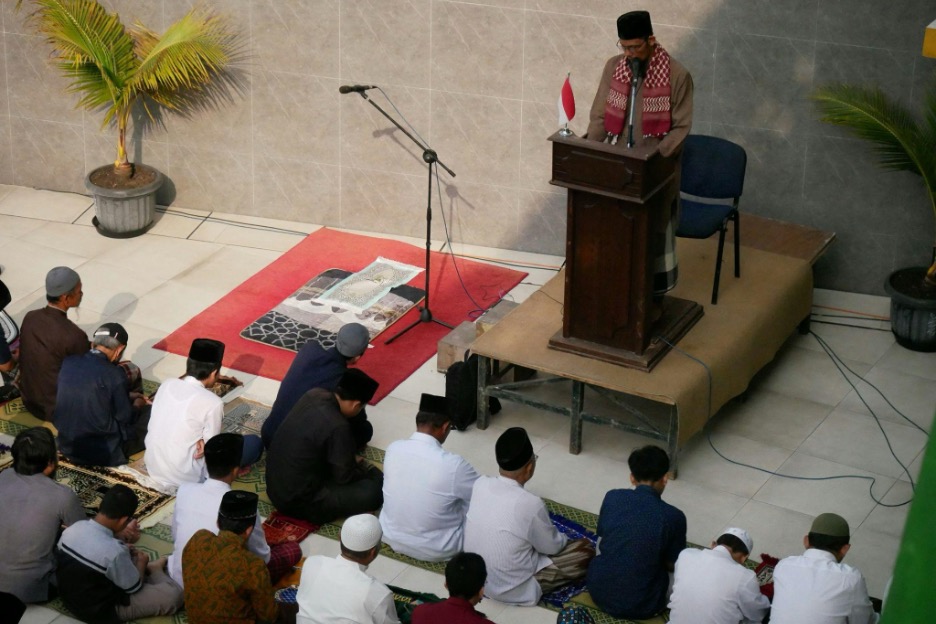
Can Malaysia bridge the gap between youth policy aspirations and real-world outcomes? Credit: Unsplash/NHN
Costing, Continuity and Outcomes: Malaysia’s New Youth Policy
4 September 2026/6 Minutes of Reading
Introduction
Malaysia adopted its first national youth policy framework in 1985, more than a decade after it was first proposed by students of Universiti Malaya.
More than four decades later, the country has produced successive policies, plans and national transformation exercises intended to prepare young Malaysians for social and economic change. Among them was Transformasi Nasional 2050 (TN50) – launched at Universiti Malaya in 2017 before about 500 youth leaders – which was formulated after a wide-scale public consultation exercise across the country.
Sadly, TN50 was discontinued after the change of government in 2018.
While not a policy in itself, the fate the befell TN50 illustrates a recurring problem: consultation can be extensive while institutional continuity remains fragile.
The recently introduced Malaysian Youth Development Action Plan 2035 (PBM 2035) should therefore be approached from within this context. This formal document will be a test for the Unity Government to prove that Malaysia can move forward from the production of youth policy to measurable implementation.
The document also has regional significance. ASEAN’s new Work Plan on Youth 2026-2030 explicitly calls for a shift from event-based activity towards integrated, programmatic and outcome-oriented approaches. Malaysia’s experience, therefore, may offer lessons for other Southeast Asian governments making the same transition.
Policy Lineage
Malaysia’s youth policy architecture has evolved through several stages.
The 1985 policy used a broad youth age range of 15 to 40. The 1997 National Youth Development Policy placed greater emphasis on holistic development and participation. The Malaysian Youth Policy adopted in 2015 narrowed the statutory definition of youth to ages 15-30, a change that became operational in 2018.
The Malaysian Youth Policy was followed by the Malaysian Youth Policy Action Plan 2030 and a youth socioeconomic development plan.
Today’s PBM 2035 sits alongside the 13th Malaysia Plan and extends the planning horizon by another decade. Rather than a complete policy reset that breaks away from past instruments, the document is better understood as an accumulation of frameworks introduced before.
Policy layering is not necessarily a weakness. New plans can refine earlier commitments. The difficulty arises when the public cannot readily see which earlier targets were achieved, which were abandoned and which have simply been renamed.
Without a published evaluation chain, each new document risks becoming its own starting point.
Implementation Gap
PBM 2035 makes an unusually candid observation: the 2015 Malaysian Youth Policy did not initially have an action plan. That admission helps explain why broad aspirations were difficult to translate into coordinated programmes, budgets and accountability.
It should not, however, be read as proof that nothing was implemented. Agencies and youth organisations continued to run programmes, and later plans attempted to provide operational direction. A 2022 study of the Malaysian Youth Council, nevertheless, found uneven understanding and implementation among one important stakeholder group. Its scope was limited, but its conclusion reinforces the need for clearer coordination and monitoring.
The central question is therefore not whether activity occurred. It is whether activity can be connected to national objectives, financed consistently and evaluated over time. PBM 2035 makes progress on the first part of that problem but leaves the other two only partly resolved.
Improvements
Compared to earlier high-level policy statements, PBM 2035 is more operational. It organises interventions around seven strategic cores, identifies target groups, assigns lead and supporting agencies, and includes implementation risks.
Its programme matrix gives administrators a clearer view of responsibility than a purely aspirational policy would.
The Plan also recognises that “youth” is not a single, uniform category. Young people differ by geography, disability, education, income, employment status and exposure to social risk. Identifying target groups creates the basis for more precise intervention.
These are meaningful improvements. They should be acknowledged because effective policy review is not a choice between endorsement and rejection. The more useful task is to identify what the Plan has strengthened and what still prevents it from becoming an accountable delivery instrument.
The Missing Costing Framework
However, PBM 2035 still has a few issues.
The first one is financing. PBM 2035 identifies activities and institutional responsibility but does not present a consolidated public costing framework linking programmes to estimated expenditure, funding sources and annual disbursement.
Some activities may be funded through existing agency budgets, while detailed allocations may appear elsewhere. The Plan itself does not make that relationship easy to trace.
This matters because a lead agency column is not the same as an implementation commitment. Without transparent costing, it is difficult for Parliament, CSOs or youth organisations to distinguish a funded programme from an administrative intention. It also becomes harder to judge whether resources are distributed according to need.
A practical solution: the government must conduct an annual public delivery statement. For each major intervention, the Ministry of Youth and Sports (KBS) could report the approved allocation, expenditure, implementing partners, geographic coverage and beneficiaries.
This would not require every youth programme to be centralised; it would, instead, require the overall portfolio to be visible.
From Attendance to Outcomes
The second issue concerns measurement.
Many PBM 2035 indicators count programmes, participants, institutions or access points for monitoring delivery, but they do not by themselves show whether young people became more employable, healthier, safer, financially resilient, or more involved in public life.
Malaysia already has tools that could support stronger outcome measurement. The Institute for Youth Research Malaysia (IYRES) publishes the Malaysian Youth Index, which covers multiple domains of youth wellbeing, and the Malaysian Youth Mental Health Index.
These instruments are not perfect, but they provide a starting point for baselines, trend analysis and subgroup comparison.
A stronger monitoring framework should combine output indicators with outcome indicators. Programme participation could be reported alongside employment retention, wage progression, educational completion, mental health measures, civic participation or other relevant results. Data should also be disaggregated where possible by sex, age, state, urban-rural location, disability and socioeconomic background.
Regional Comparison Matters
ASEAN’s youth agenda is moving in the same direction. The ASEAN Youth Development Index encourages member states to assess youth development across comparable domains rather than relying solely on the number of activities delivered. The 2026-2030 Work Plan goes further by emphasising continuity, scale and impact.
This does not mean national policies should be standardised. Southeast Asian countries differ greatly in demography, institutions and fiscal capacity. However, this is an opening for Malaysia to further improve PBM 2035, based on the suggestions in this piece, and propose it as a regional standard that depicts the linkages between activities, budgets and outcomes. Transparent reporting would also make cross-country learning more credible.
For ASEAN readers, Malaysia’s case highlights a broader governance question: how can long-term youth strategies survive electoral turnover and administrative restructuring without becoming detached from democratic accountability? The answer is not to insulate policy from politics entirely, but to establish enough public evidence that changing or discontinuing a programme requires explanation.
What Happens Next
Three reforms would give PBM 2035 a credible accountability structure.
First, make the Malaysian Youth Index the Plan’s principal outcome measure. Youth and Sports Minister Dr Mohammed Taufiq Johari has announced that the Index is entering a new transformation and primary-data phase for 2026-2030. This creates an opportunity to connect the Index directly to PBM 2035 rather than treating it as a separate research exercise.
KBS should publish a baseline and report progress annually by state, income group, sex, disability, urban-rural location and community, subject to appropriate privacy safeguards. The 13th Malaysia Plan already records an increase in the Malaysian Youth Index from 68.30 in 2020 to 73.59 in 2024 and sets a target of 75 by 2030. PBM 2035 must show who benefits from that improvement and who remains behind. A national average can indicate progress; it cannot prove inclusion.
Second, publish the cost. PBM 2035 identifies programmes and responsible agencies but provides no consolidated public account of their estimated cost, funding source or annual allocation. A 10-year plan cannot fix every expenditure in advance, but it must distinguish funded commitments from programmes expected to be absorbed into existing budgets and aspirations dependent on future financing.
KBS should also publish estimated allocations and actual expenditure for each programme annually. PBM 2035 involves 65 programmes across 35 ministries, departments and agencies, but it does not provide a consolidated programme-level costing framework.
Transparent financial reporting would allow the Parliament and young Malaysians to distinguish between inadequate financing and weak delivery. Without it, a 10-year plan risks becoming a wish list with an implementation table attached.
Third, give the midterm review an independent custodian. KBS leads 24 of the Plan’s 65 programmes while also being the principal coordinator and leads the Youth Dashboard initiative used for monitoring.
This is an institutional weakness, not an allegation of misconduct; it is a question of institutional design. A ministry responsible for delivering a substantial share of the Plan should not be its sole evaluator.
The mid-term review should therefore be conducted by an independent, multi-stakeholder panel involving IYRES, universities, youth organisations, civil society and relevant public agencies. Its methodology, financial evidence and findings should be published in full.
IYRES’s own Strategic Plan 2026-2030 recognises the need for policy evaluation and evidence-based youth development; the next step is to give that evaluation sufficient institutional distance.
After 40 years, Malaysia should no longer be satisfied with proving that youth programmes were conducted. It must prove that young lives have indeed changed.
PBM 2035 is more detailed than many of its predecessors and deserves recognition for that progress. But its legacy will not be determined by the number of programmes launched, meetings held or participants counted. It will be determined by whether Malaysia can identify who advanced, who was left behind, what was spent and whether the government is prepared to publish the evidence.