search

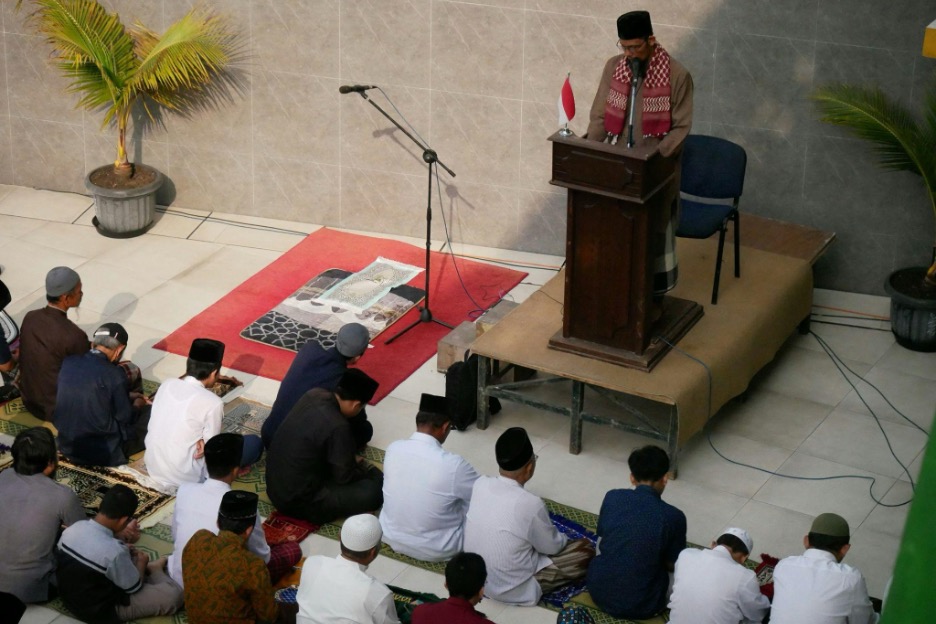
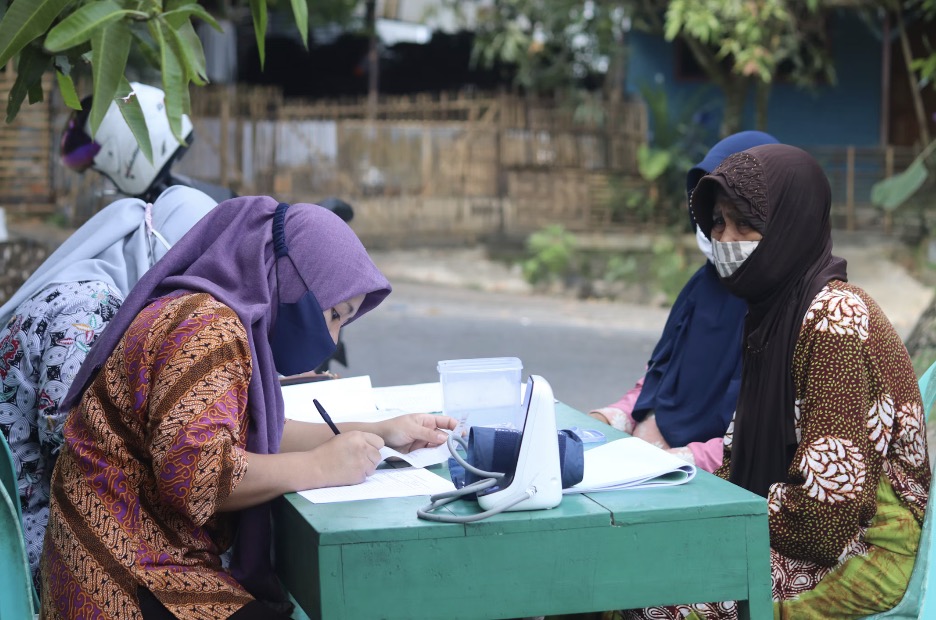
A khutba in a local mosque. Credit: Masjid Pogung Raya/Unsplash
Data Jihad
16 October 2026/5 Minutes of Reading
Introduction
For a religious group, Muhammadiyah’s stance on AI and technology breaks the pattern. In January this year, it released a statement affirming that AI is a neutral tool that has humanitarian values.
Indonesia’s second largest Muslim organisation is bucking the conservative trend that rejects modernity and technological advancement, rooted in the belief that they are not in line with Qur’anic values and the Ummah spirit.
Some in the organisation even call for a “data jihad” aimed at building a sound digital ecosystem to help Muslims respond to global algorithmic dominance.
Muhammadiyah’s standing deserves a closer look, especially due to its stark contrast to the Catholic Church’s scepticism towards AI.
With its membership numbering tens of millions in Indonesia, Muhammadiyah – like its fellow Islamic group Nahdlatul Ulama – shapes the religious, political and sociocultural outlooks of its members. Its stance on AI, thus, has a bearing on a large portion of Indonesian society.
Facing AI
The proliferation of AI has become the newest challenge for religious groups in the digital era, precipitating the rise of influencer-preachers and threatening to reduce their relevance among urban Muslims. This means the consequences of AI’s advent lie beyond just the technological domain; it also touches on how religious knowledge is produced, circulated and received in the near future.
Research finds that while both Nahdlatul Ulama and Muhammadiyah see AI as a challenge to religious authority, their responses differ. Although they are cautious about using AI to answer religious questions, this does not mean they reject AI altogether. In practice, both have started incorporating AI into their digital activities.
Nahdlatul Ulama, for instance, has adopted Siskader, Kitab AI and Pandai AI. Meanwhile, Muhammadiyah has Chat HPT and AI-based service tools.
The divergence can be seen in their respective reactions towards generative AI, such as ChatGPT, and computational AI designed for more specific tasks.
Nahdlatul Ulama’s position illustrates this distinction clearly. In its 2023 National Conference of Ulama, the organisation ruled that AI-generated answers should not be treated as a basis for religious rulings or fatwas, citing concerns over hallucinations, bias, and the lack of human judgement behind AI-generated responses.
Yet this caution does not translate into a rejection of AI itself. At its recently concluded congress, the organisation used a chip- and AI-based system developed with the involvement of santri to verify participants, track their participation, and support the management of the event.
This demonstrates Nahdlatul Ulama’s willingness to use AI as an administrative and technical tool without giving it authority over religious judgement.
Muhammadiyah, on the other hand, approaches the issue through its tradition of tajdid (renewal). Rather than treating AI primarily as a theological threat, the organisation frames it as an emerging reality that must be engaged responsibly.
Muhammadiyah has already used computational technologies for religious purposes, including astronomical calculations related to the Islamic calendar, while developing ethical guidelines for broader AI use at the same time.
It holds onto its central principle al-mas’uliyyah (human accountability) in its approach to AI. The principle maintains that, because AI has no moral agency of its own, responsibility remains with the humans who develop or use it.
These different approaches converge on one point. AI may expand the capacity to access, process and distribute religious knowledge, but technological capability does not automatically translate into religious authority.
Therefore, for Indonesia’s Islamic groups, the challenge is less about stopping AI from entering religious life; it is more about determining where its utility should end and human judgement should remain.
Empowering Muslims?
In a wider goal of achieving empowerment for Indonesian Muslims, Vice Chairman of the Central Executive Board of Muhammadiyah’s Council for Libraries and Information Ismail Fahmi recognises that his organisation must take the initiative by uploading their knowledge base online so AI can base its religious recommendations on Muhammadiyah’s own database.
His call for a “data jihad” is also complemented by other proposed initiatives such as developing Muhammadiyah’s school network as a hub for digital talent, implementing anticipative itjihad (independent reasoning) through a creation of a new majlis (council) within the organisation to answer future challenges, and even adopting technology-based reform for waqf.
On the other hand, Majelis Ulama Indonesia (Indonesian Ulema Council – MUI), a semi-official religious authority, has a more conventional approach to this goal.
It organised an Islamic AI workshop last July aimed at creating new digital mujahids with their own AI prompt bank and ready-to-publish materials designed to amplify messages of Islam that are moderate and enlightening.
Furthermore, a local MUI branch in East Java has taken similar initiatives by developing AI Mu’awin, a digital assistant designed to provide easy access to MUI’s fatwas and curated Islamic knowledge.
As a localised agentic AI, Al-Muawin is insulated from typical algorithmic hallucinations because it is trained exclusively on a curated database of fatwas and Islamic texts.
By designing the AI explicitly as a mu’awin (assistant), MUI ensures the technology aids knowledge retrieval without usurping the authoritative role of human scholars.
However, despite all of this optimism, some quarters have raised concerns about the potential drawbacks.
Prof Mohammad Nur Rianto Al Arif from Syarif Hidayatullah State Islamic University cautions about the risks of distorting religious teachings due to oversimplification, algorithmic bias and information manipulation.
Nur Rianto also warns about the digital literacy gap among Muslim organisation cadres. Not all preachers, teachers or activists have adequate skills to make use of digital technology, let alone AI.
Persatuan Islam (Islamic Union – PERSIS), another large Islamic group, has different concerns. In an official statement, the group demands that the government pursue AI governance that not only promotes innovation but also protects children’s rights.
This stems from the worry that AI could expose children to various threats, including pornographic content, violence, online gambling, cyberbullying, digital exploitation and even false information generated using AI technology.
Despite this, PERSIS echoes its fellow organisations in its sentiment towards AI as a neutral tool and the key role of humans in preventing its harm.
Future Prospects
The above depiction shows that AI reception is particularly mixed among religious groups. This, however, is no ground to outrightly dismiss AI.
AI can democratise access to learning the Qur’an and other aspects of Islam, facilitated by religious experts from these organisations. This could help reduce one-sided interpretations of Islamic teachings, particularly for vulnerable individuals who have no access to Islamic authorities, or as an option for time-constrained urban Muslims seeking religious enlightenment.
At the same time, the growing popularity of AI presents an opportunity to make religious learning more relevant and accessible to new demographics, particularly young people, technology enthusiasts, and other digitally engaged audiences.
By engaging with AI and emerging digital technologies, Islamic institutions can meet their audiences where they already are and introduce religious knowledge through formats and platforms that resonate with their everyday experiences.
However, their growing adoption of AI does not mean that these organisations have solved the challenges it brings. In fact, using AI to strengthen religious services may create new problems of its own.
One concern is technological dependence. Initiatives such as the proposed MUI GPT show that Islamic institutions are beginning to build AI tools around their own religious knowledge.
But having control over the data does not necessarily mean having control over the technology itself. The systems may still depend on external models, computing infrastructure, and technical expertise that may adopt ideologies or worldviews contradicting Islam.
There is also a risk in making AI too closely tied to a single organisation’s interpretation of Islam. A system trained mainly by one institution’s framework may make its own interpretation easier to access while giving less visibility to other legitimate views.
This matters because AI can produce answers that sound convincing even when it fails to acknowledge disagreement among scholars, context or individual circumstances.
A study on AI and Islamic jurisprudence finds that AI systems performed better at retrieving and organising existing sources than at dealing with conflicting interpretations or questions requiring contextual judgement.
The problem could become even more serious as AI-generated religious content becomes harder to distinguish from genuine religious communication. Recent research in Indonesia has documented how AI can be used to create fake clerical voices, religious symbols and persuasive narratives, potentially weakening trust in established religious authorities.
Ultimately, the question facing Indonesia’s Islamic organisations is not whether AI should be embraced or resisted, but how it can be incorporated without allowing the technology to redefine religious authority on its own terms. Their growing efforts to build, regulate and use AI show that these organisations are not simply reacting to technological change; they are trying to shape how it enters Muslim life.
Yet this effort will remain incomplete if access to technology comes at the cost of human judgement, intellectual diversity or critical engagement. AI may help Islamic institutions remain relevant in a changing digital landscape, but its value will ultimately depend on whether they can ensure the technology serves their communities without allowing convenience to become a substitute for knowledge and authority.
The views expressed are those of the authors and do not necessarily reflect those of STRAT.O.SPHERE CONSULTING PTE LTD. This article is published under a Creative Commons Licence.
Republications minimally require: 1) credit authors and their institutions, and; 2) credit to STRAT.O.SPHERE CONSULTING PTE LTD and include a link back to either our home page or the article’s URL.