search



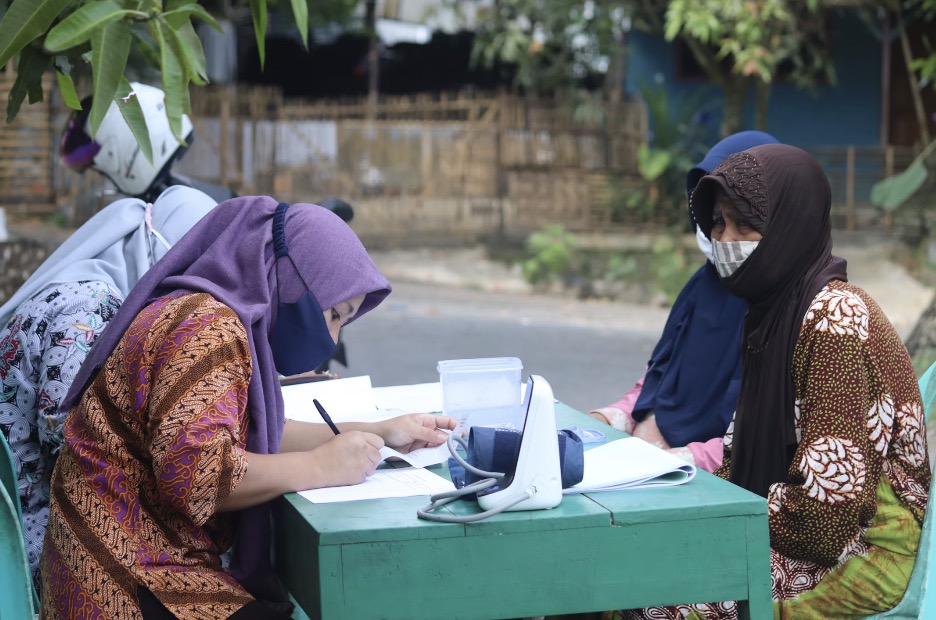
The author during fieldwork in Nepal, 2024. Credit: Author’s collection
Behind the Promise (II): A Guide for Nepali Migrant Workers Entering Malaysia
21 October 2025/8 Minutes of Reading
Prelude
Behind the Promise is a two-part series developed with a rights-based and people-centred approach to migration reporting. Part II of this series is a compilation of perspectives of Nepali migrant workers and responsible recruiters in the Nepal-Malaysia corridor. They believe in empowering migrant workers to be informed and support them in navigating the recruitment system, including the situations that lead some of them to abscond once they arrive in Malaysia.
“…every promise is backed by proof, not pressure.”
Introduction
For decades, Malaysia has been one of the most popular destinations for Nepali migrant workers seeking stable wages and a chance to transform their families’ futures.
Every year, hundreds of thousands leave their villages and families in Nepal with hope, aspirations and trust placed in the recruitment chain that connects them to job opportunities across Malaysia.
Their journey passes through a recruitment process that, if formal and official, is well structured but, if informal, can expose them to vulnerabilities.
Licensed Nepali manpower companies and credentialed Malaysian private employment agencies are parts of the official pathway. Alongside the formal pathway, village brokers and district sub-agents operate through familiarity and word of mouth; they are actors in the informal pathway.
Beyond recruitment, a separate set of risks is present once workers are employed in Malaysia and far from home. For Nepali migrant workers, understanding these dynamics – both the recruitment and settlement phases – is essential for their protection.
Promise and Paperwork
Most workers do not start with a contract. They start with a conversation—a neighbour who “knows someone”, a relative who “has a contact”, or a message about a job opening in Malaysia.
Unfortunately, most scam operations also take place during this early stage.
Licensed manpower companies in Nepal describe a pattern that recurs at the start of every recruitment cycle. According to one, scammers employ urgency in their business approach, such as “quota (job order) opening or closing soon”.
“They will demand a deposit from us, for example, RM200 per worker for one job order that needs 20 migrant workers to Malaysia.” [sic]
Similarly, workers face pressure, upfront fee demands and unverified promises. An owner of a private employment agency in Bukit Bintang, Malaysia, advised: “Workers (Nepali migrant) must check the job order/advertisement with the Nepal government (labour department) and embassy officers (in Malaysia and Nepal). If the job order is not registered, it is a red flag.” [sic]
By right, a legitimate job order never requires a rushed deposit payment. If a recruiter pressures applicants to pay upfront quickly, the latter must terminate the discussion immediately. A credible recruiter will always give applicants the time to verify the job order and understand where they will be relocating to in Malaysia.
Know the Intermediaries
The formal recruitment chain begins simply: aspiring Nepali applicants connect with licensed Nepali manpower companies in their search for jobs overseas.
Legitimate companies are those that have fostered partnerships with Malaysian recruitment agencies, through which Malaysian employers are hoping to hire workers.
Figure 1. Recruitment and Employment Pathway of Nepali Migrant Workers in the Nepal-Malaysia Corridor

Note: The figure maps the Nepal-Malaysia migration journey from the perspective of Nepali migrant workers, including their interactions with formal and informal intermediaries. It reflects workers’ reported experiences rather than the official recruitment pathway. Source: Author’s compilation.
An informal layer of village brokers and district sub-agents operates beneath this formal network. As familiar locals, they easily earn the community’s trust, which may open the path to exploitation. For example, an aspiring migrant should trust documents that they can understand and verify, rather than verbal promises from intermediaries who may simply call acquaintances working in Malaysia about possible vacancies, even when the jobs are with different companies or have not been verified.
As one Malaysian recruiter shared, “Migrant workers trust the agent in their village because the agent is the one who ‘helped’ them. Even when something feels wrong, they stay quiet.”
Before Departing
During the pre-recruitment process, verification by migrant workers is an important step. If the company or employer name listed on employment contract does not match the record on the government websites, it is a red flag.
As one Nepali manpower company explained, “There is a lot (LT) number, date, and other details on the job advertisement in the newspaper, a tracking number workers can check on the Nepal government’s website and Shram Suwikriti (official labour permit) for individual labour permit even before departure.” [sic]
Malaysian employers and agencies must also be verifiable. An agency owner in Cyberjaya noted that “one thing that migrant workers can try is to check us – employers and licensed agencies – also on the Malaysian Department of Labour website.” [sic]
Meanwhile, PERKESO’s online portal also allows workers to check employer registration status and file welfare complaints, if there are any.
An additional crucial step is to inform and discuss the job relocation with immediate family members. They should have all relevant details and copies of important migrant worker documents, such as passports, work visas and employment contracts.
A recruiter in Cyberjaya emphasised that family members are often the first point of contact if problems occur during recruitment, travel or employment in Malaysia. Without documents in hand, they cannot help effectively if the workers run into a problem.
Following workers’ arrival and during their onboarding period in Malaysia, performance evaluations and suitability assessments (probation) for both employers and workers can also raise concerns.
Recruiters interviewed for this story explained that within the recruitment industry, some use terms such as “replacement timeline” or “warranty period” to describe when an employment relationship ends shortly after placement.
The Cheras-based recruitment agency explained that “there is a replacement timeline (warranty period) for migrant workers; within 3 months is known as non-performing, workers can go return to home country.” [sic]
Early termination can happen because of poor job matching, unmet expectations, working conditions, health concerns or communication difficulties. It should not be treated as a measure of a worker’s value. Therefore, migrant workers should clarify how probation arrangements work and who bears the costs if the employment relationship ends earlier than agreed in the contract.
A licensed manpower company in Nepal advised workers to seek assistance before leaving their employer or company. “Migrant workers who do not pass medical check-up or face problems should negotiate, and the company has the responsibility to arrange for the worker to return to their home country within seven days.”
Silence and Survival
Once a migrant worker settles in Malaysia, a different set of challenges can emerge, while a different kind of silence begins.
Conventional workplace practice and human resource management often use indicators such as absenteeism, abscondement rates and workers’ silence in the face of ill-treatment to assess workers’ behaviour and treat it as a conduct issue.
Studies by Sandhya, Jones and others reveal that many workers abscond because they feel unsafe, are abused or misled about their working conditions. Abscondement is a survival strategy for migrant workers who are in an unequal power position to negotiate and to escape abusive working conditions.
Recruiters who have long experience in this field recognise this directly. An agency owner in Bukit Bintang put it plainly. “I think if your life is threatened, anyone – migrant or Malaysian – will run to save themselves.”
Another recruiter, based in Cyberjaya, described a domestic worker case from her own experience. “I had to pick up my worker from the embassy or police station (balai) because the employer was threatening my worker by slapping, beating (pukul-pukul), and this has been going on for more than a few months.”
Yet migrant workers should also understand that absconding carries consequences; it may affect a migrant worker’s immigration status (too lengthy) and make it harder to seek a remedy (too expensive) later.
A Nepali worker who had been stationed in a factory over eight years shared their experience. “Because I know from Facebook, becoming undocumented (lari) would make life very challenging (susah). That’s why I don’t want to run away (lari). I work, settle the contract, return, and apply again. I don’t want to run away (lari) from my company or boss.” [sic]
Their experience exemplifies an informed calculation about surviving the system and returning to it on better terms. It also describes the challenge that hundreds of thousands of Nepali workers make every year.
Before migrant workers decide on such a strategy, they should contact their recruitment agency or manpower company and seek help from the embassy. A responsible recruiter will never judge and blame workers for escaping danger. Advocating for workers in safe conditions is part of their professional role.
Workers with problematic employers rarely file complaints or give reviews after their return to Nepal because they are uncertain if their experiences are actionable. However, such reviews carry weight and still matter, at least to inform future workers about the pros and cons of working for those employers.
This is because a low complaint rate does not translate into safe employment. It could mean that workers are silent or do not know how to access the complaint mechanisms available to them.
A Nepali migrant worker may file a formal complaint with the Department of Foreign Employment (DOFE) and claim 50-100% compensation from their manpower company. Similarly, complaints against Malaysian employment agencies can result in guaranteed money deductions and the company being blacklisted by the Malaysian government.
The Corridor Needs Reform
Malaysia’s regulatory framework provides workers with a range of tools, guidelines and complaint channels to facilitate workers’ need. Similar mechanisms also exist in Nepal. These include eAduan JTKSM and the Nepal Complaint and Case Management System.
The challenge, however, is how to ensure that each and every worker has access to them.
Protections are unevenly enforced, as multiple non-state actors – including village brokers, unlicensed sub-agents and unregistered intermediaries – still dominate decision‑making. Workers often enter the recruitment process before any formal safeguards and certainty are in place.
As a Malaysian recruiter in Butterworth shared, some employers have begun working with civil society organisations (CSOs) to independently review their recruitment practices to address informal actors and workplace conditions.
While some recruiters have praised ongoing efforts to improve recruitment practices and strengthen employer-worker continuity, these developments are not yet widespread as gaps still remain.
Such gaps further undermine the corridor’s long-term employment continuity that benefits both migrant workers and employers. A sustainable Nepal-Malaysia corridor must ensure a harmonious employer-migrant worker relationship that builds on safe and orderly migration.
Looking Ahead
The Nepal-Malaysia corridor offers long-standing opportunities for migrant workers. However, safety, order and regular migration depend on decisions made before departure.
Workers are better protected when they can “do it yourself”—verify recruiters through official registries, get written contracts, understand probation terms and stay in touch with embassies as well as family members. They should not rely on word of mouth or verbal promises.
Together, Parts I and II of the Behind the Promise series reveal a recruitment landscape with legitimate pathways where trust can be faked and protection depends on recognising the difference.
Part I examines Malaysian jobseekers recruited into overseas scam compounds; Part II details Nepali workers’ vulnerabilities—from promises and recruitment chains to workplaces and the journey home.
Protecting workers on both ends of the corridor requires stronger regulation and enforcement, as well as informed workers who can distinguish genuine promises from those without proof.
Acknowledgement: The author thanks all the interviewees for their helpful comments, which enriched knowledge of migration intermediaries through interactions during collaboration. Interviews were conducted in a language other than English and translated into English by the author. Quotations have been lightly edited for clarity. This story was developed under the Migration Journalism Grant of the International Organization for Migration (IOM) Malaysia as part of a project supported by the Malaysia-United Nations Sustainable Development Goals (SDG) Trust Fund.
The views expressed are those of the authors and do not necessarily reflect those of STRAT.O.SPHERE CONSULTING PTE LTD. This article is published under a Creative Commons Licence.
Republications minimally require: 1) credit authors and their institutions, and; 2) credit to STRAT.O.SPHERE CONSULTING PTE LTD and include a link back to either our home page or the article’s URL.