search



Is Thailand’s engagement with Myanmar strategic realpolitik or a high-stakes concession? Credit: Unsplash/JP Desvigne
Essay: Realpolitik over Repudiation?
Bypassing
Thailand hosted Myanmar President Min Aung Hlaing in Bangkok on 6 and 7 August 2026, where Prime Minister Anutin Charnvirakul welcomed him to a bilateral business forum and committed both governments to a new chapter of economic cooperation.
Twelve days later, General Ye Win Oo, who succeeded Min Aung Hlaing as commander-in-chief in March, arrived for talks with Thai commanders on his first foreign trip in the role.
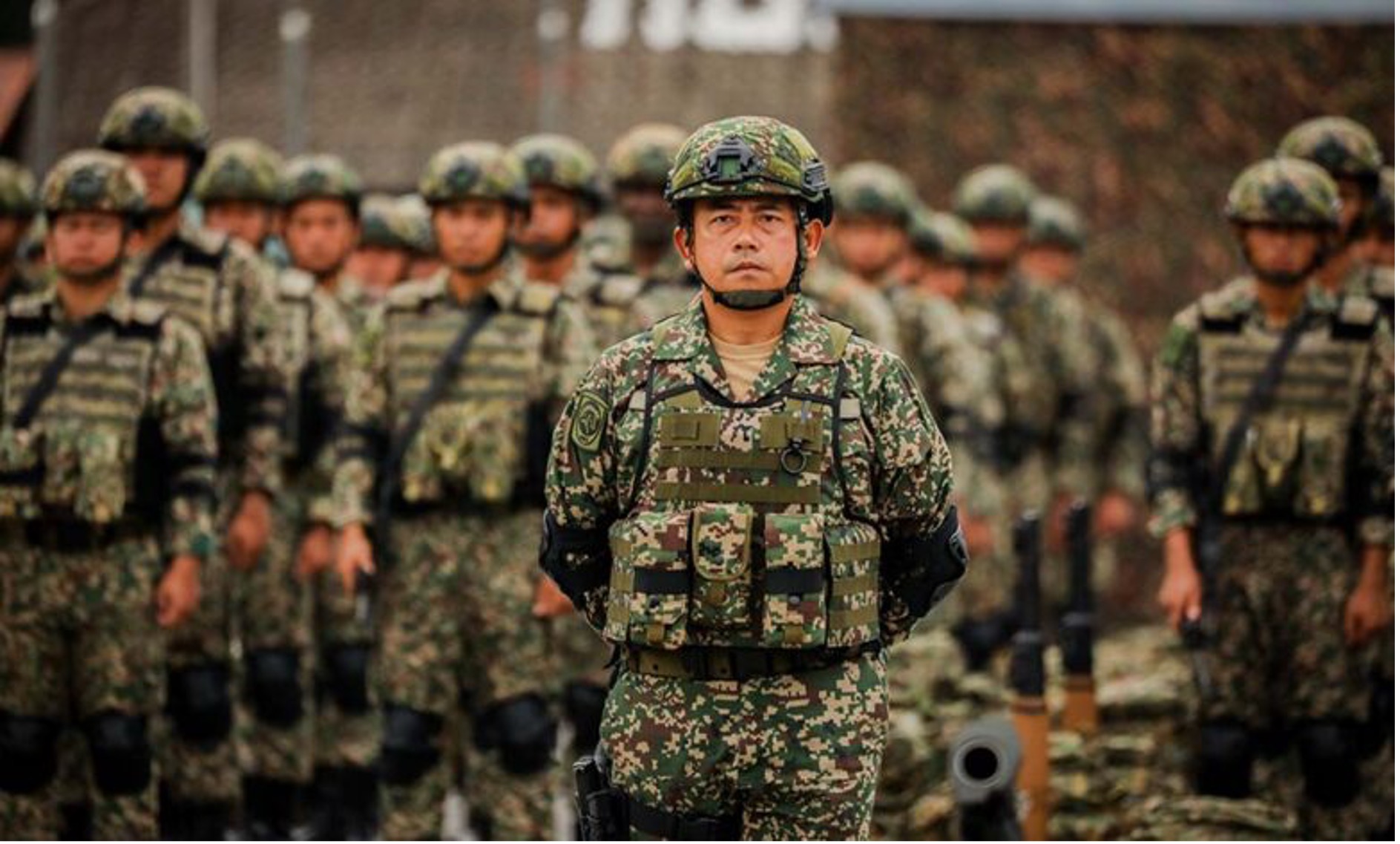
Min Aung Hlaing, who had already visited Laos, has since been received in Cambodia, Vietnam and – on 7 and 8 October – Malaysia, where Prime Minister Anwar Ibrahim, whose government had been among the bloc’s sharpest critics of the regime, pledged to work for Myanmar’s reintegration.
Brunei and Indonesia are expected to follow.
Each capital has extracted a bilateral payment in return. Bangkok secured a labour cooperation memorandum and a US$12b trade target, and Kuala Lumpur obtained Naypyidaw’s cooperation in repatriating Myanmar nationals, about 10,000 of whom have been sent back since January.
ASEAN as an institution is moving at a different speed. The bloc’s special envoy, Philippine Foreign Secretary Theresa Lazaro, said in July that Myanmar’s return to ASEAN summits remains “still far off” while compliance with the bloc’s peace plan is assessed.
The gap between those two positions is doing work for Naypyidaw. Myanmar’s government is collecting from individual members, one visit at a time, the recognition that ASEAN withholds collectively, a diplomatic arbitrage between what capitals will grant and what the bloc has agreed to.
Whether this amounts to realpolitik depends on a property of recognition that the current approach ignores.
A Plan Without a Mechanism
The failure of the alternative is established. The Five-Point Consensus (5PC) – ASEAN’s April 2021 plan requiring an end to violence, inclusive dialogue and humanitarian access – remains unimplemented more than five years on.
As many as 15,088 people are confirmed to remain in detention, with a further 7,730 arrests unverified, according to the Assistance Association for Political Prisoners. Myanmar’s new pro-military parliament went further on 9 July, passing a motion rejecting the consensus as interference.
Naypyidaw then moved against the mechanism itself. On 8 August, its foreign ministry declared that a new ASEAN envoy and the continuation of the role were no longer necessary after the elections, and on 13 October, a new ASEAN Affairs Committee held its first meeting to pursue what the regime described as Myanmar-led approaches to restoring its role in the bloc.
Min Aung Hlaing had already told the parliament on 31 July that certain member states treated Myanmar in a discriminatory manner. The regime now sets its own terms for readmission and treats the bloc’s framework as a document to be reviewed rather than fulfilled.
The consensus failed for a structural reason. It specified what Myanmar must do while never specifying what each act of compliance would earn, so the regime faced the full cost of compliance with no defined return.
Exclusion, meanwhile, redirected Myanmar’s diplomacy toward Beijing, a military pact with Russia running to 2030 and a courtship of India, a government indifferent to ASEAN’s conditions.
Why Bangkok Engages
Thailand’s engagement is compelled rather than elective, which the September floods demonstrated.
The same weather system that left 1.7 million Thais affected across 27 provinces killed villagers in landslides across the border in Tanintharyi in Myanmar. The two countries share a monsoon, a watershed and 2,400 kilometres of land border.
More than four million Myanmar nationals, including 2.3 million registered migrant workers, live in Thailand, and gas from the Yadana and Zawtika fields has at times supplied 15 to 20% of Thai demand, with contract extensions now under negotiation.
Scam compounds along the Myawaddy corridor prey on victims recruited through Thailand, as examined previously on this platform, and mining runoff from Shan State contaminates rivers flowing into Thai provinces.
Foreign Minister Sihasak Phuangketkeow has accordingly spent a year building a strategic framework for gradual, reciprocal engagement, and Energy Minister Akanat Promphan travelled to Naypyidaw on 19 October to discuss gas cooperation with Min Aung Hlaing directly.
The interests are real and permanent, which settles whether Thailand should engage and leaves open the sequence.
Recognition Moves One Way
Sequence decides everything, because the instruments on each side behave differently over time.
Most of what Naypyidaw wants from the region is reversible. Trade can be restricted again, aid can be suspended and border crossings can close.
Recognition is the exception. A red-carpet state visit, a military chief received by his counterparts and a seat restored at a summit each certify the government’s standing, and no subsequent deterioration allows that certification to be withdrawn.
The photographs exist, the precedent stands and every later government must negotiate with a counterpart the region has already treated as legitimate.
An asymmetry follows. Myanmar’s concessions, such as detainee releases or humanitarian access, can be revoked after recognition is secured, while the recognition itself cannot. Engagement that grants the irreversible instrument first and seeks the revocable ones later has spent its leverage before using it.
That is the current pattern. Five ASEAN capitals have delivered head-of-state receptions, and Naypyidaw’s return has consisted of a Red Cross visit to Aung San Suu Kyi in August and a 20-minute monitored telephone call with her son on 22 October, each granted under presidential authority and each withdrawable at the same discretion.
Her transfer to house arrest on 30 April carries the same conditionality, and her 18-year sentence stands. Lazaro’s benchmarks for compliance remain under development, and Philippine President Ferdinand Marcos Jr, this year’s ASEAN chair, conceded on 8 October that the consensus has produced no results and that the bloc must move toward recognition.
Washington has added a further incentive to move ahead of performance. US officials met Myanmar’s government in Tokyo in October for the second time in a month, and Washington lifted sanctions the same week on the daughter of a regime-linked businessman who had sued for delisting, describing the step as part of a new approach to the country.
Sihasak told Reuters on 23 October that Thailand welcomes the engagement. Each outside party dealing with Naypyidaw bilaterally reduces the regime’s need to satisfy the bloc.
The repair is a matter of ordering rather than principle. ASEAN should define the steps and verify them before each stage of readmission, beginning with scheduled detainee releases and internationally observed humanitarian corridors through Thai border crossings, so that recognition arrives after performance instead of in anticipation of it.
The division of labour is already implicit: Manila controls the summit threshold, and Thailand, the member with by far the longest border shared with Myanmar, is positioned to verify what Naypyidaw claims. Coordinated, the two positions close the arbitrage. Uncoordinated, they are the arbitrage.
Outlook
Three indicators will show which version prevails before leaders gather in Manila on 16 to 18 November: 1) whether Lazaro’s humanitarian mission, which Manila said on 14 October still had no confirmed dates, enters Myanmar with verified conditions before the summit rules on the consensus; 2) whether Thailand ties its gas contract extensions and border trade talks to any measurable step, and; 3) whether Naypyidaw delivers sequenced detainee releases, since a counterpart unable to manage that much has answered whether engagement has a willing partner.
Repudiation received a five-year test and produced neither compliance nor isolation, and Thailand’s engagement will continue because its interests leave no alternative.
The open question is order. Realpolitik grants recognition after verified performance.
What Bangkok has practised so far – and what the region is now copying – grants it in advance, and the difference between the two is the difference between a strategy and a concession.
The views expressed are those of the authors and do not necessarily reflect those of STRAT.O.SPHERE CONSULTING PTE LTD. This article is published under a Creative Commons Licence.
Republications minimally require: 1) credit authors and their institutions, and; 2) credit to STRAT.O.SPHERE CONSULTING PTE LTD and include a link back to either our home page or the article’s URL.