search



Peace negotiations set to resume in Thailand’s south. Credit: Unsplash/A. C.
Back to the Table
22 October 2026/5 Minutes of Reading
Resumption
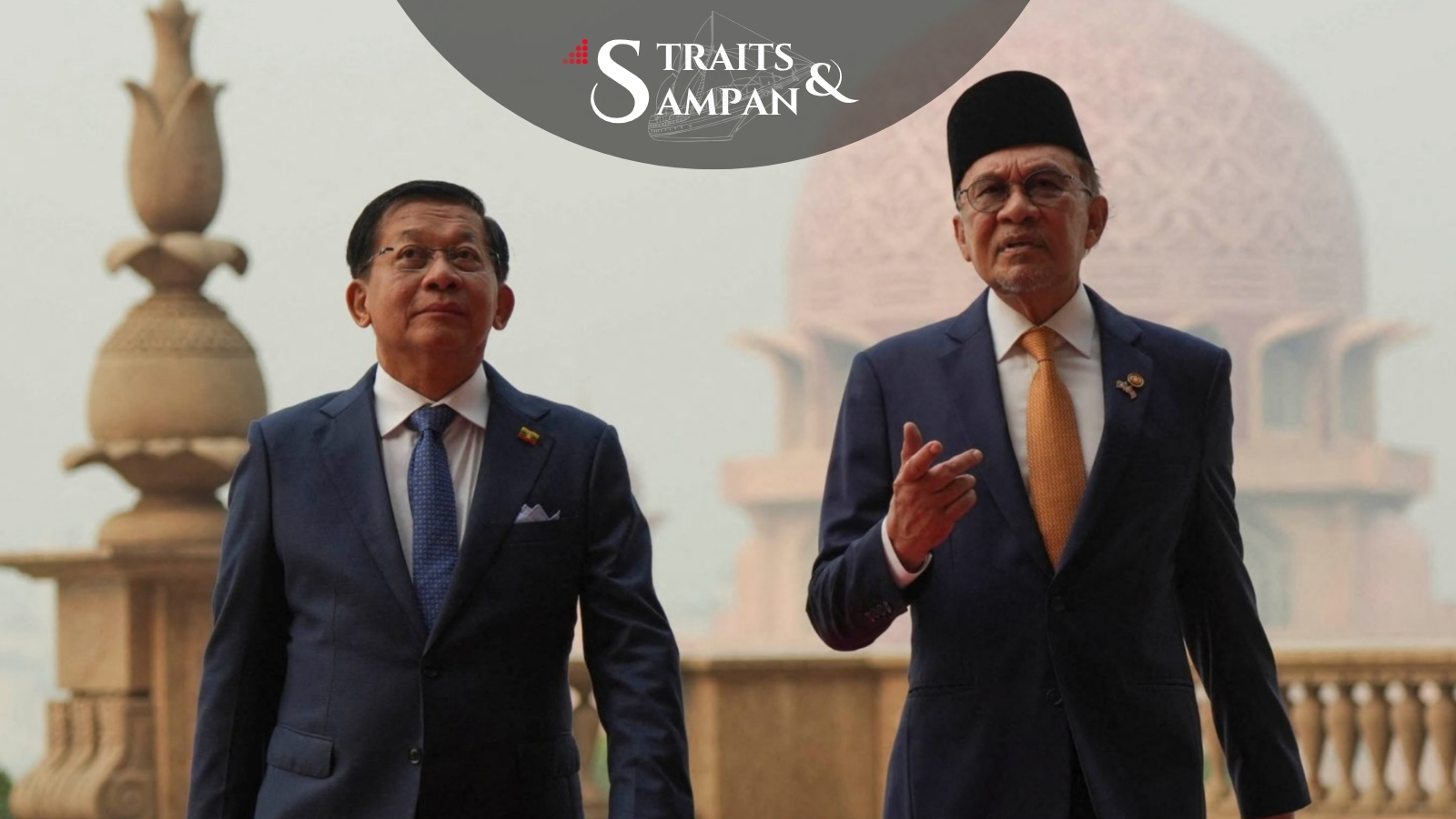
Peace talks to resolve the conflict in Thailand’s far south are expected to resume in the coming days, now that Malaysia has appointed a new facilitator for the process.
The person is Lt Gen Datuk Ahmad Norihan Jalal, a retired military intelligence chief whose last post before retirement was that of director general of the Malaysian Defence Intelligence Organisation (MDIO).
Formal negotiations ground to a halt after a brazen attack in Narathiwat on 22 July 2026, when militants shot dead five paramilitary rangers at close range. Caught on CCTV, the incident jolted the entire security apparatus and forced the Thai government to call off talks that had been scheduled to resume in September.
Bangkok demanded an explanation from Barisan Revolusi Nasional Melayu Patani (BRN), the long-standing separatist movement that controls virtually all the combatants on the ground. Why, Thai officials wanted to know, had violence escalated just as discussions were moving along?
BRN did not answer. Instead, it responded with a spate of coordinated attacks, hitting 51 targets on the evening of 22 August; by the end of the week, the tally had reached 78.
Sources in the movement said combatants had been angered by “arrogant” statements from Gen Chaiyapruek Duangprapat, then the Thai Army’s chief of staff, who vowed to hunt down the perpetrators of the July attack to the ends of the earth, whichever country they were hiding in.
Two months after that overnight blitz, the dust has settled, and there is a feeling on both sides that it is time to get the talks moving again.
Three long-standing items remain on the agenda—reduction of violence, public consultation (PC) and a political solution to end the conflict. The two sides are expected to pick up where they left off.
The first order of business is the terms of reference (TOR) for a temporary reduction of violence. The hope is that this will give both sides some breathing space, from which a more permanent ceasefire could be discussed.
It is a big leap of faith: fighters on both sides of the political divide have never much liked the idea of talking to the enemy and tend to push the line.
Nor would it be the first time the two sides have talked about a ceasefire. Four years ago, a six-week truce was agreed for Ramadhan. The pause held throughout the Islamic holy month and into mid-May 2022, taking in the Buddhist observance of Visakha Bucha.
“BRN combatants have always complied with ceasefires agreed at the negotiating table,” said Asmadee Bueheng, a local writer in Pattani. “But nothing meaningful ever comes out of it. If anything, these ceasefires come across as a public relations exercise by the Thai authorities, with virtually no impact on resolving the conflict.”
Since they began in February 2013, the official negotiations have never moved beyond being a talk shop. This time, team Thailand feels it is time to put substantive issues on the table.
Thanut Suvarnananda, Thailand’s chief negotiator, wants to use those issues to create an atmosphere conducive to peace and peaceful coexistence between the state and the Malay minority. He wants to open a discussion on what form of governance would actually suit the southern border region.
Beyond reducing violence, the ideas Thai officials are weighing include decentralisation – a polite way of saying power-sharing – bilingual education, pardons for some detainees, promotion of Patani Malays’ historical and cultural space and making Bahasa Melayu a working language.
There is also talk of arranging regular meetings, under the PC initiative, between Patani community leaders – Buddhists and Malay Muslims alike – and BRN representatives.
To broaden the space for critical discussion and thinking, these Thai nationals, once in Malaysia, should also meet the Siamese community in Kelantan and ask how they negotiated their own cultural and political space with the Malaysian state.
A Question of Political Will
Artef Sohko, president of The Patani, a political action group that promotes the right to self-determination for the people of Patani, said, “The Thai government doesn’t need permission from the BRN to push through these progressive ideas. There has to be political will to do this and an adequate explanation to the rest of the country as to why these initiatives are necessary.”
Easier said than done, indeed. Nothing comes easily in the far south, where generation after generation of separatist militants have resurfaced to take up arms for independence.
Translating Thanut’s good intentions into policy will require buy-in not only from the conservative camp but also from the Royal Thai Army (RTA), which has never liked the idea of talking to the enemy in the first place.
Unlike his predecessors, Thanut understands full well that counterinsurgency is not a zero-sum game. The very nature of unconventional warfare, such as the separatist insurgency in Patani, creates an asymmetry in how success and failure are measured.
Thailand and BRN are playing by different rules, with different goals. A conventional army measures success in battles won, territory controlled and enemies killed. An insurgency measures its success in its longevity, popular support gained and government legitimacy eroded.
The problem is that combatants on both sides can be tone-deaf to the politics of the day. When BRN declared a unilateral ceasefire during the Covid-19 pandemic, the Thai Army had the chance to reciprocate but refused because, as one senior military officer in the far south put it, “The law is on our side.”
BRN’s combatants proved just as deaf to the progressive ideas under discussion when they answered Thailand’s demand for an explanation with the August blitz.
Hardliners at home aside, the Thai team will struggle to find common ground with the rebels. BRN says it has no objection to a reduction of violence, or even a ceasefire, but insists that it be monitored by international observers.
The same goes for the talks themselves: BRN continues to insist that state actors – not just international NGOs – observe the high-level official sessions.
Hardliners in the Thai military, on the other hand, want to hit the reset button and rethink the involvement of all foreign mediators, with the exception of Malaysia as the designated facilitator.
Yet finding capable and credible CSOs trusted by both Bangkok and BRN to observe the talks, monitor a ceasefire or oversee anything involving rules of engagement will not be easy.
For Artef, it is more than a question of technical expertise. Few people have faith in the process after a long history of letdowns, he said. If the current government can establish that faith, Artef believes, people will come forward to help.
Meanwhile, BRN combatants, operating on autopilot, are not letting up on violence that has been rising for the past four years. In high-profile coordinated attacks, BRN is not after body counts; they want to inflict serious psychological damage on the Thai security apparatus.
Just this past weekend, six men – two from security forces and four separatist combatants – were killed in two separate gunfights.
Incident frequency in 2023-2026 has climbed back to 2017 levels, and attacks appear more lethal and better targeted.
Including the July-August wave, 2026 is likely to exceed 2024’s incident total and become the most active year since at least 2017. Violence remains below the 2005–2008 peak, but the Thai army is coming to terms with the fact that it cannot win through military means.
Republications minimally require: 1) credit authors and their institutions, and; 2) credit to STRAT.O.SPHERE CONSULTING PTE LTD and include a link back to either our home page or the article’s URL.