search


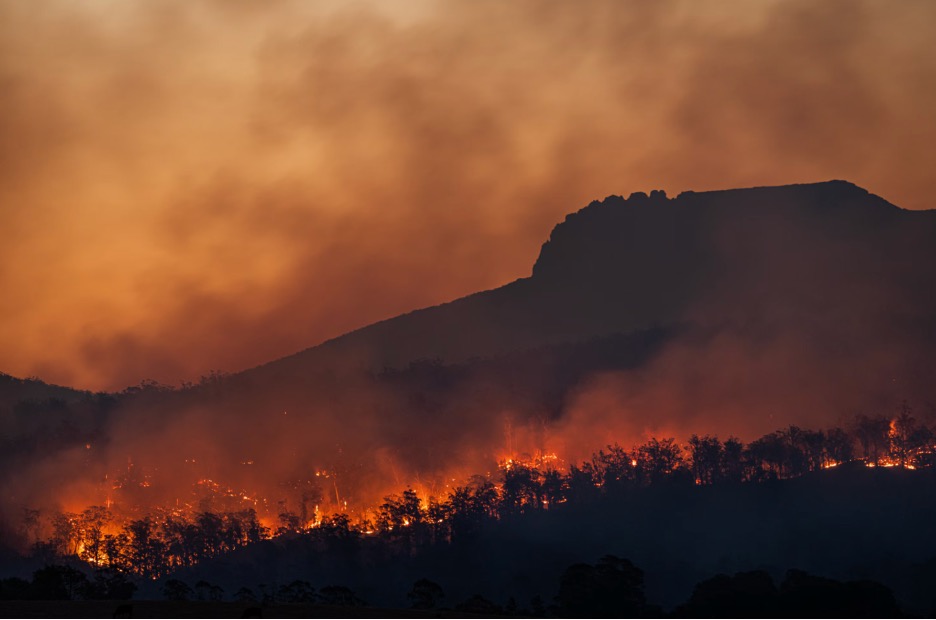
Can shared environmental threats bridge religious divides? Credit: Unsplash/Matt Palmer
Faiths, Floods and Flames
29 October 2026/6 Minutes of Reading
Water and Fire
In this age of the climate crisis, Indonesia’s susceptibility to human-induced environmental disasters has become increasingly frequent and severe.
The widespread and almost biblical flood that devastated parts of Sumatera in late 2025 is still fresh in our memory even as the haze-causing inferno razes through forests and peatlands in the country.
Humans might be the most vocal victims of such disasters, but the Indonesian fauna and the entire ecology suffer the most. While the government has undertaken measures for disaster relief and mitigation, the scale and impact of the disasters are too much for only one actor to play a role in.
Against this backdrop, religious groups have emerged as another actor that could support disaster prevention and mitigation efforts.
Study
With the support from The King Abdullah bin Abdulaziz International Centre for Interreligious and Intercultural Dialogue (KAICIID), we conducted a mixed-methods research between June and September 2026 to examine how interfaith environmental collaboration emerges, sustains and institutionalises.
Combining qualitative cross-case comparison and quantitative survey design, this research involved desk study, observations, in-depth interviews, online survey and focus group discussions (FGDs). The online survey drew responses from 80 respondents from over 20 organisations and communities. Meanwhile, our FGDs involved activists from 15 interfaith environmental initiatives in South Sulawesi, Central Maluku, Yogyakarta and Jakarta.
The study discovered that interfaith community actions, however small in scale, contribute substantially to environmental protection and management, whose benefits are enjoyed by all in the community. Furthermore, these community-led engagements support the government’s measures in this area and serve as a counterweight to extractive industries and developmentalist agendas.
The findings also ascertained that interfaith environmental collaboration is more likely to become institutionalised when participating communities operate within clearly defined boundaries, engage in concrete forms of collaboration through multisector forums, establish monitoring mechanisms, develop conflict-resolution procedures, and receive recognition or support from local governments.
Our key takeaway is that shared concerns and values of environmental stewardship may bring actors from different religious communities to act together. Nevertheless, their collaboration can only become institutionalised when such is embedded in recurring practices, clear roles, networks and established mechanisms that enable collective action to persist and be reproduced over time.
Common Ground
Various religions recognised in Indonesia impose ecological and environmental responsibilities upon its followers—such teachings serve as a source of ethical, moral, as well as social legitimacy for ecological preservation.
For example, Islam considers humans as God’s stewards on earth (khilafah fil-arḍ) who are tasked to maintain balance (mizan) and practise purification (taharah) in their surroundings. Catholicism, through Pope Francis’ encyclicals Laudato si’ (Praise Be to You – 2015) and Laudate Deum (Praise God – 2023), establishes pillars of the Church’s social teaching in response to the climate crises. Furthermore, Hinduism embraces the concept of Tri Hita Karana, which emphasises harmony among God, humanity and the environment.
These show various faiths uphold a firm commitment to ecological protection and to fighting against the climate crisis.
Meanwhile, the United Nations Environment Programme (UNEP) has promoted the idea of faith leadership, which places faith-based organisations and communities as custodians of far-reaching, value-based perspectives on environmental sustainability.
Indonesia has also witnessed the rise of “green religion”, whereby the integration of faith and environmental preservation has pushed religious institutions to take part in the environmental activism. This has provided ethical legitimacy for sustainability initiatives across various local communities, as will be explored by examples below. Arguably, such legitimacy has facilitated the work of religious leaders to mobilise environmental campaigns.
As disasters striking people of different backgrounds indiscriminately, the efforts to tackle them must transcend partisan, religious and other boundaries. It also means that pro-environment programmes cannot be dominated by any single religious groups to achieve a maximum impact.
This, therefore, creates a condition whereby religious groups and leaders of different faiths can collaborate together in addressing the shared challenge. The climate crisis and natural disasters, thus, have emerged as a common ground for interfaith collaboration in Indonesia.
Collaboration as a Necessity
Issues such as deforestation, declining air quality, waste-related disasters and climate-related risks demand mutual accountability and require a multistakeholder collaboration to address, including public agencies and non-state actors.
An interfaith collaboration is stronger than any one religious group in undertaking climate governance while also bolstering social capital across different communities. In this sense, such a form of collaboration can achieve two objectives at once: environmental protection and social cohesion.
Examples below capture this aptly.
The Mulung’s coastal clean-up activities in Ambon have had participants from different religious communities since it came about in 2019. Spearheaded by youths passionate about Ambon’s waste crisis, the initiative has not only benefited the environment but also strengthened the religious harmony in an island that in the past was beset by religious conflicts.
Papua is another instance. The Interfaith Rainforest Initiative (IRI) was launched in 2023 to gather religious leaders from different faiths to conduct tropical forest conservation campaigns among the indigenous communities. Meanwhile, in Toraja, the problems of landslides and environmental degradation have pushed various religious groups to undertake tree planting, forest protection and river revitalisation initiatives.
These initiatives are not a phenomenon solely found in Indonesia’s outer provinces. On our team’s visit to the Sangurejo village in Sleman, Yogyakarta, we discovered that figures from Lembaga Dakwah Islam Indonesia (Indonesian Institute of Islamic Da’wah – LDII), Nahdlatul Ulama and Muhammadiyah have encouraged the community to take part in the Pro-Klim village programme, which has been around since 2023. The groups have also launched the Kyai Peduli Sampah (Cleric Caring for Waste) programme in response to the waste emergency in Yogyakarta.
These initiatives from various social, religious and geographical settings are motivated not only by religious convictions but also by a shared responsibility to combat the climate crisis.
Institutionalisation
Our study analysed ways in which these collaborations sustain themselves.
Across 15 case studies, we found nine collaborations have become institutionalised. This refers to the condition when interfaith environmental collaboration is clearly present, recurrent, and embedded in organisational or customary arrangements, capable of reproducing over time.
These collaborations have emerged as best practices in interfaith cooperation in environmental protection. They include IRI’s forest conservation programme, The Mulung’s Clean-Up initiative, Eco-Bhinneka’s SMILE projects, the Buddhist Environmental Project in Pesantren by Permabudhi, the Peacebuilding and Climate Change Programme by MPM Toraja and JAGAT Gusdurian.
Most of these are driven by established institutions that already possess a clear vision regarding interfaith relations and environmental issues. They show signs of an institutionalised collaboration: their programmes are durable, they receive collective recognition and organisational support, and their collaboration has sustained over time despite changes in leadership, resources, or participating actors.
In short, interfaith environmental collaboration may become institutionalised when it persists over time despite leadership change or when initial funding ceases.
A key lesson learned: institutionalisation tends to be stronger when certain conditions are met. It occurs when collaborations combine clearly defined boundaries and responsibilities, when there is a multisector forum that connect diverse actors, when monitoring and conflict-resolution mechanisms are present to stabilise cooperation, and when recognition or support from local government is given.
Rather than operating independently, these conditions reinforce one another in different combinations, helping to explain why some forms of interfaith environmental collaboration become more institutionalised than others.
Conclusion
To conclude, collaboration emerges in the first place because communities from different religious backgrounds have shared awareness regarding the ecological threats and climate challenges surrounding them.
Their programmes, while locally bounded and aligned with the ecological challenges they have faced, are parts of the global collective actions to tackle climate and environmental crises.
This further emphasises that environmental crisis affects individuals indiscriminately, and that – despite that – it has triggered the emergence of interfaith environmental collaborations across regions in Indonesia.
Religions, therefore, are not only a source of moral, ethical, and social legitimacy for fighting and mitigating climate and environmental challenges. They also drive actionable and impactful collaborative initiatives for a sustainable environment.
The views expressed are those of the authors and do not necessarily reflect those of STRAT.O.SPHERE CONSULTING PTE LTD. This article is published under a Creative Commons Licence.
Republications minimally require: 1) credit authors and their institutions, and; 2) credit to STRAT.O.SPHERE CONSULTING PTE LTD and include a link back to either our home page or the article’s URL.