search


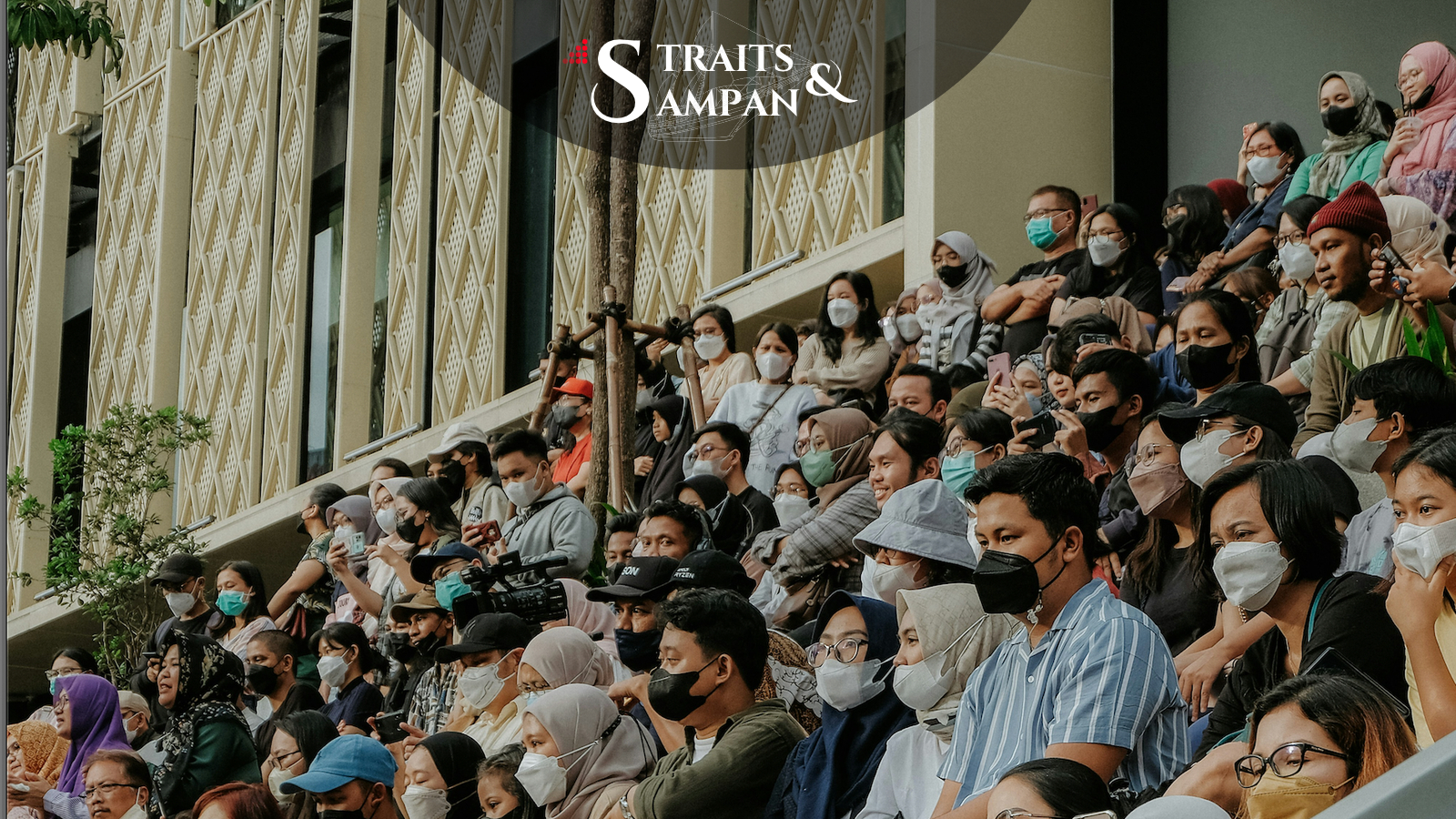
Is Indonesia’s middle class being squeezed to fund public spending? Credit: Unsplash/Lukmannil Hakim
Indonesia’s Embattled Middle Class
29 October 2026/4 Minutes of Reading
Viral
In late September 2026, two reels posted by Dyah Laily Fardisa, owner of the medium-sized food chain Bolosego, went viral on Indonesian social media.
In her first post, she aired her grievance about how the Tax Office had overestimated her Bolosego’s tax bill by tripling the amount.
She explained that in the past, she had voluntarily paid around Rp500m (US$28,000), a hefty sum by the standard of an SME in Indonesia. Unfortunately, the Tax Office had told her that they were not convinced that it was an appropriate amount.
To rub salt in the wound, she faced another issue with a group of parking attendants around her food truck in Yogyakarta, whom she claimed had asked for an unsanctioned rate of Rp1m for the right to unload supplies. She had also been asked to provide food packages, at no charge, for them and a host of police officers on a daily basis.
Dyah’s posts went viral because they largely resonated with Indonesia’s middle class, who feel increasingly embattled because of the lack of government support, not to mention the eagerness of various government agencies to augment tax revenues by levying tariffs or, in more insidious cases, to enrich themselves through extortion attempts.
“I built my business from scratch, without assistance from the government. But when it’s finally taking shape and thriving, they come knocking to squeeze us for taxes,” she said.
That middle classes feel embattled is not a phenomenon exclusive to Indonesia. It is observable across Southeast Asia.
Malaysia’s middle-income households (M40), with a monthly income ranging between RM5,250 and RM11,819, have also been under intense pressure, with everyday staples like eggs experiencing steep price hikes. There, the crisis is as such that it has brought about political setbacks for Anwar Ibrahim’s government, such as mass street protests and the successive defeats for his Pakatan Harapan coalition in state elections.
Meanwhile, in neighbouring Singapore, the middle class is also feeling the heat of inflation and rising costs in housing, staples and fuel.
Across the straits, Indonesia’s own middle classes are not faring any better.
Stuck in the Middle
First, however, we need to properly define Indonesia’s middle classes into their subclasses: the aspiring middle class, the middle class and the upper middle class.
The aspiring middle class Indonesians typically earn below Rp7m a month and are the most vulnerable of the three to any economic crisis.
While Badan Pusat Statistik (National Bureau of Statistics – BPS) puts the average monthly income per capita at just under Rp7m, the fact remains in most regions the minimum wage (UMP) is under Rp4m.
While it is difficult to quantify the real size of the aspiring middle class, it is arguably the largest demographic group in the category, accounting for roughly 60-80% of the population.
This brings us to the true middle class. The monthly income for middle class Indonesians ranges between Rp7m and 21m. The Mandiri Institute, in its report earlier this year, puts the number of Indonesians belonging to this category at approximately 46.7 million in 2026, down by 1.2 million from the previous year.
Correspondingly, the middle class only makes up 16.6% of Indonesia’s population, less than a quarter of the aspiring middle class.
While BPS’ classification system places any Indonesian with earnings above Rp20m as “upper class”, this is grossly inaccurate. Instead, an Indonesian with monthly earnings between Rp20m and 70m ought to be categorised as upper middle class instead, which probably make up less than 5% of the total population.
The middle classes are rightly called the pillars of Indonesia’s economy.
The True Middle Class
Currently, 81% of Indonesia’s national consumption is propped up by both the aspiring middle and middle classes, making them essential drivers of the economy. National consumption, the main generator of the Value Added Tax (PPN), is crucial to the economy because PPN contributes almost 40% towards state revenues.
Yet, as we see from the previous statistic, the true middle class – expected to be simultaneously a consumption driver and provider of employment – is shrinking due to a fall in its earning power.
In short, the middle class is finding its role as a pillar in the economy increasingly crushed by the weight it has to bear.
As the entrepreneurial class, it is expected to pay taxes in full, more so under President Prabowo Subianto’s administration, known for its costly populist initiatives such as Makan Bergizi Gratis (Free Nutritious Meal – MBG) and Koperasi Desa Merah Putih (Red and White Village Cooperatives – KDMP).
This is reflected in the state budget. As of October 2026, it is experiencing a shortfall of Rp318t, or 1.24% of the country’s GDP. In the same period, however, tax realisation stands at only 68.6%.
With government spending reaching new heights – expected to hit Rp4,100t in 2027 – the administration has set its sights on the middle class to fill its coffers.
This has increased pressure on government agencies such as the Tax Office to generate more revenues by pursuing wayward taxpayers who underreport.
Earlier this month, it was reported in the press that the Tax Office had sent out 454,377 notifications to taxpayers almost indiscriminately, requiring them to provide additional explanations regarding the origins of their assets.
The irony here is that the pursuing tax officers tasked with carrying out the directive also belong to the same class as the pursued citizens. A few former tax officers have even admitted on social media to feeling guilty when they had to investigate the taxes of clearly law-abiding citizens.
Furthermore, middle class Indonesians are not entitled to Bantuan Langsung Tunai (Cash Transfer – BLT) from the government. They are also not at liberty to enjoy government fuel and energy subsidies or other welfare programmes, such as Bantuan Stimulan Perumahan Swadaya (Self-Stimulant Assistance Housing Programme – BSPS) for house repairs, most of which are available to the aspiring middle class.
Voting Matters
Despite all these, why has the Indonesian government paid scant attention to them?
The answer lies in the overwhelming numerical difference between Indonesia’s aspiring middle class and the middle class, which has inevitably led the political elite to conclude that the latter class is expendable.
In a one-man-one-vote system, politicians would rather woo the majority class of voters and appeal to them collectively than risk defending the interests of the minority middle class.
This is why the populist campaign promises of every presidential ticket in the last two decades have mostly focused on the aspiring middle class and its interests, at the expense of the true middle class, who have remained an afterthought as far as politicians are concerned.
Admittedly, the economic doldrums of Indonesia’s middle class cannot be entirely laid at the government’s feet. There are external forces at work, too, such as continuing pressures on the global supply chain and oil prices resulting from the conflict in the Middle East, the depreciating rupiah and multiple stock market crashes.
Yet, in the face of such odds, a shrinking middle class almost inadvertently translated to weaker economic fundamentals, less revenue for the state and a hobbled economy. It also deals a fatal blow to democracy and meritocracy, as socioeconomic mobility becomes less attainable.
It is time that Indonesia supported its middle class through initiatives such as targeted consumption and business tax reliefs and other anti-inflationary measures.
The administration must strike a balance between supporting the aspiring middle class and preventing the middle class from slipping down the ladder if sustainable growth remains its objective.
The views expressed are those of the authors and do not necessarily reflect those of STRAT.O.SPHERE CONSULTING PTE LTD. This article is published under a Creative Commons Licence.
Republications minimally require: 1) credit authors and their institutions, and; 2) credit to STRAT.O.SPHERE CONSULTING PTE LTD and include a link back to either our home page or the article’s URL.