search

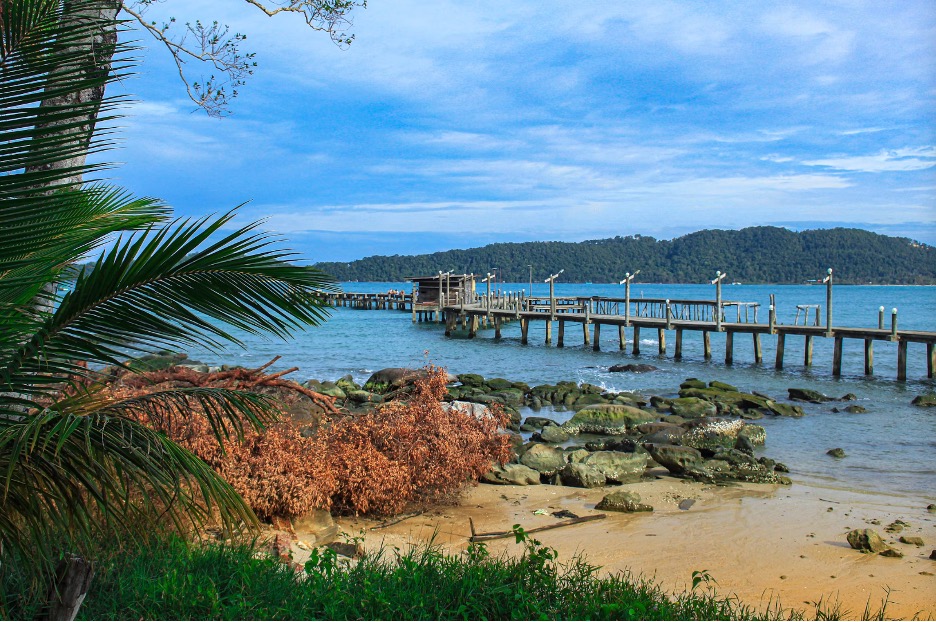
Koh Rong Sanloem, Cambodia. Credit: Unsplash/SAM Sokkolinmony
Did Thailand Just Hand Cambodia a Legal Windfall?
18 June 2026/6 Minutes of Reading
Battle in New York
Almost immediately after the bloody cross-border clashes erupted along the Thailand-Cambodia border on 24 July 2025, Prime Minister Hun Manet reached out to the United Nations Security Council (UNSC) requesting an emergency meeting to discuss what he called “unprovoked and premeditated aggression” by the Thai military.
More than 100,000 villagers on both sides of the border were abruptly displaced on the first of four bloody days of cross-border clashes.
Just the first day alone, Cambodia’s BM-21 Grad rockets smashed into a Thai public school and a 7-Eleven convenience store in Sisaket; a hospital in Surin Province was also hit. The multiple rocket launcher system (MRLS) used by Cambodia is an inherently imprecise, unguided weapon system.
Cambodia denied deliberately targeting civilians, arguing that any civilian infrastructure caught in the crossfire was either a result of proximity to the conflict zone or unavoidable collateral damage during a heavy artillery exchange.
Nevertheless, on the following day in New York, members of the UNSC at the emergency meeting did not share Phnom Penh’s framing, said one official whose government was observing the discussion. He spoke on condition of anonymity.
Cambodia’s position was undermined – fairly or unfairly – by the shelling of the Thai hospital and other soft targets, such as the public school and convenience store. Regardless of the facts, that episode loomed large in the minds of many in New York, the official said.
Cambodia asked that the UNSC refer the border dispute to the International Court of Justice (ICJ) for final adjudication, but the council rejected the request.
However, it was not only collateral damage that influenced the UNSC decision; credit must also be given to the Thai team, said the official.
“The quality of the delegation matters a lot at critical times like this. It was observed by a number of countries that Thailand’s more polished and better-staffed delegation made a difference at the UNSC meeting. The Thais were sophisticated and technical in their messaging, citing the Geneva Conventions [and the] breach of anti-mine and anti-cluster munitions obligations. They looked like the good guys despite being the ones who kept insisting on handling this bilaterally,” the official said.
As in any dispute, the issue of credibility becomes central when there is no impartial third-party available to ascertain the facts. In such circumstances, the outcome often depends on the parties’ ability to articulate and present their arguments effectively. This raises a legitimate question regarding the existence of objective truth within such contexts.
Thailand may have walked out of the New York meeting as the victor over this one specific battle with Cambodia, as Bangkok can claim credit for dissuading the UNSC from forwarding the case to the ICJ.
But Thailand is not out of the woods; the Royal Thai Army’s optics are not at all great, the Bangkok-based diplomats said.
Furthermore, members of the international community are still asking: why is it Cambodia that keeps asking for observers? By demanding outside observers, Cambodia is sending a clever, indirect message to the world: that Thailand cannot be trusted to act fairly or tell the truth on its own.
Losing Optical War
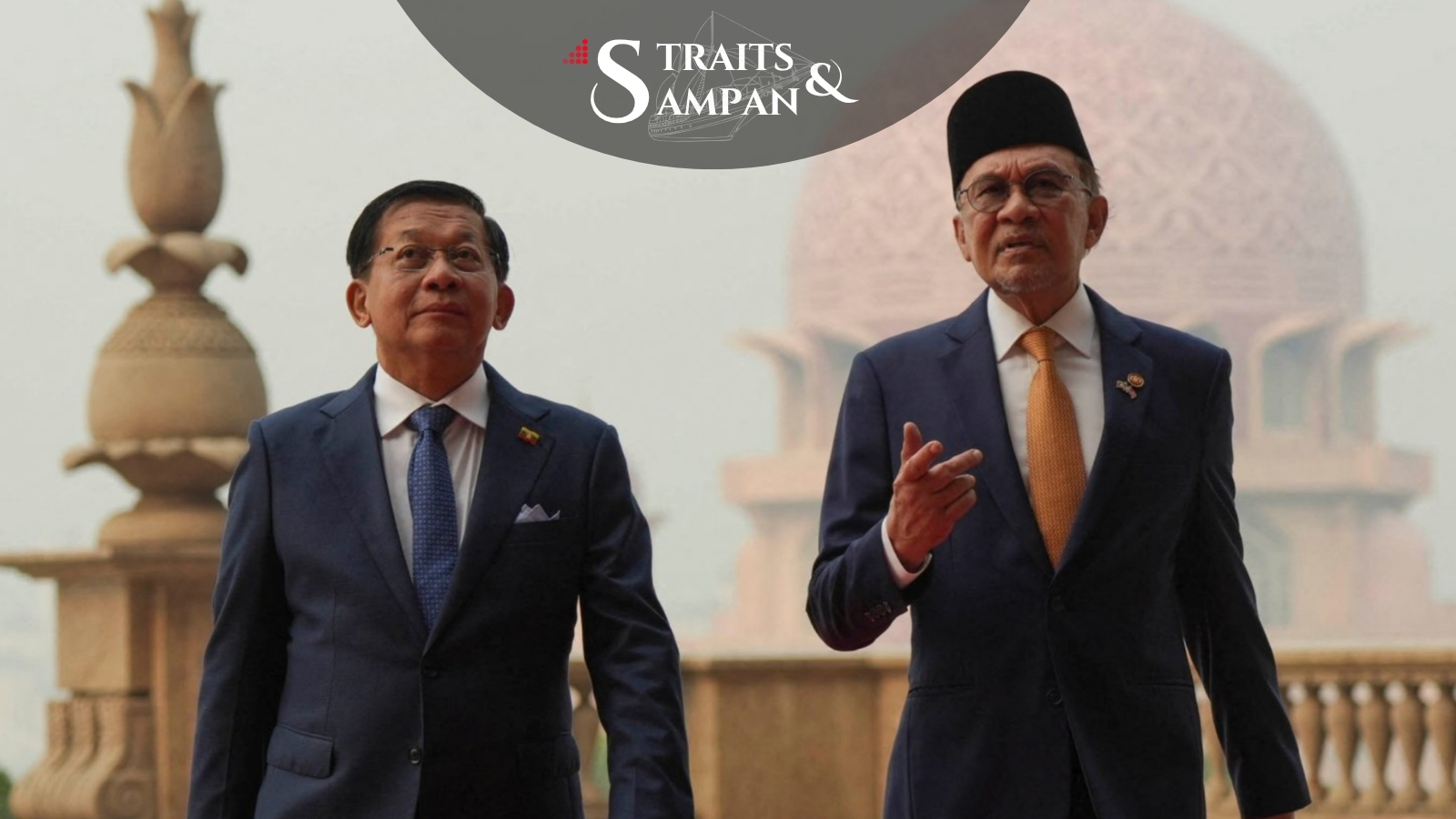
And then came the photo ops. In October 2025, a ceasefire was brokered by the Malaysian Prime Minister Anwar Ibrahim and the United States President Donald Trump, who dropped by to witness the signing of an expanded peace agreement between the two countries. Days later, Thailand suspended the implementation of the ceasefire pact, following a landmine blast that maimed one of its soldiers.
The 22 December meeting was supposed to be more substantial as the two foreign ministers met face-to-face in Kuala Lumpur. The event, aimed at de-escalation and enforcing a sustainable ceasefire, was facilitated by Malaysia, the ASEAN chair for 2025.
The situation on the ground leading to the 22 December ministerial meeting was not very promising, as Thailand and Cambodia traded blame for border clashes that killed one Thai soldier and four Cambodian civilians earlier that month. The border clashes were followed by a Thai air raid.
For the 22 December meeting, Cambodia wanted the observers – China and the United States – to be there on all three days. But Thailand restricted the observers to the plenary session, making Bangkok look like the ones determined to complicate the whole thing.
Needless to say, the restrictions, along with Thailand’s long-standing position that the dispute be resolved bilaterally, cast a negative light on Thailand, while Cambodia comes across as the aggrieved party precisely because of its push for foreign observers, which carries the subtext that they are needed to keep Thailand honest.
All along, both sides believe they occupy the moral high ground, clinging to their own narratives with equal conviction.
Nationalist Blunder
By the time Thailand conducted its February 2026 general election, border tensions had strengthened military political influence, making national security – the war with Cambodia – the main public topic to the point that a medium-sized political party, Bhumjaithai, known for its pro-cannabis legislation, secured a comfortable mandate to lead the country.
Anutin Charnvirakul was the accidental prime minister at the time. His sudden rise to the premiership in September 2025 was the direct byproduct of political crises rather than a popular electoral mandate for him to lead the country.
Bhumjaithai rode on the back of public sentiment and vowed to terminate the 2001 Memorandum of Understanding (MoU 44), which had governed maritime boundary talks for over two decades.
For a country that had insisted all along on bilateral mechanisms to resolve the dispute, terminating the document that was aimed to do just that does not help Thailand’s international standing very much. This shows how Bangkok’s diplomacy has become entangled with politics influenced by toxic nationalism.
Thailand’s official excuse was that MoU 44 had been in place for more than two decades without producing results. Left unsaid was the lack of political will – and the infighting among political factions, including street battles – that held border resolution, among so much else, hostage.
If anything, the move played into Cambodia’s hands. On 2 June 2026, Phnom Penh officially triggered “Compulsory Conciliation” under the United Nations Convention on the Law of the Sea (UNCLOS) to break the maritime deadlock with Thailand.
This sudden shift transforms their resource competition over a US$300b overlapping claims area (OCA) from an active military risk into an institutional, legal battle overseen by the UN.
US$300b Energy Trap
Hun Manet announced that because bilateral channels had been exhausted, Cambodia had no choice but to take this step to “protect its sovereignty and maritime rights” under international law.
Cambodia’s energy ministry also noted that the global oil shocks from the ongoing Iran conflict have made unlocking the OCA’s estimated 12 trillion cubic feet of natural gas a matter of immediate economic survival.
Trying to put on a brave face, Anutin said Thailand is “unfazed” and confident in its legal position. He said nothing about how the termination of MoU 44 had played right into Cambodia’s hands.
Article 298 of UNCLOS is applied in situations where “no agreement has been reached in negotiations between the parties within a reasonable period of time.” Twenty-five years is a very long time by any standard.
Under UNCLOS, the process relies on an independent panel rather than a binding courtroom. The commission will review the dispute and issue a non-binding report with recommendations. Neither country is legally forced to accept the terms, but it creates a heavy international diplomatic framework for them to work within.
Thailand is insisting that the UN framework focus strictly on drawing the physical boundary line and not serve as an attempt to settle joint resource development and revenue sharing.
Thailand’s habit of kicking the can down the road is evident across many other issues. The peace process in the far South has never progressed beyond confidence-building exercises to anything concrete. Meanwhile, scores of Uyghur asylum seekers were held in immigration detention for nearly a decade before Thaksin Shinawatra used them as political pawns with Beijing to bolster his daughter’s standing with China.
Consequently, the more Thailand emphasises that the MoU 44 produced no progress over a quarter of a century, the more it strengthens Cambodia’s justification for seeking compulsory conciliation in the first place.
It is therefore difficult to see the logic of repeatedly stressing the failure of 25 years of negotiations while simultaneously criticising Cambodia for turning to a dispute-settlement mechanism designed precisely for situations where prolonged negotiations have failed to produce an agreement. Both Thailand and Cambodia are signatories to this convention.
Ever since the Preah Vihear temple dispute of 2008-2011, Cambodia has tried to bring ASEAN and the UNSC in as mediators. When negotiations failed and nationalist sentiments on both sides intensified, Cambodia brought the case back to the ICJ for reinterpretation of its earlier ruling, which resulted in Thailand having to retreat from the vicinity of the temple.
Had the nationalist faction and the Democrat-led government stopped trying to strip Preah Vihear of its World Heritage status, Cambodia might not have been able to bring the case back to the ICJ at all.
But that is what happens when a government fails to think things through and when bureaucrats lack the courage to disagree with the political leaders.
The views expressed are those of the authors and do not necessarily reflect those of STRAT.O.SPHERE CONSULTING PTE LTD.
This article is published under a Creative Commons Licence. Republications minimally require: 1) credit authors and their institutions, and; 2) credit to STRAT.O.SPHERE CONSULTING PTE LTD and include a link back to either our home page or the article’s URL.