search

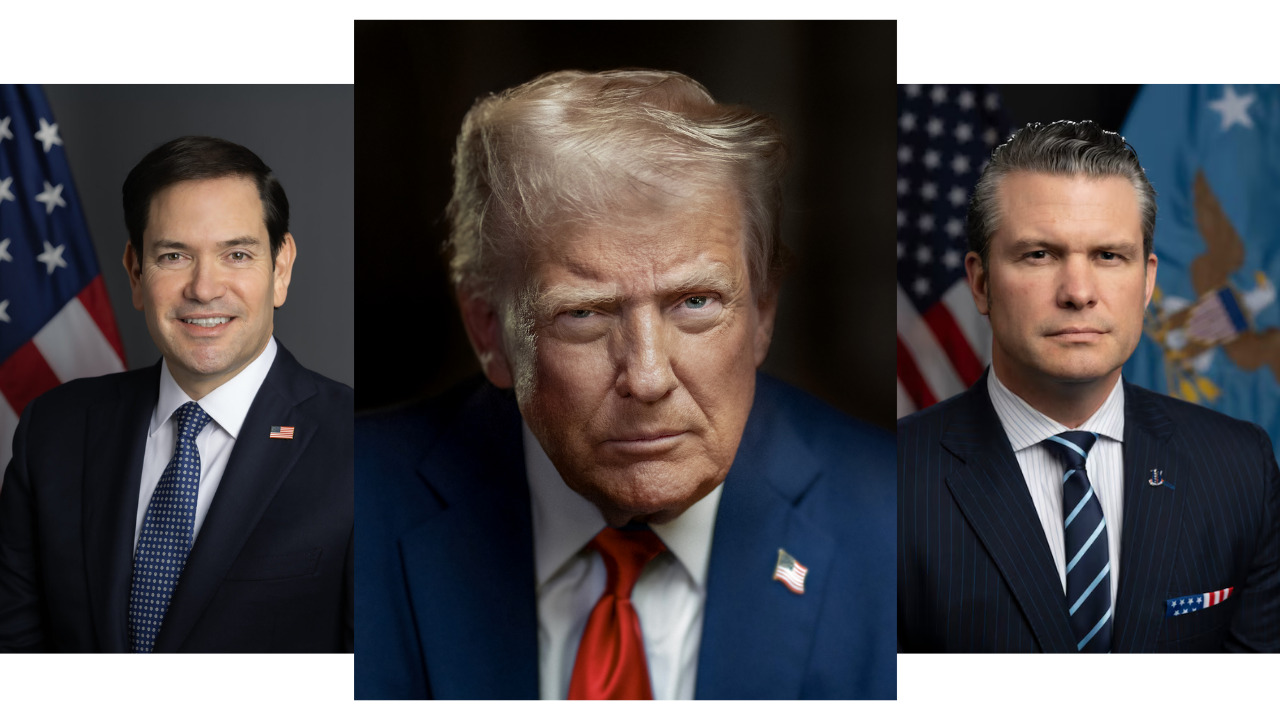
The three US envoys to the Indo-Pacific. Credit: The Government of the United States
Three-Envoy Tour Reveals White House Strategic Retrenchment
10 June 2026/6 Minutes of Reading
Short Burst
Over the last month, the United States has engaged in a flurry of diplomatic activity in the Indo-Pacific, which is actually quite surprising, given that President Donald Trump’s second administration has massively deprioritised the region.
Trump 2.0 has leaned into the America First agenda, even more so than in Trump’s first term.
In terms of strategic thinking, as indicated in both the National Security Strategy and the National Defense Strategy, the Indo-Pacific has fallen well behind the western hemisphere in importance. Furthermore, in terms of the US foreign policy, the Indo-Pacific has been far overshadowed by Trump’s so-called Donroe Doctrine, the war in Ukraine, and the wars in Gaza and Iran.
This is the geopolitical context in which the US president as well as secretaries of state and war visited the Indo-Pacific last month.
Commercial Concessions
Trump, his senior advisers, and several tech bros spent 14-15 May 2026 in Beijing trying to drum up American business with Chinese President Xi Jinping and his key staff in order to uplift a middling economy that is almost completely propped up by the stock market and the AI industry.
Interestingly, tariffs were not discussed during the meetings, though Chinese and American negotiating teams are actively discussing reciprocal tariff reductions.
Trump did mention that China has promised to buy more US crude oil. Additionally, both sides hammered out deals on Chinese purchases of American soybeans, beef and Boeing aircrafts. However, Xi completely passed on buying Nvidia’s H200 chips, preferring instead to try to create an indigenous Chinese state-of-the-art microchip industry.
Years from now, we may look back at the Xi-Trump summit as a passing of the guard. The US delegation went to China with a sense of desperation, politically and economically needing a deal with China, and thus lacked leverage to seal a “big win”.
Trump departed China having settled for relatively small purchases rather than big structural trade deals. Plus, the image of Trump going to China, attending meetings on Xi’s home turf, was very symbolic. It was as if Trump, hat in hand, came to kiss Xi’s ring rather than stand up to China and defend American interests.
Soothing Tension
While Trump focused on bilateral economic transactions in Beijing, Secretary of State Marco Rubio was dispatched to New Delhi to manage traditional strategic partnerships.
From 23-26 May, Rubio visited India to meet Prime Minister Narendra Modi and key Indian officials as well as to participate in the second Quadrilateral Security Dialogue (Quad) meeting under Trump’s second administration.
Rubio’s bilateral discussions with Indian leaders focused on tariffs, trade and energy. Additionally, Rubio extended to Modi a formal invitation from Trump to visit the White House at an unspecified date in the near term.
In Rubio’s gathering with fellow Quad top diplomats Penny Wong of Australia, Toshimitsu Motegi of Japan and Subrahmanyam Jaishankar of India, a wide range of issues were discussed on the table. These include energy supply chains, maritime security, access to critical minerals, coercive moves in the South and East China Seas, the security of undersea digital cables, and the Strait of Hormuz crisis, among others.
Notably, for the first time, the Quad announced a joint port infrastructure venture in Fiji—a spot chosen for its central location in global shipping lanes and undersea cables.
Clearly, Rubio was dispatched to India to engage in clean-up duty: to play nice with India in both bilateral and multilateral settings following the latest strains. Modi has been frustrated with Trump, to the point that he has openly embraced Russia and China over the last year.
Tariffs, of course, are a part of it—the United States angered, blindsided and confused India by imposing punitive economic punishments. But even more importantly, the United States has stepped on core Indian interests. When Trump inserted himself into the India-Pakistan hostilities last May, claimed credit for the ceasefire and then cozied up to Pakistan, he did more than just step on India’s foot.
Trump, as well as his staff, has underestimated the centrality of the ongoing standoff with Pakistan in India’s foreign policy. Given this backdrop, it will be fascinating to see if and when Modi does indeed visit the White House during the remainder of Trump’s tenure in office.
Self-Sufficiency
Lastly, Pete Hegseth’s 25-30 May journey to Southeast Asia saw him address the 2026 Shangri-La Dialogue (SLD) and lay out the Department of War’s strategic thinking on the broader Indo-Pacific.
In emphasising that the United States is looking for partners, not dependencies, he criticised nations – mostly in Europe – who were not providing for their own defence and security. He also lauded countries that, in his view, have stepped up to meet the United States’ challenge, such as South Korea, Japan, the Philippines, Australia, Indonesia, Singapore, Thailand, Vietnam, India and Malaysia.
Notably, Taiwan was not mentioned at all, as Hegseth preferred not to touch the thorny issue. Moreover, while he did note the “rightful alarm regarding China’s historic military buildup and the expansion of its military activities in the region and beyond,” he simultaneously praised the recent upswing in the US-Sino ties.
Indeed, Hegseth was largely respectful to China this time around, a sharp contrast to his speech a year before in the same conference.
On the sidelines of the SLD, Hegseth held bilateral meetings with officials from Vietnam and Thailand, focusing on defence issues that encompass maritime security and cooperation, defence modernisation, the Kuala Lumpur Peace Accords, and more. Here, Hegseth once again highlighted the necessity of both countries upping their defence capabilities and military readiness in order to get them more self-sufficient.
Transactional Diplomacy
On the positive side, the high-level visits by American leaders are important, as they do reflect a certain level of willingness by the United States to remain politically, economically and militarily engaged with nations across the Indo-Pacific. That, in turn, can temporarily alleviate the anxiety on the part of US partners and allies who worry about potential abandonment.
Moreover, signs that China and the United States desire good bilateral relations should soothe regional apprehensions about a potential falling out with each other. Relatedly, as Sino-American hostilities ebb, governments throughout the region will naturally feel less coercive pressure to pick sides, which allows them greater freedom of policy and action.
Unfortunately, a short burst of diplomatic activity simply papers over the deeper issues plaguing perceptions of the United States. Tariff disputes still exist, fears of US retrenchment are still widespread and the Trump administration is distracted with wars on multiple fronts.
The general distrust of the United States remains. Countries in the region are waiting for the United States to undertake actions that can reassure them, not simply words and promises.
Furthermore, there is an underlying takeaway from the three visits that has not gotten much attention from the media, scholars and policy analysts. It is that Trump is mostly uninterested in the geopolitical jockeying in the region, and he does not have an appetite for meaningfully counterbalancing China.
The White House’s main goal right now is to extract as many resources and money from countries throughout the Indo-Pacific. That requires imposing tariffs on countries across the board – whether friend or not – and playing nice with China. The America First position seeks economic spoils and views China as an economic competitor, not a security threat.
The Trump administration is likely willing to sell out and even hurt its regional allies and partners in exchange for economic deals, especially with China, and this is demonstrated through signals that his administration sent about Taiwan. Hegseth intentionally omitted Taiwan in his SLD speech, while the US government recently paused on arms sales to Taiwan.
Moreover, during Trump’s visit to Beijing, China also made promises to buy more American goods, and Trump does not want to jeopardise that deal or scuttle the possibility of future deals with China because of Taiwan. Taiwan’s security is probably irrelevant as long as the United States gets the economic gains it seeks.
This should send chills down the spine of US partners and allies in the Indo-Pacific. For the next two and half years, they face the prospect that their relationship with the United States is up for sale if China, or any other party, is willing to fork over enough concessions.
These are the possible foreign policy consequences of a transactional, America First US foreign policy. What kinds of concessions would Trump make to China if Xi offered something really economically significant? Would he let Taiwan go? Remove troops from South Korea, Japan and elsewhere in the Indo-Pacific?
The fact that these questions are even asked without a clear and certain answer should be enough to make US allies sweat for the remainder of his tenure.
The views expressed are those of the authors and do not necessarily reflect those of STRAT.O.SPHERE CONSULTING PTE LTD.