search

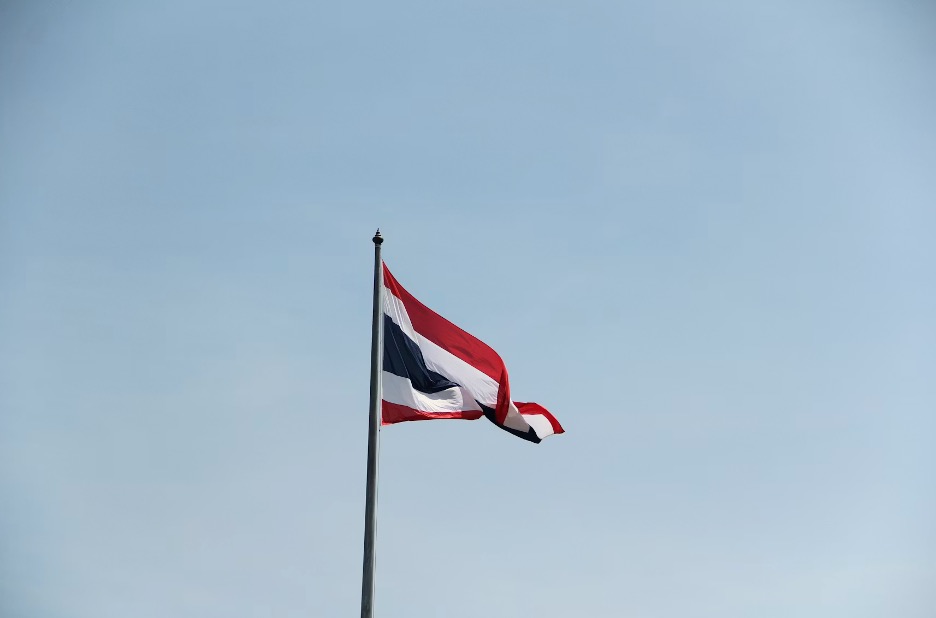
Is Thailand’s politics sabotaging the peace process in the far south? Credit: Unsplash/Dave Kim
Sabotage, Disinformation and Fragile Peace
24 July 2026/6 Minutes of Reading
Sabotaging the Negotiating Table
Just as the new team of negotiators for the southern Thai peace process appeared to be gaining momentum, Minister of Defence Adul Boonthamcharoen threw a monkey wrench into the process.
Adul was quoted by Isra News Agency questioning the need to even talk to Barisan Revolusi Nasional Melayu Patani (BRN), the main separatist movement, which controls virtually all the combatants on the ground.
The two sides have engaged in off-and-on peace talks for about a decade. Thailand’s domestic politics has held the process hostage, preventing the talks from gaining meaningful traction.
But the biggest spoiler has always been the military; Thai generals cannot stand the fact that government officials are sitting face-to-face with BRN, and many believe that talking to the rebels unnecessarily legitimises them.
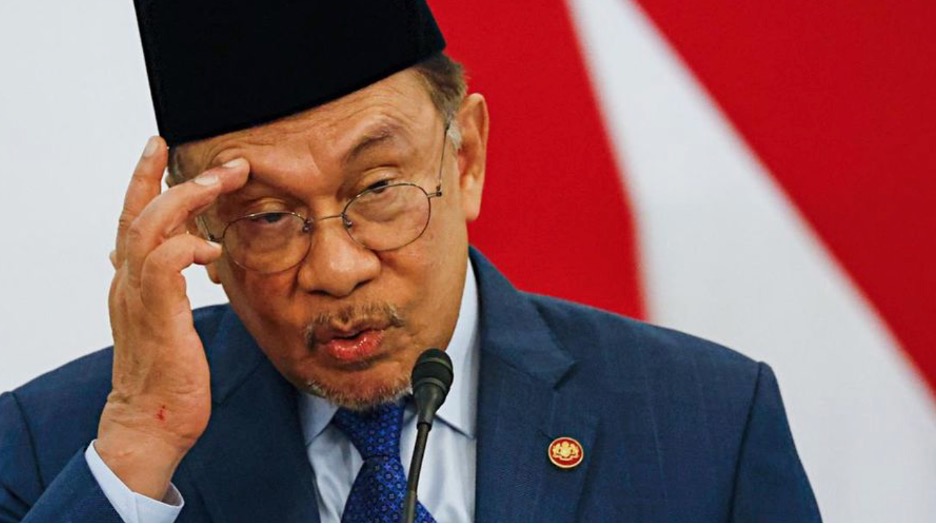
Adul’s statement came just days before Prime Minister Anutin Charnvirakul’s two-day official visit to Malaysia on 9-10 July 2026, where he discussed a wide range of issues with his counterpart, Anwar Ibrahim, including conflict resolution in the Patani region.
“The government has no business talking to the BRN,” said Adul. Yet, in the same breath, he contradicted himself: “And we will not elevate the status of the dialogue any more than necessary”—a remark suggesting he is aware of the peace process but not happy with it.
When Adul questioned the merit of talking to BRN, it was unclear whether he was referring to the mystery caller who had telephoned the Isra News Agency, claiming to be a rebel commander in Narathiwat province.
The caller offered to surrender more than 100 BRN combatants in exchange for a Thai Army withdrawal from the “area”—though it was unclear whether he meant Narathiwat province alone or the entire conflict-affected region, which includes Pattani, Yala, and the four Malay-speaking districts of Songkhla province.
Adul’s statement showed that Thailand still lacks unity in the far south. One might expect the country to be singing from the same sheet of music by now, given that official talks between the separatists and the government began back in 2013.
Regardless of his intention, Adul’s statement was damaging to the peace initiative. It was extremely humiliating for Anutin, who was on his way to Malaysia. In an indirect way, it also gave BRN the justification it needed to spike violence.
One veteran observer of the conflict said the caller claiming to be a BRN commander in Narathiwat looked very much like a ploy by the old guard of officials from the Fourth Army Area, who had been upset at being replaced by commanders from the Second Army Area in the northeast.
The idea, this observer suggested, was to provoke their replacements and see how they would react under a critical situation. As it turned out, the new crop of top brass in the far south kept their cool.
Backchannels and Goodwill Gestures
Under the current leadership of Thanut Suvarnananda, director of the National Intelligence Agency (NIA), the talks appear to be moving in the right direction.
His team moved quickly, reaching out to an international NGO to facilitate discussions between Thai generals and their counterparts from the Indonesian and Philippine armed forces—military leaders who had worked on the Aceh and Mindanao peace processes.
Another international NGO has been facilitating discussions between Thai officials and BRN negotiators, with the participation of Malaysian facilitators.
All the while, Thailand is considering BRN’s request for the release of some BRN detainees as a goodwill gesture. The Terms of Reference (TOR) for Public Consultation is currently being drafted, with the TOR for a Temporary Cessation of Violence in the pipeline.
In the meantime, the Thai negotiating team is planning to bring a group of Thai CSOs to Malaysia to meet with BRN. There is also talk of permitting some CSOs to observe the official negotiations between the two sides.
The fact that the Thai army is no longer on the negotiating team makes it easier for the two sides to reach agreements at the table. Implementing any deals reached with BRN, on the other hand, would be difficult without a buy-in from the army.
According to an informed source, the Thai Army is considering opening another back channel through former Indonesian vice president Jusuf Kalla.
Thai security agencies and the military have long wanted to speak directly with BRN military leaders. But the global standard does not allow Thailand to pick and choose who it talks to; BRN leaders pick their own representatives to the negotiating table. Thailand simply has to learn how to make that work.
ISOC Under Fire
A major component of Thailand’s counter-insurgency programme in the far south is control over the narrative.
Over two decades ago, around mid-2001, when the current generation of separatist militants resurfaced in the Malay-speaking south, carrying out sporadic attacks against government security positions, they were dismissed as “sparrow bandits”.
Even after the arms heist in Narathiwat on 4 January 2004 – when BRN combatants made off with about 400 pieces of military weaponry and the Thais could no longer dismiss the political underpinnings of the act – government officials continued to portray them as drug-crazed youths who embraced a distorted history and a wrong interpretation of Islam.
Today, as Adul suggested, they are still not worth talking to. And yet the Thai government continues to send officials to meet with them—not to “negotiate”, but to have a “conversation”.
Running on a separate track is the Internal Security Operations Command (ISOC)—nominally a military-led entity under the Office of the Prime Minister, created to integrate armed forces, police and administrative resources to suppress domestic threats. The prime minister serves ex officio as director, and the army’s commander-in-chief concurrently as deputy director.
It is ISOC that oversees the information warfare, or more to the point, disinformation, often referred to as information operation (IO).
On paper, ISOC is a civilian-chaired, whole-of-government coordinating body—not a service branch. In practice, it has no independent procurement and draws on the armed forces’ logistics, training facilities and intelligence networks, relying on military personnel for execution.
In the far south especially, an ISOC officer and an army officer in the same district often draw on the same intelligence apparatus and the same manpower pool. Basically, it is the same guy wearing two hats.
During the recent budget debate, veteran lawmaker Wan Muhammed Noor Matha – part of the government’s special committee scrutinising the THB3.788t Fiscal Year 2027 budget bill – called on the government to scrap ISOC, calling the entity redundant.
Wan Noor lashed out at the command, saying it had nothing to show for itself other than the recent failed assassination attempt on Narathiwat MP Kamolsak Leewamoh, a well-known human rights lawyer from the Prachachart Party.
The weapon, the personnel and the vehicle involved all belonged to ISOC, said a visibly upset Wan Noor. ISOC dismissedthe suggestion that they were behind the assassination attempt.
Disinformation in the Courts
On 11 June, Thailand’s Court of Appeal ordered ISOC to pay compensation to Senator Angkhana Neelapaijit, a prominent Thai human rights defender and a recipient of the 2019 Ramon Magsaysay Award, and to Anchana Heemmina, founder of the Duay Jai human rights organisation, overturning part of a lower-court decision.
The suit was filed by the two activists against the Office of the Prime Minister, ISOC and the Royal Thai Army over online posts that spread false information about them.
The Office of the Prime Minister and the Royal Thai Army were named as the first and second defendants because the PM serves as ISOC Director, with the Army Commander-in-Chief and Fourth Army Area Commander as supervisors of the IO, raising a command-negligence theory of liability.
ISOC was ordered to pay THB210,000 in total compensation – THB120,000 to Angkhana and THB90,000 to Anchana –plus interest and to remove the offending content within seven days.
IO started in the conflict-affected far south, targeting political activists via ghost accounts on social media, mainly Facebook. By March 2021, Facebook decided it had had enough. Meta removed 77 accounts, 72 pages, 18 groups and 18 Instagram accounts, marking the first time the company had removed accounts allegedly linked to the Thai government. The network had roughly 703,000 followers and 100,000 in groups, mixing fake personas with authentic accounts.
Twitter, now known as X, also took action. The company took down 926 Thai accounts in October 2020 that were smearing pro-reform youth and student-led movements that, by November 2020, engaged in street clashes with Thai police. Giant rubber ducks were used as shields against powerful water cannons.
Last, but not least, IO was also deployed against critics of the military’s Cambodia policy. Senator Angkhana was one of their primary targets.
Impact on the Peace Process
The battle over who gets to control the narrative in the historically-contested region far south is currently taking its toll on the government’s own peace effort in the area.
Activists from groups like The Patani and Civil Society Assembly for Peace (CAP) are being charged by ISOC for advocating rights for self-determination in their home region.
Thailand’s National Human Rights Commission said in a January 2025 statement that it found no evidence of inciting separatism. The commission also said prosecuting the activists represents excessive use of the law to suppress freedom of expression and constitutes a human rights violation.
Court cases that ISOC pushed through against groups like The Patani and CAP are still ongoing. The problem for the Thai peace process is that more and more government agencies are turning to them for consultation about how to bridge the trust gap between the state and the Malay minorities in the far south.
Over the years, The Patani often acts as an interlocutor between the government security apparatus and the separatist militants, and provides consultation to the Malaysian government, the designated facilitator for the peace talks.
One government security unit accuses them of treason, while others turn to them for consultation. This says a lot about Thailand’s disunity in this effort to bring peace in this region where more than 7,700 have been killed from insurgency-related violence since January 2004.
The views expressed are those of the authors and do not necessarily reflect those of STRAT.O.SPHERE CONSULTING PTE LTD.