
Introduction
In the quiet hours of night, millions of young Indonesians scroll through their phones. Between comedy clips and music videos, disturbing images flash by, from Palestinian children pulled from rubble in Gaza to rockets exchanged between Israel and Iran.
These appear without warning, delivered not by choice, but by the algorithmic feed.
The intent of such content may be to inform and raise awareness, but its sheer volume could easily overwhelm anyone, leaving them wit
This is how – in the context of radicalism/extremism – brain rot begins, not from apathy but from emotional overload. It is the state where extremist content no longer needs to shout; it blends easily into one’s home feed, just one click or scroll away.
Multiple essays have already looked at brain rot from different angles, including cultural and legal aspects. This one, however, explores the political dynamics of brain rot; in particular, how digital fatigue and emotional vulnerability can facilitate extremist narratives to thrive on youth’s political discourse.
Brain Rot and Youth Vulnerability
A UNICEF baseline study found that nearly 90% of Indonesian youth are online every day, averaging 5.4 hours of screen time. Most young people watch short videos on platforms like TikTok, YouTube Shorts and Instagram Reels on their smartphones. This level of exposure on social media creates a growing risk of radicalisation.
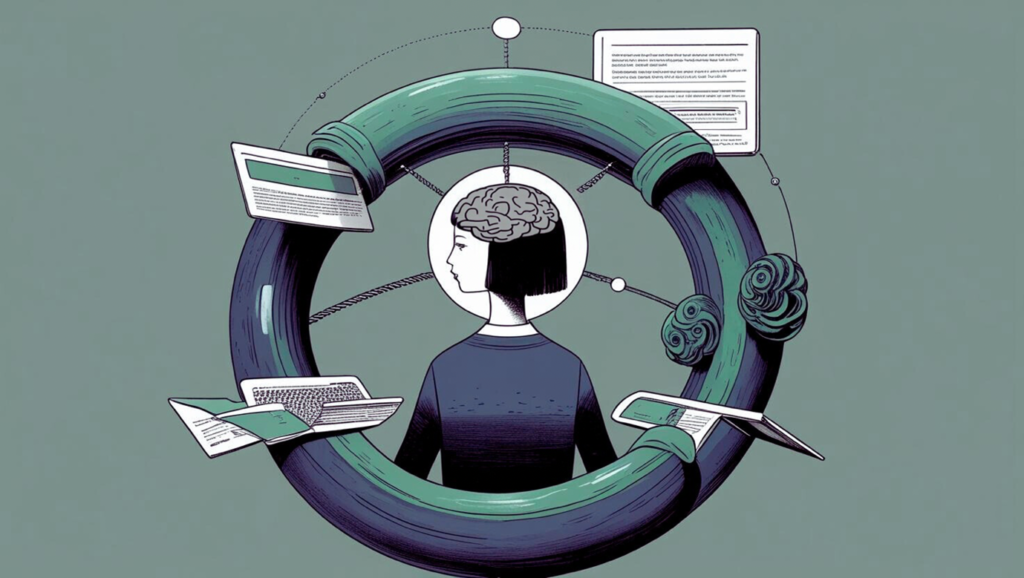
These social media may have started out as communication tools, but they have somehow evolved into platforms where entertainment, aspiration, despair, anger and conviction mix and match, thus giving rise to the brain rot phenomenon. This term, once a meme, now represents a real concern: the slow loss of mental and emotional clarity from constant exposure to shallow or numbing content.
Brain rot is increasingly seen not only as a mental health issue but also as a possible pathway to extremist influence. It weakens cognitive function and mental strength, creating an ideal environment for extremist messages.
In this state, critical thinking declines and political disillusionment rises. Radical ideas start to appear reasonable, especially when they resonate with deep frustrations about politics, economy and general wellbeing.
This concern mirrors another condition called “pandemic brain”, a state of forgetfulness and cognitive fatigue caused by prolonged stress and overstimulation during the peak of the Covid-19 pandemic.
Such a comparison is not without basis, given that the risk of radicalism in Indonesia grew during the pandemic. With increased screen time, less face-to-face interaction and higher dependency on online platforms, young people felt more isolated, creating fertile ground for online radicalisation.
Rising frustration and perceived political unfairness during the pandemic made room for politicised narratives by extremists to develop. For many disillusioned youths, radical messages that frame violence as justice felt emotionally compelling.
Today, Indonesian youth use the term “brain rot” casually to describe their digital fatigue. Students who consume a steady diet of quick, entertaining content often lose interest in tasks requiring deep focus and struggle with complex material. Too much digital input adds to mental fatigue, making it harder for youth to concentrate, plan, stay motivated or understand what truly matters.
The effects reach far beyond the classroom. Brain rot impacts how young people process information, form opinions and engage with the world. In overstimulated environments, truth becomes less significant than emotional appeal; what feels urgent, relatable or compelling captures more attention. When it comes to political discourses like anti-state narratives, it becomes much easier.
Affective Publics
In Indonesia, young people are politically active, socially vocal and emotionally engaged. They follow news online, share critiques and take part in protests.
Many young people have grown disappointed in the government for its perceived inability to address or involvement in creating problems that they are passionate about, such as the environmental destruction in Raja Ampat, unresolved gender-based violence, and the performative – rather than participatory – political system.
The idea of “affective publics” helps to understand how youth get involved in politics today. In online spaces, people connect not through facts but through shared emotions such as anger, grief, pride or betrayal.
These publics are organised around “affect”, described as “thought as felt and feeling as thought”. In these spaces, political engagement comes more from what resonates emotionally than from careful discussion.
This means political discourse today is increasingly influenced by emotional climates instead of rational debate. When someone experiences digital fatigue, their ability to process detailed arguments weakens, making emotional content more convincing.
Issues that resonate with young people today, such as environment and gender, are also highly emotive. But when emotional content overwhelms the youth without giving them a chance to process the information, it stops being a source of empowerment and renders them exhausted.
This is where vulnerability increases, as politics becomes not just a means for civic expression but merely a tool for emotional manipulation.
Extremist
When young people are already emotionally drained and politically disillusioned, it does not take much to push them further.
Jemaah Islamiyah recognised this opportunity. Before its formal disbandment in mid-2024, the group expanded its focus from violence to a political strategy called tamkin siyasi (political consolidation),
Some of its members infiltrated Indonesia’s political and religious institutions. One launched the Partai Dakwah Rakyat Indonesia (Indonesian People’s Da’wah Party – PDRI), a party aimed at contesting national and regional elections, while another became part of the fatwa commission at the Indonesian Ulema Council (MUI).
These do not mean a shift away from their goals; they were a recalibration, designed to harness public support and political momentum.
Politics, thus, becomes more than a background; it becomes a battlefield for influence. Young people are trying to reclaim their future, while extremist groups aim to capture their attention. In affective publics, where emotional stories spread faster than facts, the risk of ignoring this shift is significant.
As brain fatigue weakens the mental sharpness needed to resist emotional manipulation, this risk only increases.
Emotional Propaganda
Today, extremist propaganda no longer appears only in traditional sermons or manifestos. Instead, it mixes with everyday content like anti-government posts, emotional videos from Gaza or Syria, and viral stories about global injustice. The youth are susceptible to such manipulation, as their constant
Many clips on social media start as genuine journalism, but over time and with repetition, they become emotional triggers that can be distorted. Extremist groups take these visuals and add narratives meant to provoke anger, using public emotions to serve their agendas.
In one interview, a former far-right propagandist explained, “Radicalising people was easy; I just had to tell a better story than The Establishment.” It was not about facts or ideology; it was about creating a story that felt more engaging and personal.
He added, “The one with the better story wins the war… the battle does not take place on a physical level but in our minds.”
These extremist narratives do not seem threatening. They blend into the home feed like a wolf in sheep’s clothing, wrapped with emotive messaging that arouses anger or vengeance. For overstimulated and mentally exhausted youth, this content is easy to accept and hard to question.
In 2023, a teenager in Batu Malang was arrested for engaging with extremist content online, having joined a Telegram group that frequently shared anti-state propaganda. Such propaganda included claims that democracy is shirk (idolatry) and calls for war against the state for not applying sharia.
In Malaysia, the Ulu Tiram incident suggests that the young offender may have been influenced by the ongoing conflict in Palestine, which he frequently consumed online, as well as by a family background connected to a terrorist organisation.
While the details differ, both cases show a clear pattern: those young people are affected by constant exposure to digital content.
If youth can be influenced by online narratives when they are not emotionally fatigued, the risk increases when their emotional defences are low. In such cases, emotionally charged content does more than sway opinions. It influences how young people understand politics, identity and the world around them.
Beyond the Scroll
Brain rot is often seen as a meme, but it might be the canary in the coal mine, a warning sign of a bigger issue among Indonesia’s youth: the decline of clear thinking and emotional strength in a world where many engage in endless scrolling.
For Indonesian youth, this emotional exhaustion affects attention span. It weakens the ability to think critically, fosters political disillusionment and blurs the line between civic participation and emotional manipulation.
When exposed to narratives that provoke rather than inform, extreme ideas do not seem radical; they seem right, especially when they reflect long-standing anger about injustice, inequality or failed leadership.
What starts as mindless scrolling evolves into a tool for shaping political views. Social media feeds, once designed for entertainment or awareness, now serve as emotional channels, boosting complaints, skipping over rational thinking and promoting narratives that resonate more than they inform.
This issue extends beyond mental health. It poses a political and security threat. While extremist groups have quickly adjusted to this environment, democratic forces tend to react rather than act. In a country where the youth are the political majority but trust in institutions is declining, even the most dangerous ideas can seem like common sense.
This article is not about offering blueprints, but it aims to raise awareness. Before fatigue turns into apathy, before emotion transforms into ideology and before the scroll dictates the narrative.
What we are witnessing now is no longer just a meme. It is a warning.
