Democratic Stress Test
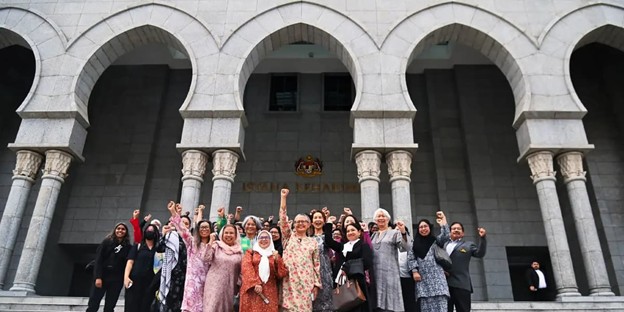
On 19 June 2025, Malaysia’s Federal Court ruled in favour of SIS Forum (Malaysia), holding that a 2014 Selangor fatwa declaring liberalism and pluralism as deviant could not be enforced against a registered company.
The decision underscored a crucial constitutional limit: fatwas cannot extend to corporate entities.
More than a technicality, this was a matter of protecting civil rights. By drawing a clear boundary between religious authority and constitutional law, the Federal Court’s decision appears to mark an important step forward for Malaysian democracy and constitutionalism.
Yet the responses that followed – by state religious authorities, Islamist actors and government leaders – revealed something deeper. Rather than addressing ethical or jurisprudenti
Such a reaction highlights the limits of Islamist democracy, where participation in democratic processes masks a deeper commitment to religious supremacy. The ruling, thus, offers a critical window into how Malaysia’s religious bureaucracy and Islamist movements operate and react when confronted with judicial constraints.
The Long Shadow of Islamisation
To understand why the ruling sparked such visceral reactions, it is necessary to situate fatwa authority within Malaysia’s longer trajectory of Islamisation.
Since the 1980s, syariah courts have expanded jurisdiction over family law, morality policing and personal status, while state religious departments have gained authority over a widening range of social and cultural matters.
By the 2000s, fatwas were no longer merely advisory opinions but acquired a quasi-legal nature. Today, they shape not only individual behaviour but also regulate publishing, media and corporate entities.
Maznah Mohamad, in Divine Bureaucracy (2020), describes this as a circulatory system of power: overlapping jurisdictions in which bureaucratic and religious authority reinforce one another, generating power without accountability.
Fatwas sit at the centre of this machinery, presented as divinely grounded yet enforced through modern bureaucratic systems. This fusion of divinity and bureaucracy means fatwas are insulated from critique even as they carry binding social and legal consequences.
This institutional architecture aligns closely with what Bassam Tibi terms in his book Islamism and Islam: “institutional Islamism”. “Institutional Islamism” embeds itself within state structures – parliaments, NGOs, courts, bureaucracies – to achieve the sacralisation of politics and the surrender of sovereignty to God (hakimiyyat Allah).
Placed in the Malaysian context, the convergence of religious bureaucracy and institutional Islamism explains why the SIS Forum (Malaysia) ruling struck a nerve. A judicial limit on fatwa authority might have been perceived not as a constitutional clarification but as a threat to the entir
The Backlash
The chorus of responses to the SIS Forum (Malaysia) ruling, though varied in tone, converged on one demand: the preservation of fatwa authority.
The religious authorities’ responses exemplified their perception that they are under threat by the ruling, which challenges the jurisdiction of the fatwa institution and is therefore unacceptable. They insisted on their authority to issue fatwas on Muslim affairs.
Majlis Agama Islam Selangor (Selangor Islamic Religious Council – MAIS) and the Sultan of Selangor responded with disappointment, insisting that while the fatwa could not apply to a corporate entity, it remains valid for individuals.
MAIS lamented that the court had created a loophole through which “deviant” groups might hide. The Sultan, as head of Islam in the state, went further, urging SIS Forum (Malaysia) to remove the word “Islam” from its name to prevent confusion.
These responses reframe a judicial limitation as a symbolic affront, transforming a constitutional ruling into a question of religious loyalty.
Furthermore, the Selangor Mufti reinforced this framing by portraying SIS Forum (Malaysia) as a “cult-like” movement. This might appear less as an incidental comment and more as an epistemic strategy: to deny SIS Forum (Malaysia) the status
Despite this, SIS Forum (Malaysia)’s track record runs counter to this depiction. Since founding Musawah in 2009, SIS Forum (Malaysia) has built a transnational network of Islamic feminist scholarship. It is an active partner of the Kongres Ulama Perempuan Indonesia (Indonesian Women’s Ulama Congress – KUPI), which has convened more than a thousand female ulama to deliberate on fiqh (Islamic jurisprudence) and justice.
SIS Forum (Malaysia)’s corpus – spanning publications, legal training and maqasid-based jurisprudence – shows that it is embedded in intellectual rather than cultic traditions. The refusal to acknowledge this reflects a strategy of delegitimisation: by reducing SIS Forum (Malaysia) to “deviant”, Islamist actors defend the fatwa without confronting its ethical validity.
The Minister of Religious Affairs struck a more conciliatory note, affirming respect for the judicial process while stressing that fatwas remain essential in guiding Muslims. He called for stronger cooperation between the judiciary, legislature and religious institutions to preserve the kewibawaan institusi fatwa (authority of the fatwa institution).
Regardless, even at the federal level, the core message echoed the state’s: judicial restraint must not translate into weakened religious authority.
Islamist Movements: Three Registers of Response
Responses from Islamist movements fall broadly into three registers—far-right Islamists, moderate Islamists and Islamist coalitions. All three share an ideological basis rooted in transnational Islamism, a movement that seeks to organise society under hakimiyyat Allah and reassert religion as the foundation of political and moral order. While they differ in strategy and tone, they operate within the same ideological continuum.
The far-right Islamists adopt an openly confrontational stance, framing feminism, liberalism and pluralism as existential threats to Islam.
The moderate Islamists present themselves as reformist and dialogical but remain committed to expanding sharia authority through rahmah-based or cosmopolitanism rhetorics, and they consider themselves as the middle ground between the liberals and the far-right Islamists.
The Islamist coalitions represent networks of these actors across ideological spectrums, formed to amplify and consolidate their influence through collective advocacy, joint statements, and coordinated activism in both state-linked and civil society spaces.
Far-Right Islamists
The International Women’s Alliance for Family Institution and Quality Education (WAFIQ), linked to Ikatan Muslimin Malaysia(Malaysian Muslim Solidarity – ISMA), attacked SIS Forum (Malaysia) directly on gender grounds. It framed SIS Forum (Malaysia) as a Trojan horse for liberalism and feminism, rejecting Islamic feminism altogether as a Western deviation.
Its rhetoric focused on warning Muslims against “false” women’s rights advocacy and demanding harsher state action against SIS Forum (Malaysia)’s publications and activities.
Arguably, this is an attempt to counter SIS Forum (Malaysia)’s gender justice agenda by positioning WAFIQ as the sole guardian of authentic Islamic womanhood.
Moderate Islamists
Angkatan Belia Islam Malaysia’s (Malaysian Islamic Youth Movement – ABIM) response reveals a different register of concern. As the original Islamist organisation that cultivates the infrastructure of Islamic legal activism, ABIM has long expanded sharia jurisdiction through affiliated lawyers.
ABIM’s statement on this issue focuses not on theology but on institutional authority, warning that the decision could weaken fatwa and disrupt Malaysia’s dual legal system. It demands explicit federal recognition of fatwa and amendments to strengthen religious institutions. ABIM even appeals to Majlis Raja-Raja (Conference of Rulers) to uphold Islamic supremacy.
IKRAM, by contrast, clothed the same defence of fatwa in its negara rahmah rhetoric. Its statement mentions Islam as a syumul (comprehensive) system of governance and morality, equating SIS Forum (Malaysia) with cultic groups like Global Ikhwan Services and Business (GISB) and warning against exploiting corporate l
While promising gentle dialogue and inclusive approaches, IKRAM still pressed for legal reforms to expand sharia oversight. This softer packaging demonstrates how moderate Islamists reproduce the authoritarian core of religious authoritarianism while presenting themselves as compassionate reformers.
Islamist Coalitions
The coalition Himpunan Gerakan Islam Malaysia (HIKAM), which consists of moderate Islamists ABIM, IKRAM, Wadah Pencerdasan Umat Malaysia (WADAH) and Pertubuhan Himpunan Lepasan Institusi Pendidikan Malaysia (HALUAN), illustrates the unifying power of fatwa defence.
Its joint statement endorsed the Sultan’s call for SIS Forum (Malaysia) to drop the word “Islam” from its name, affirmed fatwa as essential to protect aqidah and moral order, and warned against exploitation of corporate status.
Crucially, HIKAM framed the Federal Court ruling as a narrow technicality that threatens religious sovereignty while offering no ethical critique of the fatwa itself. This shows how moderates and conservatives alike concurred in defending fatwa authority as sacrosanct.
Taken together, these responses reveal a striking concurrence across institutions and movements. From the monarchy to the bureaucracy, from muftis to federal ministers and from far-right Islamists to moderates, the defence of fatwa became the common denominator.
None questioned its ethical content or the validity of delegitimising feminist voices. Instead, the backlash reasserted the sanctity of the fatwa as the linchpin of Malaysia’s religious bureaucracy—untouchable, insulated and above democratic scrutiny.
Epistemic Closure and the Gendered Battleground
The portrayal of SIS Forum (Malaysia) as a deviant cult reveals how gendered politics serve as a primary battleground for Islamist ideology.
Haideh Moghissi argues in Feminism and Islamic Fundamentalism: The Limits of Postmodern Analysis that Islamism consistently deploys gender to mark boundaries of community and authority; thus, controlling women’s voices is central to maintaining ideological purity.
Extrapolating from this argument, labelling SIS Forum (Malaysia) “sesat” (deviant) is not about theology but about disciplining feminist voices that challenge patriarchal readings of Islam.
By erasing SIS Forum (Malaysia)’s intellectual contributions, Islamists deny the possibility of pluralist ijtihad (independent reasoning). Yet, as Ziba Mir-Hosseini argues, Islamic feminism emerged precisely as a resistance against Islamism and religious fundamentalism.
Through their jurisprudential work, groups like SIS Forum (Malaysia) articulate alternative visions of Islam rooted in justice, equality and ihsan (excellence). Their engagement with maqasid al-shariah (purposes of sharia) embodies the preservation of religion not through authoritarian closure but through ethical renewal.
Maznah Mohamad, in her book The Divine Bureaucracy and Disenchantment of Social Life, demonstrates how these institutionalised forms of religious authority are gendered in practice. The circulatory system of fatwa, sharia courts and religious departments does not operate neutrally; it disproportionately targets women’s rights in family law, moral regulation and public participation.
The attack on SIS Forum (Malaysia) thus exemplifies how bureaucracy mobilises its authority to police gendered spaces, silencing feminist reinterpretations while insulating patriarchal norms from critique.
Therefore, the backlash represents a form of epistemic closure. Instead of debating competing visions of Islam, Islamist actors – from bureaucrats to NGOs – construct arguments and claims to delegitimise alternative readings of Islam. In doing so, they sacralise the fatwa as a repository of divine truth, even when its claims rest on erasures and misrepresentations.
Undemocratising the Constitution

The SIS Forum (Malaysia) fatwa case demonstrates not only the defensive reflexes of Islamist movements and religious bureaucrats but also the decisive role of Islamist legal actors in undemocratising Malaysia’s constitutional order.
Through court cases, media interventions and public mobilisations, Islamist lawyers translate constitutional disputes into moral spectacles that reinforce religious supremacy. Their interventions exemplify what Tamir Moustafa describes in Constituting Religion as the “court of public opinion”: legal disputes are repackaged for mass consumption, generating polarisation and strengthening the authority of religious institutions.
ABIM and IKRAM illustrate how “institutional Islamism” operates through the language of law and reform. Their post-ruling responses did not defend pluralism or the ethics of fatwas but demanded an explicit recognition of fatwa powers in federal law, the harmonisation of civil and sharia systems, as well as the expansion of Islamic governance. Wrapped in the rhetoric of rahmah or technocratic harmonisation, these calls nonetheless reveal a consistent objective: the insulation of religious authority from democratic accountability.
Islamist legal practitioners such as Zainul Rijal Abu Bakar (lawyer for the Selangor Fatwa Committee and director of Pertubuhan-Pertubuhan Pembela Islam[Organisations of Islamic Defenders – PEMBELA]) and Dr Zulfakar Ramlee (IKRAM Legal) reinforced this expansionist logic.
Zainul framed the Federal Court decision as a mere technicality, insisting that individuals in SIS Forum (Malaysia) remain personally bound by the fatwa and should cease speaking on Islam. Dr Zulfakar described fatwas as the institutional product of rigorous deliberation, endorsed by the Sultan, and used the case to argue for strengthening sharia court structures.
Their framing portrayed fatwa as beyond ethical contestation while calling for deeper institutional entrenchment.
Other lawyers, such as Aidil Khalid of Persatuan Peguam-Peguam Muslim Malaysia (Malaysian Muslim Lawyers Association – PPMM), took the battle directly into the public sphere. Public talks and social media campaigns linked the ruling to wider struggles against so-called “Islamic liberalism”, mobilising suspicion against SIS Forum (Malaysia) as part of a broader ideological war.
In this way, Islamist lawyers moved seamlessly from courtroom to mosque to media, extending the fatwa battle into the social space.
Moustafa also shows how the very codification of sharia into modern state law transformed what was once a plural and interpretive legal tradition into a fixed, hierarchical, and standardised system. Where fiqh historically thrived on differences of opinion (ikhtilaf) and non-hierarchical debate, the postcolonial state imposed a hierarchical court structure and codified statutes that mirror civil/common law procedure.
As he notes, whole sections of civil court codes were imported wholesale into the Syariah Criminal Procedure Act and Syariah Civil Procedure Act, stripped only of elements deemed “objectionable”. The result is what scholars have called an “Anglo-Muslim law”: formally modern, positivist and legible to common law lawyers, yet unfamiliar to classically trained jurists.
This pembakuan – the hardening of fluid jurisprudence into statutory authority – created the appearance of sharia as a supreme legal code, monopolised by the state and its legal actors. Islamist lawyers seized upon this codification to argue for kedaulatan syariah (sovereignty of sharia), claiming that precisely because sharia has been bureaucratised into statutes and courts, it must now function as the highest law. Every court case is thus reframed as justification to expand this supremacy, even when rulings technically limit its scope.
This dynamic supports Moustafa’s thesis: the judiciary becomes less a site of resolution than a stage for polarisation. Courtroom defeats are reframed as technicalities, while the public is mobilised to demand stronger religious institutions. Legal actors present themselves as neutral professionals but in fact embed authoritarian logics into constitutional practice.
Conclusion
The Federal Court’s decision did not deny the dignity of Islam or strip fatwas of spiritual value. It merely clarified that constitutional boundaries apply to religious decrees. Yet the reactions it instigated – disappointment, panic, misinformation campaigns and calls for censorship – show how fatwa has been elevated beyond critique. Across the monarchy, bureaucracy, government and Islamist movements, the defence of fatwa authority converged on a consensus: religious authority is untouchable.
The backlash also reveals the tangible consequences of misinformation. Despite winning a constitutional ruling, SIS Forum (Malaysia) acceded to the Sultan’s intervention to drop the word “Islam” from its public name. Previously, SIS Forum (Malaysia) was known as Sisters of Islam (SIS).
In July 2025, the organisation formally announced it would henceforth operate only as SIS Forum (Malaysia). As Executive Director Rozana Isa explained, the decision was taken to move forward from endless debates about nomenclature and to refocus on substantive issues – nafkah (financial support) arrears, unilateral polygamy, gender-insensitive legal interpretations – that continue to deny justice to Muslim women.
The impact of misinformation extended beyond Islamist circles. Liberal and secular commentators, who might have defended SIS on grounds of democratic rights and civil liberties, instead echoed the Islamist suspicion of “misuse of Islam”. One commentary even suggested an “SIS vs GISB showdown”, equating a feminist intellectual platform with a cult-like organisation simply because both were registered companies:
“Imagine the SIS vs GISB Showdown. On one side, SIS; the so-called torchbearers of liberal Islam. On the other, Global Ikhwan Sdn Bhd (GISB); accused of being too far in the other direction, running its own mini-caliphate economy with allegations of cult-like behaviour. Both sit on opposite ends of the ideological spectrum, yet both might find themselves using the same legal shield: ‘You can’t fatwa us, we’re corporate entities!’”
This framing reveals a wider interpretive failure. While concerns about the “corporate shield” loophole may appear legitimate, since religious authorities fear that deviant or commercial entities could exploit corporate registration to evade fatwa jurisdiction, it also exposes a deeper structural problem: Malaysia lacks an independent body capable of evaluating such cases consistently or ethically. In the absence of institutional neutrality, this “technicality” argument becomes selectively weaponised against progressive groups like SIS Forum (Malaysia) while leaving other religiously aligned corporations untouched.
However, SIS Forum (Malaysia) was far from isolated. The Federal Court’s ruling was welcomed by human rights advocates, legal scholars and feminist networks within Malaysia, as well as by its regional and international allies, including Kongres Ulama Perempuan Indonesia (KUPI), Singapore-based Musl
These networks underscored that the ruling did not create a corporate loophole but reaffirmed that faith-based scholarship and public advocacy must remain free from state coercion. Their support highlights that within the global Islamic intellectual landscape, SIS Forum (Malaysia) represents a legitimate reformist current rather than a deviant outlier.
In the end, SIS Forum (Malaysia) was compelled to retreat from its symbolic claim to “Islam”, even as it continues to live out that commitment through its jurisprudential and advocacy work. This outcome demonstrates the paradox of Malaysia’s Islamist democracy: even when progressives secure judicial victories, the convergence of misinformation, religious/divine bureaucracy and institutional Islamism ensures that authority remains insulated from critique. The lesson is clear: when democracy is stripped of pluralism and ethics, it becomes a theatre for defending authority rather than a space for deliberation. The SIS Forum (Malaysia) fatwa backlash is thus not only a story about one organisation but a mirror reflecting the fragile foundations of Malaysia’s democratic experiment under the shadow of Islamisation.