search


Iranian Supreme Leader Ayatollah Ali Khamenei was reportedly killed in one of the US-Israeli strikes. Credit: REUTERS/Office of the Supreme Leader
Malaysia and Potential War in the Gulf
March 4, 2026 / 7 minutes of reading
Escalation
Over the past weekend, the United States and Israel launched strikes against Tehran, killing Iranian Supreme Leader Ayatollah Ali Khamenei, senior leaders and hundreds other. The ripple effects of this are already being felt. While still on the negotiating table over Iran’s nuclear programme, the attack does not bode well for a diplomatic solution.
For weeks now, the world had been bracing for a possible attack on Iran. US warships have been anchored in the Persian Gulf. The USS Abraham Lincoln, a formidable aircraft carrier and in commission since 1989, serves as a reminder of the US presence in the region and the pressure it can exert on Iran.
Israel’s influence on the United States is clear, with joint operations against Iran a clear indication of this. President Donald Trump’s statements and the use of bases in the Middle East indicate that this might be a bigger military campaign than last year’s targeted attack on Iran’s military and nuclear facilities.
Dynamics observed in 2026 have proven to be a continuation of last year’s growing escalations in the region, with significant repercussions for the world. But how will this recent increase in tensions in the Persian Gulf affect Southeast Asia, particularly Malaysia, with its different ties to the region?
Iran holds an interesting position in the region. It has established a presence within ASEAN through its permanent representative and has an embassy in most countries, except Timor Leste.
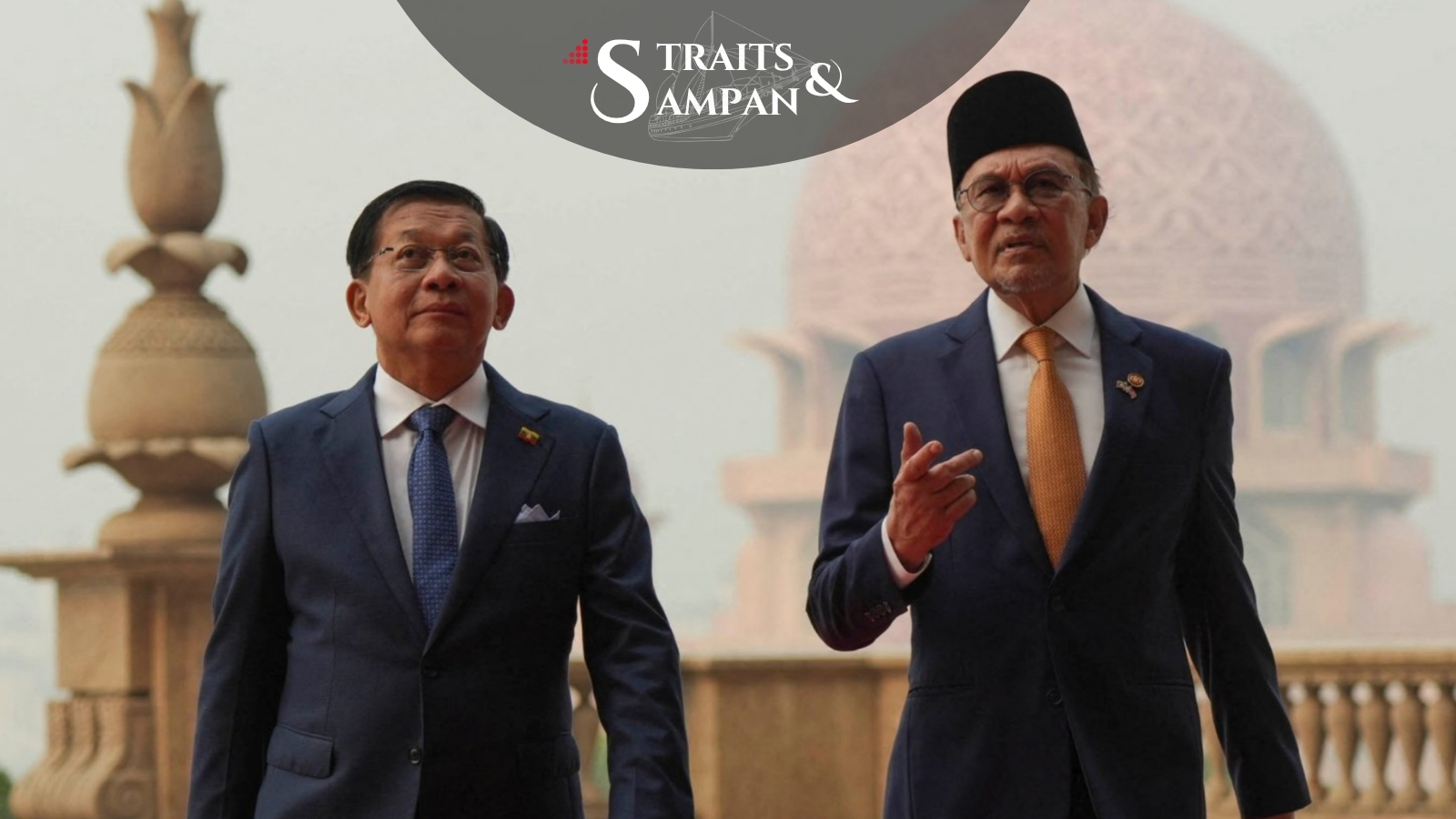
The two regions are deeply connected economically, politically and even socially. Malaysian Foreign Minister Mohammad Hassan issued a statement a few days ago warning of the global impact a war would have on Malaysia and the region. Since the attacks on Iran this past weekend, Prime Minister Anwar Ibrahim has been issuing strong statements against the Israeli-US attacks, pledging to bring the matter to the Malaysian Parliament. He has warned against further instability and a rise in oil prices, while also promising to support Malaysians in the Gulf countries.
This latest escalation in tensions in the Gulf is part of already existing tensions in the region, revealing the delicate balance on which the Saudi-Iranian-Emirati relationship rests on. It also shows how Malaysia will be affected by this delicate situation and how it sees itself as a voice of reason.
Instability in the Gulf
In recent times, the geopolitics of the Persian Gulf has been shifting. Saudi Arabia and Iran, despite long tensions, have come together since their representatives met in China in March 2023 to improve relations. The détente has proved resilient—Saudi officials have also made it clear that it would not support any action against Iran.
However, in retaliation to attacks on its soil, Iran has hit targets in the Gulf, including Saudi Arabia and the United Arab Emirates. This has reversed some of the advances made in the diplomatic relations between the countries, with the UAE recalling its ambassador from Iran on Sunday.
This has served to further increase tensions that had already been building up in the region. The conflict in Yemen started off as very much a Saudi-Iranian proxy war, with Iran backing the Shiite Houthis based in Sanaa while Saudi Arabia and other Gulf countries gave support to the Sunni forces based in Aden.
As the relationship was on track to becoming more normalised between Riyadh and Tehran, tensions have lowered between Saudi Arabia and Iran. But it was the United Arab Emirates’ activities in Yemen that revealed a growing rift with Saudi Arabia. Although both started by supporting the same side in the conflict, their backing of different opposition groups in Yemen showed their inability to find common ground on an endgame.
Emirati troops stationed along the Saudi border at the end of 2025 deeply concerned Riyadh, who saw this as a provocation. The United Arab Emirates has since withdrawn its troops from Yemen, but tensions have remained between the two.
Meanwhile, Qatar-Iranian relations last year were put to the test when the United States used its base in Qatar to launch an attack on Iran. Tehran retaliated by sending missiles to the base within Qatar’s territory. The attack left a bitter mark but also shed light on how embedded the United States was in the Gulf, with its various bases and relative freedom to use them for operations against neighbour countries.
This weekend’s attacks continue to put the region under strain. Oman has sought to play the role of peacekeeper, urging for a diplomatic solution and keeping communications with Tehran and its new leadership open. But only time will tell if tensions can de-escalate and the United States, Israel and the Arab Gulf countries do not enter into a reactionary war with Iran.
The ASEAN Split
The Gaza dimension adds complications to the matter. Since the 7 October attacks, the Middle East has plunged into a state of uncertainty and instability. These tensions have affected global affairs and have poured over into Southeast Asia in a few ways.
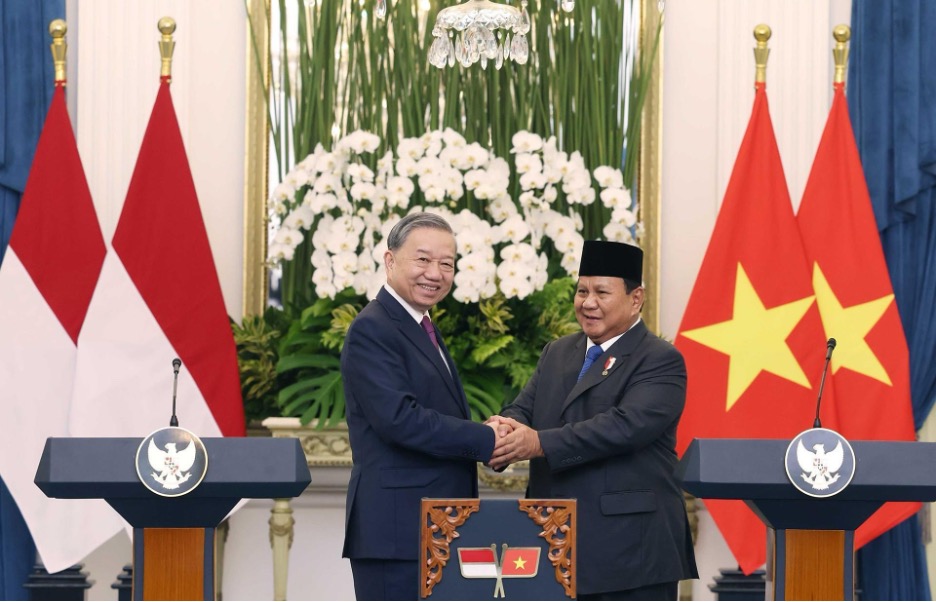
For instance, Indonesian President Prabowo Subianto has tried to play a more prominent role by committing the country to the Board of Peace (BoP), though this has brought to question Indonesia’s actual commitment to the Palestinian cause.
As the largest Muslim country in the world, there is an expectation for Indonesia to support Palestine and condemn Israel outright. But Prabowo’s decision to join the BoP indicates a shift towards alignment with the United States. The only other Southeast Asian countries that have expressed an intent to join the BoP are Vietnam and Cambodia.
Anwar, on the other hand, has assured that Malaysia will not be joining the BoP if peace and independence for the Palestinians are not guaranteed.
Anwar’s High-Stakes Diplomacy
Anwar has endeavoured to balance Malaysia’s relations with the United States as well as with the Arab world, including Iran. At the most recent ASEAN summit, he entertained a jovial Trump during the latter’s 24-hour visit to Kuala Lumpur—all while also calling for restraint in the Middle East and criticising Israel’s as well as the United States’ actions in the region.
Malaysia, despite its official stand against Shiism, maintains warm relations with Iran. Anwar has even condemned past military actions against Iran. However, Malaysian foreign policy has relied on positive equilibrium between West and East, a delicate balance that has the potential to pull the country in different directions.
A possible war in Iran may present Malaysia with an existential crisis of sorts or at least reveal the difficulty of maintaining such a balance. On the one hand, it has to keep its relations with the United States for the sake of trade and investment, but on the other hand, Anwar has positioned Islam and the Islamic world as an important part of his political agenda.
The growing Saudi-UAE tensions will also present Malaysia with another set of issues. Both have been trying to keep Malaysia close in their orbits, with both the Saudi kingdom and the Emirates hosting Malaysia’s Yang di-Pertuan Agong Sultan Ibrahim recently.
Both are important trading partners for Malaysia. In the case of Saudi Arabia, Malaysia maintains close ties for the sake of the pilgrimage quota. Again, a similar dilemma will be presented whereby Malaysia might find itself caught between two allies. Malaysia has also shown strong support for Iran, condemning the attack on Tehran and the killing of Khamenei.
With concerns on how a war might drive up oil prices, Anwar has promised to maintain the oil price in Malaysia—a very important symbol of stability for Malaysians.
Chokepoints
Thousands of kilometres apart, but it is clear that increased tensions in the Middle East will invariably have global effects. If a war erupts following the recent attacks, any escalation will cause problems for the maritime trade that goes through the Persian Gulf, which is significant in itself. Iran has the power to close the Straits of Hormuz, a major waterway through which international traffic passes. It has already halted traffic through, halting supplies from Southeast Asia to Europe and the rest of the world, causing huge delays and disruption.
Airports in the Middle East have closed, causing great disruption of travel. The bombing of Dubai airport also shows the vulnerability of air travel, while the images of grounded planes further serve as a reminder of the disruptive nature of the conflict.
Malaysia and Southeast Asia have a voice in what happens in the Middle East, considering their closeness to the United States and the weight of their combined economic power. However, it might be difficult for a collective strategy to come together, with different agendas and new alignments emerging.
This article is published under a Creative Commons Licence. Republications minimally require 1) credit authors and their institutions, and 2) credit to STRAT.O.SPHERE CONSULTING PTE LTD and include a link back to either our home page or the article URL.