Introduction
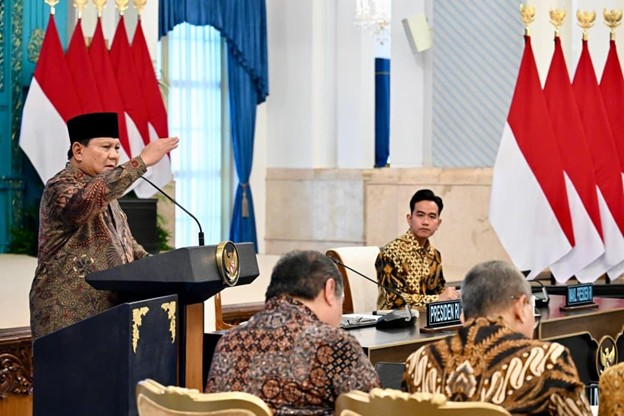
Indonesia stands at a crossroad, yet again, on President Prabowo Subianto’s first anniversary in office. Despite his high-profile social welfare programmes and ambitious economic policy, concerns over the human rights trajectory have become more pronounced.
Like what his predecessor former president Joko “Jokowi” Widodo did, Prabowo does not prioritise human rights in his top agenda list. His approach thus far suggests a preference for a strong government, political stability, strong economic growth, military deployment and international participation.
The commemoration of his first year in office only further consolidates the patterns that many predicted he would follow, patterns that were also set up during Jokowi’s decade of rule. These have resulted in the gradually narrowing civic space and weakening accountability across multiple governmental levels, thus casting human rights protection far down the priority list.
After Reformasi
To understand this issue, it is imperative to look back to revisit Reformasi.
This critical democratic transition brought new freedoms, including general elections, decentralisation and, notably, the enactment of Law No 39/1999 on Human Rights, marking a fundamental transformation and the end of the authoritarian New Order era.
Since then, however, the progress of solving past human rights abuses has stalled. Violations including the 1965 massacre, the Talangsari incident, the Trisakti shootings and the 1998 kidnapping remain unresolved.
Amnesty International reported that Indonesia’s persistent failure to pursue legal accountability undermines public trust and genuine reconciliation. Meanwhile, Human Rights Watch observed that democratic consolidation has been uneven, with civilian oversight of security institutions remaining weak.
In the last decade, the structural constraints became more visible. While Jokowi initially pledged to resolve past abuses, his administration increasingly relied on security forces to maintain political stability, particularly during periods of social unrest. This effectively limited his space to revisit these cases, which involve personnel of these forces.
Meanwhile, civil liberties continue to shrink under new information, protest and cybercrime regulations, while political settlements reached outside courts replace meaningful accountability processes and reparations to victims.
Jokowi’s decade-long rule established a political environment in which rights protection became conditional, which later set the scene for how Prabowo approaches this subject.
From Continuity to Consolidation
Prabowo’s first year demonstrates a continuity of rather than a break from the trend established by Jokowi. Despite persistent controversy surrounding his military records, he successfully brought together major political parties under a large coalition tent, business interests and segments of the security apparatus seeking stability as well as political access. This expansive network of elite backing, while effective in securing power, has constrained the prospects for meaningful reforms in the human rights dimension.
While campaigning, the Prabowo-Gibran platform offered only broad promises of dialogue on past abuses. These promises were not explicitly mentioned in their vision-mission document for fear of being exploited as a political commodity.
Komisi untuk Orang Hilang dan Korban Tindak Kekerasan (the Commission for Disappeared and Victims of Violence – Kontras) warned that such an approach risks replacing legal accountability with symbolic gestures, potentially marginalising victims’ rights and thus denying them their narratives.
The actions taken during the administration’s first year have largely confirmed these apprehensions. Despite the establishment of the Ministry of Human Rights, which is a spin-off of the Ministry of Law and Human Rights, the institution has not solved enduring concerns regarding truth-seeking and accountability of the victims.
Progress was further undermined by the state’s heavy-handed response to student protests throughout the year, as well as continued reliance on militarised approaches to facilitate industrial development, often at the expense of local community rights and p
Protest Continues
In the absence of substantive advancement in human rights, a number of government policies have generated significant public concerns.
In 2025 alone, Indonesia has witnessed public mobilisation across various issues. Demonstrations were conducted across the archipelago under the taglines of “Indonesia Gelap” (Dark Indonesia) and “Reset Indonesia”, carrying the people’s demand for budgeting transparency and disdain over parliamentary privileges. Moreover, protests in Papua, Central Java and Sulawesi underscored a rejection of extractive projects and a call for the protection of community rights over their land.
The government responded to all these protests with a firm hand. Nearly a thousand protest-related detentions were made, targeting mostly students and activists, during Prabowo’s first year, the highest number since the 1998 Reformasi.
One widely publicised incident involves the death of Affan Kurniawan, a Gojek driver, during the August riots. However, no officer has been charged with criminal offence, despite the call by Amnesty International for a transparent investigation and revised crowd-control procedures.
Although authorities maintain that tightened security measures are necessary for public order, civil society groups warn that such actions risk discouraging legitimate dissent and shrinking Indonesia’s democratic space. While civic engagement remains robust, the scope for lawful protest continues to shrink.
At the Expense of the Environment
Potential human rights violations continue to grow in the dimension of environment. With Prabowo placing economic acceleration as a strategic national programme, building on Jokowi’s development policies, many also begin to wonder what this means to Indonesia’s environment.
Prabowo has expanded projects in food security, strategic industries and downstream mineral processing, sectors that heavily concentrate on resource extraction and require forest clearing. In Papua, for instance, mining and plantation industries have uprooted communities, polluted rivers and silenced local resistance, including in Raja Ampat.
In dealing with those protests, the government has deployed the military to protect these strategic national projects. It is normal today to see food estates, mining sites and palm oil plantations guarded by military individuals, prompting the perception that the military is leaving the barracks under Prabowo’s administration.
Environmental activists have amplified these concerns. Wahana Lingkungan Hidup Indonesia (the Indonesian Forum for Environment – WALHI), the leading Indonesian environmental NGO, issued a critical assessment warning that the government’s plan to clear 20 million hectares of land for various development projects risks intensif
This trend suggests that the environment and society remain vulnerable in a system where economic priorities take precedence, despite existing laws that protect these.
Structural Constraints of Human Rights Reform
The tendency for the human rights agenda to take a back seat in Indonesian politics is not solely attributable to Prabowo’s leadership. Instead, it stems from deeper structural incentives embedded in the political system. Broad coalitions of political, economic and security actors place a premium on stability, coalition management and growth, making rights reforms, especially those involving accountability, politically sensitive.
A security-driven governance framework interprets dissent through a public-order lens, encouraging authorities to prioritise control over accommodation. Meanwhile, Indonesia’s investment-led development model frames environmental and social protections as potential obstacles to economic growth. Institutions meant to safeguard rights continue to face resource limitations, overlapping mandates and fluctuating political support.
Human rights NGOs converge in their assessment that Indonesia’s human rights challenges are systemic, arising from institutional design, political incentives and entrenched governance practices rather than any single administration.
Conclusion
All in all, as Indonesia moves further into Prabowo’s second year, a pressing question emerges: will human rights be treated as an essential pillar of democratic legitimacy or relegated to a secondary option?
Civil society indeed remains vibrant, the media landscape retains a modicum of pluralism, and citizens continue to articulate demands for accountability and transparency. However, these democratic spaces are increasingly strained, while the trajectory of political change remains uncertain. The Indonesian proverb “menabur garam di luka” (rubbing salt in the wound) captures this growing public frustration properly. At one point, people hope for reconciliation, institutional reform and a more accountable government. However, the society continues to face and confront recurring patterns of unresolved injustices and tightening civic constraints.