search


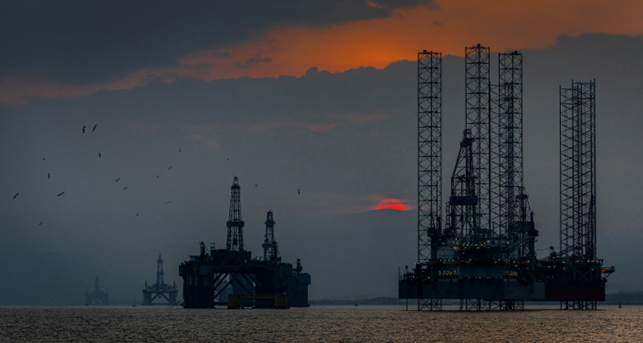
The war has left the region in a state of “fragile transition”, where Iran’s influence has grown despite territorial losses in its proxy network. Credit: Google Gemini
Iran’s “Victory” Will Reshape Geopolitics
Introduction
The illegal war on Iran by the United States and Israel seems to be following a well-trodden path of imperialism: from Mosaddegh, Saddam, to Gaddafi and now Iran.
Iran has emerged as an anti-imperialist foil to the United States and Israel. The country has proven willing to fight back, owing to a long history of hostility and sanctions.
This article argues that whether Iran “wins or loses”, its victory lies in being able to survive, reshape the balance of global power and dent the United States, Israeli and Western “aura” of power.
Despite the fragile ceasefire, Iran seemed to have the upper hand in the war because of a well-planned asymmetric strategy, developed by a government and a population that are militarily and psychologically prepared for war.
The United States and Israel have not achieved any of their goals, such as regime change or converting the war into an all-out regional war while also strengthening Israel’s and the United States’ position in the region, at the expense of China and Russia.
Iran’s success reinforces the point that preventing defeat is in itself a form of victory.
Despite losing its hold on Syria and with Hezbollah taking significant losses in Lebanon, Iran’s performance in the war has demonstrated that it is no paper tiger and has even gained some admiration among Muslims. Its performance in the war has been described in a “Messianic way”, reflecting Shiite eschatology.
The implications of the war extend beyond battlefield victories and defeats. A victory for Iran could mean tremendous consequences for the Persian Gulf and other Muslim-majority countries. It would also force them to reassess their engagement with the Abraham Accords, which have prevented Arab countries from intervening to prevent the Gaza genocide.
If Iran loses, then the Abraham Accords could be forced on other Muslim-majority countries, thus strengthening Israel’s position by integrating it into the economic and security apparatus of these countries. Furthermore, the Cyrus Accords may be forced onto Iran, which means a forced normalisation of relations with Israel.
God Told Me: Power, Religion and Legitimacy
The United States and Israel have framed Iran as a threat to Israel’s and global security. For Israel, Iran is the last obstacle to overcome in its quest to achieve a “greater Israel”.
Israel’s goals are not only to defeat or cause tensions in Iran and regional countries but also to dominate countries on the periphery of West Asia. Israel pursues this through endless wars or through its proxies, with the aim of balkanising the region in order to ensure its long-term regional supremacy.
This reasoning helps explain why the “goal posts” for peace agreements keep changing and, therefore, are difficult to achieve or sustain, as the talks on Iran’s nuclear programme and the ongoing fragile ceasefire seem to demonstrate.
The war also reflects the perpetrators’ imperialist tendency inspired by 18th-century colonialist practices, which themselves are based on religious and political justifications. It is also conditioned by Orientalist and Islamophobic tropes that have led to genocidal violence, as exemplified in Gaza.
Comments like “a whole civilisation will die tonight” by President Donald Trump exemplify this drift. More worryingly, there has been little global outcry or condemnation over Trump’s use of “extremist, terroristic and genocidal grammar”. In this context, it begs this question: does Iran have the right to exist?
Ironically, if Muslim-majority countries or Muslim extremist groups launched similar wars or made similar comments, they would rightly be framed as extremists or terrorists.
Given that the United States and Israel are not presented as using the language of extremism and terrorism by the international community and Western media, it reflects a racialised knowledge production hierarchy.
Adapting to Sanctions and Isolation: Resistance Economy
The reason why Iran is resilient despite the constant bombardment by the United States and Israel is because of its “resistance economy”, which has also made Iranians resilient.
Since the 1979 Revolution, the imposition of comprehensive sanctions by the United States and allied countries has targeted almost every aspect of the Iranian economy. The resistance economy is not simply a policy choice for Iran but a survival strategy, which also helps explain how Iran has been able to endure sanctions and isolation.
The sanctions have targeted almost every major sector of the economy (oil, energy, banking, metals, shipping and academia), leading to a devastating impact on the Iranian population.
Despite this, Iran has not collapsed but has adapted by trading with friendly countries and focusing on developing its domestic economy. Iran has bypassed sanctions by trading with countries like China and using the banking systems of the United Arab Emirates. Meanwhile, Iran’s domestic economy includes pharmaceuticals, agriculture, steel and technology, as well as a heavy focus on research and academia.
Iran is well aware that a well-educated population is essential to a nation’s success. It has a substantial scientific and academic community, which is why Iran has been able to adapt to the sanctions and develop a domestic military industry, export drones to countries like Russia and send supply to its proxies. This demonstrates that the precarity and insecurity created by sanctions and international isolation can prepare a nation for war.
Reshaping the Geopolitical Landscape
Iran’s strategic successes are likely to have profound geopolitical implications for itself, for the Persian Gulf region and beyond.
Iranian control of the Strait of Hormuz means that it has control over 20% of the world’s oil flow, which translates into the power to change the global economy and geopolitics as well as to shape international law.
This power gives Iran the capability to influence political alliances, which is already happening—countries like Japan are negotiating with Iran over oil despite the sanctions. Iran could even use this power to pressure the United States and Europe to resolve the Palestinian and Israeli conflict.
More broadly, the war could reshape the geography and politics of regional countries. For example, post-war, the Persian Gulf countries might decide to establish a security pact, like NATO, thus reducing the United States’ role as a security guarantor.
Similarly, an EU-type bloc could emerge, resulting in the deepening of economic, military, and educational ties between Iran and other Muslim-majority countries. The bloc’s pivot towards China and Russia is a plausible outcome—Iran’s victory may even instigate this push to move away from the Western sphere of influence.
Moreover, the Iran war has brought about new consciousness about the critical role of chokepoints, with countries like Singapore, Malaysia and Indonesia being forced to revisit their security paradigm. If a war were to break out in maritime Southeast Asia or the region became embroiled in a war between superpowers, for example, the Malacca Straits might emerge as a critical theatre, becoming part of any belligerent’s war strategy, irrespective of international law.
For Singapore, this is a real concern because its geography, import-dependent economy, large maritime trade sector and reduced United States influence in Asia are not favourable conditions for its security and welfare.
Conclusion
Arguably, Iran’s position now is stronger than before the war. It has successfully diminished the combined “aura” of invincibility and military might of the United States and Israel. In doing so, Iran is now able to exert considerable influence over regional and global affairs, which will not go down well with its detractors.
Iran has also forced its Persian Gulf neighbours, as well as Western and non-Western countries, to recalibrate their economic dependencies and political alliances by changing the on-the-ground situation.
Ultimately, Iran’s “victory” lies in its ability to endure sustained pressure and adapt to it, allowing it to reshape the balance of power in its favour. An Iranian victory could also lead to changes in regional alignments and deepen existing shifts in global power dynamics toward China and Russia.
This article is published under a Creative Commons Licence. Republications minimally require 1) credit authors and their institutions, and 2) credit to STRAT.O.SPHERE CONSULTING PTE LTD and include a link back to either our home page or the article URL.