search


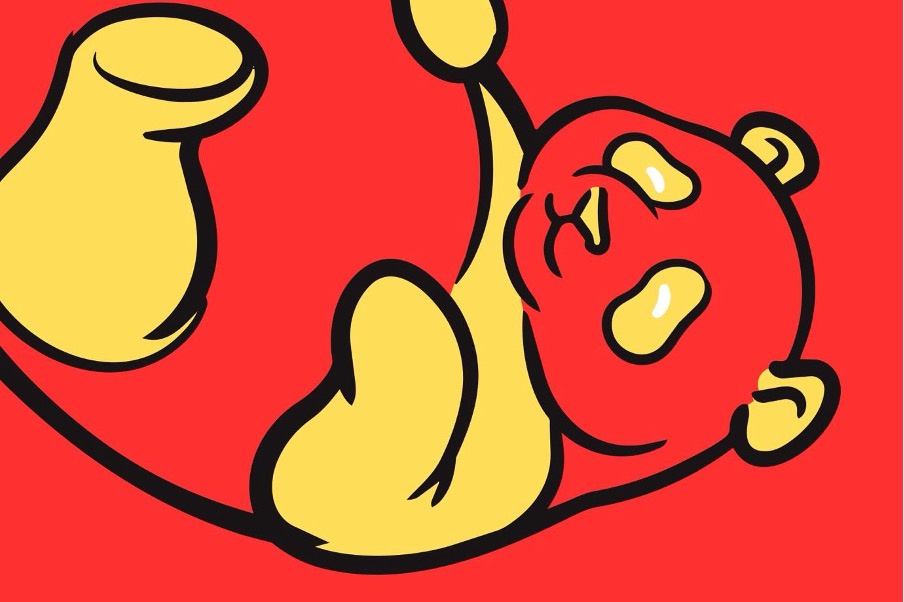
What can China’s new panda loan to Atlanta teach us about Southeast Asian geopolitics? Credit: snapshotsfromspira
Furry Envoys
16 November 2026/4 Minutes of Reading
New Loans
The US-China Summit in September 2026 – which led to an extended trade truce and the establishment of a working group on agricultural trade – preceded the transfer of two giant pandas from Chengdu to Atlanta’s zoo.
US commentators called it a peace offering, mostly because there was not much else to point to.
Southeast Asia is no stranger to China’s panda diplomacy. Over the past decade and half, Beijing has leased pandas across the region, renewed lease contracts, delayed others and withheld a few, making it a unique diplomatic currency worth analysing.
Although a panda loan is a poor gauge of how healthy a relationship actually is, it is not a neutral token either. A loan usually represents a signal China is sending, and the timetable of such loans adds nuances to how China approaches its relationship with destination countries.
A Panda Calendar
Although China used to gift pandas to friendly countries, this practice has ceased today. They are now leased out, usually for a period of 10 years at around US$1m per pair each year. They must be returned to China upon contract expiration unless otherwise renegotiated, and any cubs born abroad belong to China.
A lease can be renewed, swapped for a new pair or allowed to run out. Thus, every renewal (or a lack thereof) constitutes a message.
In Southeast Asia, panda arrivals have tracked the key diplomatic calendar. Kai Kai and Jia Jia arrived in Singapore in 2012, timed for 20 years of diplomatic ties. In October 2024, China agreed to send Thailand a new pair for the 50th anniversary of Thailand-China relations.
Meanwhile, Malaysia’s first pair was meant to land in time for the 40th anniversary of relations in 2014. When they went home in May 2025, their replacements were already lined up under an agreement signed during President Xi Jinping’s state visit to Kuala Lumpur that April; Chen Xing and Xiao Yue landed at KLIA in November for a 10-year stay.
Such panda loans add more symbolism to the state of China’s relationship with destination countries—the pandas usually represent how Beijing wants the relationship to be perceived by outsiders.
But they can be a source of, or a means to convey, displeasure as well.
Malaysia’s first pair, Fu Wa and Feng Yi, were due in Kuala Lumpur in April 2014, a few weeks after flight MH370 disappeared with 153 Chinese nationals on board. Beijing was unhappy with how Malaysia had handled the search, and the transfer was postponed. The pandas arrived only in late May.
In Thailand, a goodwill gesture became a liability. When Chuang Chuang died at the Chiang Mai Zoo in 2019, Thailand reportedly paid China around US$500,000 in compensation, and his death set off a wave of online criticism in China.
Then his mate Lin Hui died in April 2023, months before she was due to go back. China’s foreign ministry announced a joint investigation, and a Chinese-led autopsy later concluded she had died of old age, with praise for the care she had received.
Despite this relief, Thailand still owed THB15m in restitution. Bangkok had taken on a symbol of friendship and was left with a bill and a PR headache it had not planned for.
Then there is Japan. Bilateral relations soured over Prime Minister Takaichi Sanae’s remarks about a Taiwan contingency, and in January 2026, Japan’s last pandas left the Ueno Zoo with no replacement offered. It is the first time in about half a century that Japan has had none.
There is no panda for Vietnam and the Philippines either. They are two of China’s most direct challengers in the South China Sea, where tensions show little sign of easing.
But there are also different ways to read this. Pandas are expensive to maintain, requiring specialist staff and a reliable supply of bamboo. Not every government wants to pay for them.
Still, the pattern is hard to ignore. Beijing sends pandas to partners it wants to reward or reassure and keeps them away from the countries it is openly quarrelling with.
A country with a panda in its national zoo may not necessarily side with China, but the loan tells you how Beijing would like that relationship to look.
What Atlanta Means
Washington’s own diplomatic record vis-à-vis China fits the above model.
In November 2023, when relations were at a low point, the National Zoo’s three pandas flew back to China. Within a week, Xi was describing pandas as envoys of friendship.
However, by June 2024, San Diego had received the first new pair to enter the United States in 21 years.
Atlanta’s is the third pair in just over two years, which is about as plainly as Beijing ever says it wants stability with Washington.
For Southeast Asia, that is mostly good news. When Washington and Beijing are getting along, even barely, the region has more room to breathe: there is less pressure to pick a side and less risk of a sudden trade shock.
Furthermore, sending pandas to Atlanta and Kuala Lumpur within a year of each other suggests Beijing wants calmer relations all round. The question for export economies like Vietnam, Malaysia and Thailand, which have picked up supply chains moving out of China, is how long the US-China truce will last.
The region has also learned not to confuse ceremony with substance. The truce is short because Washington has continuing doubts about Chinese implementation of critical mineral exports and farm purchases.
Southeast Asian governments would do well to take the Atlanta pair as a statement of intent and nothing more and to plan for the truce lapsing in January next year.
Bear Watch: 2027
The panda diplomacy in the region is expected to see some dynamics in the next year or so.
Singapore’s Kai Kai and Jia Jia, now aged 19 and 18, are due to return to China in 2027. Indonesia’s Cai Tao and Hu Chun’s contract runs through 2027, with an extension under discussion; their cub Rio, the first panda born in Indonesia, is covered by a separate four-year arrangement from his birth.
Whether Beijing replaces the Singapore pair or extends the Indonesian arrangement, and whether Thailand will actually get the pandas it was promised, will say a good deal about how China sees each relationship.
The lessons for ASEAN governments are fairly modest. A panda loan reflects a mood, and the mood itself has to be built elsewhere, through trade and investment, geopolitical behaviour, and cultural linkages.
The fine print also deserves more attention than it usually gets. Compensation clauses, autopsy rules and the return of cubs (Singapore’s Le Le went back to China in January 2024) put much of the risk on the host while China keeps control. Governments should negotiate those terms in the open and set public expectations to match.
Meanwhile, a new pair of pandas is no substitute for progress on the hard issues. A panda in Kuala Lumpur or Chiang Mai will not settle a single dispute in the South China Sea, for instance.
Pandas work so well as soft power partly because almost nobody is willing to criticise them, which is a good reason to look at them harder.
Indeed, Southeast Asia has more experience of panda diplomacy than most regions, and what it has learned applies to Washington too: welcome the bears, but read the terms and conditions.
The views expressed are those of the authors and do not necessarily reflect those of STRAT.O.SPHERE CONSULTING PTE LTD. This article is published under a Creative Commons Licence.
Republications minimally require: 1) credit authors and their institutions, and; 2) credit to STRAT.O.SPHERE CONSULTING PTE LTD and include a link back to either our home page or the article’s URL.