search

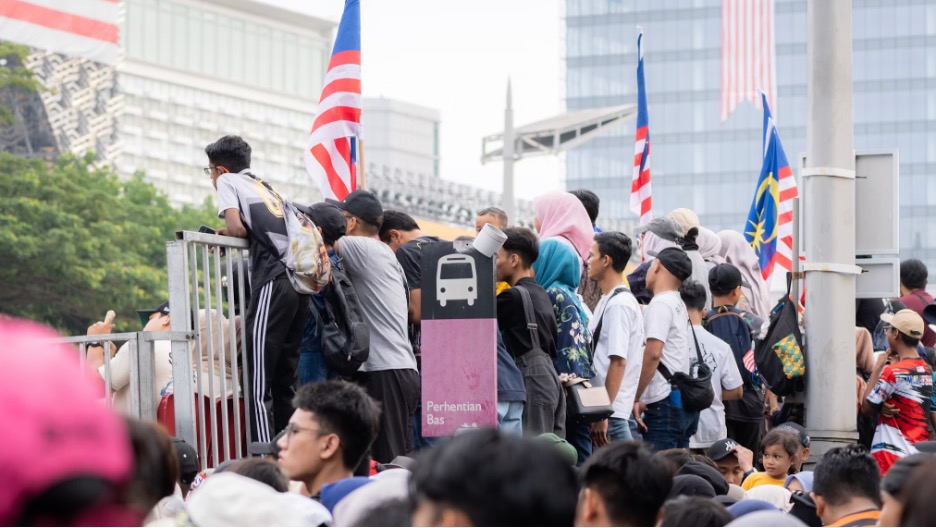
In Malaysia's public schools, the biggest obstacle to a university scholarship is not talent—it is awareness. Credit: Unsplash/Putra Mahirudin
Are Scholarships Out of Reach?
24 September 2026/5 Minutes of Reading
Introduction
Although Malaysia has one national curriculum and all public-school students take the same standardised exam, they leave school with entirely different real-world results and life trajectories. What these students believe is achievable varies dramatically.
For instance, there are hundreds of students in a Sabah missionary school who qualify for scholarships to further their studies. However, only five of them applied.
This is just one of the conundrums the author ascertained from 16 interviews with graduates of nine types of Malaysian high schools. This piece is the output from a qualitative exploratory study that attempts to discover whether students are held back from pursuing scholarship by talent or lack of awareness.
Three issues stand out as the most significant impediments.
School Counsellor Competency
The core issue in Malaysia’s school counselling service is not the lack of personnel but a deficit in scholarship literacy, particularly among public school counsellors.
Part of the problem is the system. While counsellors are expected to provide career guidance, Lembaga Kaunselor Malaysia (Board of Counsellors Malaysia – LKM) does not require them to possess knowledge on scholarship pathways for license renewal. As a result, guidance varies drastically depending on the type of school a student attends.
Interviewees from national, religious and East Malaysian schools shared that their counsellors are only aware about basic, local options (such as Unit Pengambilan Universiti [University Central Unit – UPU]). Students are forced to conduct their own research or consult seniors for overseas scholarship options.
In contrast, interviewees hailing from elite residential schools reported that their counsellors possess deep knowledge in the scholarship landscape, organising tailored workshops, talks and coaching as early as Form 4 (equivalent to Grade 10).
Indeed, counsellors play an important role in preparing students for the next path. Not all students are privileged enough to explore scholarship options due to mental, financial and social barriers—this is exactly why they need counsellors who can provide them a peek of what is possible ahead. Thus, counsellors who lack information about this may hold back potential applicants.
The Presence of Alumni and Role Models
Likewise, elite school interviewees claim that watching their seniors win competitive scholarships reinforced their own confidence to pursue the same, showing them that ambition in higher education is indeed possible.
Perhaps this partly explains why schools like the Malay College of Kuala Kangsar or Tunku Kurshiah College keep producing scholarship recipients. While scholarship bodies do draw from a broad range of school types, the alumni of these schools have had a tradition of winning scholarships, which information they share with the student body. This helps current students not only to prepare for scholarship qualification but also to devise strategies to pursue one.
Even interviewees who ultimately did not obtain any scholarship shared felt they competed on a level playing field with those who did, believing that their shared resources, school traditions and expectations put them on the same pedestal. These sustain their drive to keep on striving.
Despite this, interviewees from national and East Malaysian schools noted the lack of visible role models they can emulate, contributing to a belief that scholarship opportunities are simply out of reach. The issue is not whether they qualify for scholarships or not—they simply do not have anyone to demonstrate that such an option is attainable.
English Capability
English proficiency is not simply a testament to one’s linguistic skill. It also plays a central role in the pursuit of scholarship, especially for those considering overseas options.
However, it has also been attributed as a determinant of one’s social status—in Malaysia, there is a prevalent perception that those with English proficiency come from higher socioeconomic class.
For instance, at an elite residential school, English dominates formal space to the point interviewees described the culture as thoroughly anglicised, with one’s fluency often being linked to their confidence level. An interviewee noted that weaker English here could make a student feel inferior to their more eloquent peers. On the contrary, an interviewee from a less competitive, residential school said speaking English socially here is unusual, even attention-seeking—students who do so often face teasing.
While English is common in urban centres (especially in elite schools, where it is a unifying factor for a racially diverse student cohort), those residing in rural and remote areas may approach it with wariness and view it as a stumbling block from pursuing scholarship.
Most, if not all, overseas scholarship options demand proficiency in English, with selection interviews conducted in the language. Those who are not well versed may easily find themselves disadvantaged.
Closing the Gap
To afford opportunities to those who do not attend elite or urban schools, several steps must be considered. None of this demands new infrastructure, only a redistribution of the existing national budget and administration mandates.
Firstly, mandate scholarship literacy as part of formal licensing requirements for school counsellors. As it stands, none of LKM’s 16 professional development categories list scholarship literacy as part of required training on tertiary pathways.
The Ministry of Education (through its Teacher Education Division) and LKM should introduce an assessed module on scholarship providers, application timeline, eligibility standards and other options beyond UPU and matriculation.
Rather than requesting a new allocation, this can be folded into the RM115m already set aside in Budget 2026 for the teacher training tied to the 2027 curriculum rollout. This should serve as a supplement to counsellors’ existing career-education requirement so as not to be seen as a new burden for them.
Secondly, greater alumni engagement must be encouraged in schools. The activities could range from scholarship/career talks to personal development classes, aimed at opening students’ horizons to post-school life.
The issue for many students is not merely a deficit of information but a lack of relatable role models who have successfully navigated these pathways. For scholarship awardees, it is important to introduce them to students as early as Form 4. Featuring awardees with demographically similar backgrounds to the student body could further bridge the mental barrier on the part of students.
Past awardees have also tried to bridge this gap through other means. Some of them established the BASE Initiative (Basic Aid for Scholarship Essentials), Malaysia’s largest student-run scholarship-awareness organisation. In the 2024/2025 cycle alone, BASE Initiative reached over 5,000 school leavers – 67% of whom came from low- and middle-income (B40/M40) backgrounds – entirely through self-funded student efforts.
A partnership with the education ministry would allow organisations like BASE Initiative to scale up their operation nationwide, beyond the capacity of a small group of volunteers. Additionally, Budget 2026’s existing double tax deduction for private-sector scholarship spending should be extended to cover donations to scholarship-awareness NGOs as well.
Third, a non-academic opportunity metric should be added to the Malaysian Education Quality Standard (SKPM), Malaysia’s school quality rubric.
SKPM currently has no metric for scholarship application rates or counselling output. Jemaah Nazir dan Jaminan Kualiti (Inspectorate and Quality Assurance Board – JNJK), which directly holds authority to amend inspection indicators, should require schools to annually report the percentage of eligible Form 5 students who submit at least one scholarship or pre-university application. This can be introduced as a diagnostic sub-aspect under Standard 3 (student development and welfare) or Standard 5 (student outcomes).
The data retrieved should serve a diagnostic purpose rather than a punitive one, identifying which institutions lack advising infrastructure rather than penalising low-performing schools. Without tracking application rates, the ministry cannot identify where the aspiration gap is widest, rendering targeted support impossible.
Fourth, English exposure needs to be more holistic and emphasised earlier. As a school subject, English is first introduced in Forms 4 and 5, with Form 1 to 3 students finding little application outside the classroom (unless they are enrolled in a Dual-Language Programme).
Syllabus-embedded speaking activities – such as debate, oral examination and public speaking exercise – should be highly encouraged and built into the curriculum from Form 1. This approach ensures exposure reaches students who would otherwise refrain from speaking in class.
The four interventions proposed here are considerably cost-friendly without demanding for new infrastructure. In fact, they all ride on pre-existing budget lines and administrative mandates run by the government.
All students are taught the same content, but what they do with it depends on what they believe is possible for them. Malaysian students need to believe that they can reach higher.
The views expressed are those of the authors and do not necessarily reflect those of STRAT.O.SPHERE CONSULTING PTE LTD. This article is published under a Creative Commons Licence.
Republications minimally require: 1) credit authors and their institutions, and; 2) credit toSTRAT.O.SPHERE CONSULTING PTE LTD and include a link back to either our home page or the article’s URL.