search

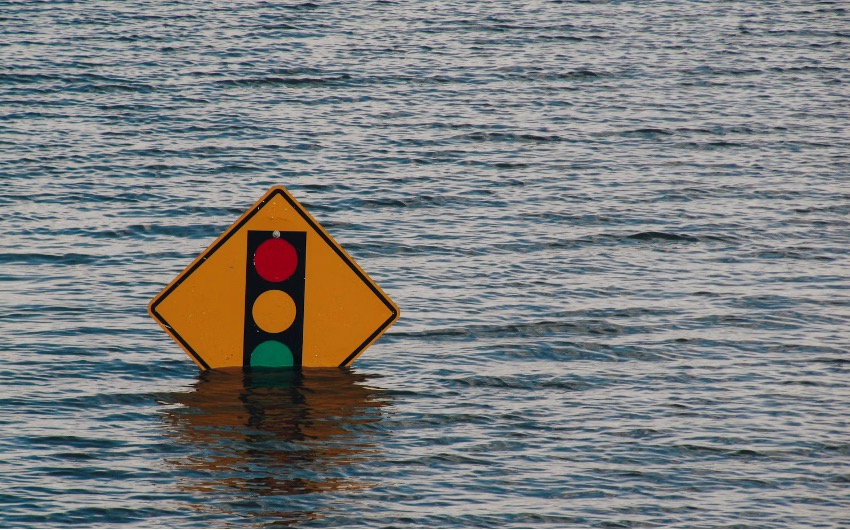
Can Southeast Asia reshape how international law defines environmental destruction? Credit: Kelly Sikkema
Essay: Ecocide, a Slow Science Reprise
21 August 2026/5 Minutes of Reading
Prelude
Two years ago, stratsea published a piece about the quiet virtue of slow science.
Meaningful research, as the article suggests, rarely comes from the pressure on the epistemic community to publish more and faster to keep up with a constantly changing academic landscape. Slow science asks, instead, for patience, curiosity, careful reading, sustained thought and perhaps, most of all, the freedom to fail.
This conviction shaped a study I recently co-wrote with Sapto Hermawan and Febrian Indar Surya Kusuma published in Ethics in Science and Environmental Politics focusing on the issue of ecocide, which – despite its environmental tenor – remains one of the most enduring and fastest-changing debates in international law.
This article in front of you explores why Southeast Asia matters in the global push to recognise ecocide as an international crime, a debate that has shaped talks about the amendments of the Rome Statute for more than 20 years.
The Long Road to Ecocide
Despite its overt simplicity, ecocide is essentially a complex concept. It asks whether some forms of environmental destruction are so grave that they should no longer be treated as a normal crime but as crimes of international concern, to be listed in the same category as genocide and crimes against humanity.
It is not, in truth, a new idea so much as an old one invented. Its intellectual lineage runs back to Raphael Lemkin, who coined “genocide” in 1944 not merely as mass killing but as the destruction of a group’s cultural and ecological foundations—in other words, its principal capacity to sustain communal life.
Lemkin understood, long before the term “ecocide” came about, that a people’s land, livelihood and spirit were bound together, and that to destroy one was, in effect, to imperil the others.
This genocide-ecocide nexus, as scholars Crook and Short have termed it, remains the conceptual root from which the modern ecocide movement grows, though it has since sought a life of its own.
The separation of these two began in 2010, when barrister Polly Higgins suggested defining ecocide as “the extensive damage to, destruction of, or loss of ecosystem(s) of a given territory… to such an extent that peaceful enjoyment by the inhabitants has been or will be severely diminished.”
Unlike Lemkin’s idea, Higgins’s definition does not need proof that someone intended to destroy a human group; it moves the focus from people to the planet, from human-centred thinking toward something closer to nature-centred thinking.
It was, in its goal, the first proposed addition to the Rome Statute’s main crimes since 1998. Nonetheless, this process has stalled, not because ecocide lacks moral urgency but because it lacks a clear and precise definition.
What exactly counts as “widespread, long-term and severe” damage? What mental state – like carelessness, knowledge or something stricter – should the crime require?
Article 5 of the Statute limits the International Criminal Court’s (ICC) power to crimes of exceptional gravity, and Article 121 requires approval from two-thirds of member states to adopt an amendment.
Legal epistemology is the process that turns a moral belief into a crime that can be prosecuted, but, in this instance, ecocide has not yet reached that point. This, too, is a kind of slow science carried into law—the unglamorous work of testing a term against two decades of state objections and definitional disputes.
Why Southeast Asia Matters
Southeast Asia’s experience is especially relevant here. Why should someone in Jakarta, Manila, Bangkok or Hanoi care if The Hague ever recognises ecocide as a crime?
The region is not just watching this debate from afar. It is, in a very real way, the proof the debate – whether to recognise ecocide as a crime – depends on.
Peatland fires in Sumatra and Kalimantan send haze across Singapore, Malaysia and southern Thailand almost every dry season, closing schools and workplaces as well as disrupting transportation.
Floods are also detrimental. The recent floods in parts of Sumatra claimed more than a thousand lives. The Mekong Delta, which feeds tens of millions in Vietnam and Cambodia, is slowly becoming salty as dams upstream and groundwater use allow the sea to move further inland each year.
Cyclones and typhoons are another problem. Typhoon Yagi hit northern Vietnam and Myanmar in 2024 with a force that displaced hundreds of thousands and left whole river valleys unrecognisable. Typhoon Rai did the same in the southern Philippines, arriving so fast it outran early warning systems, leading to the evacuation of more than 400,000 residents, injuring at least 500 people and causing 375 deaths.
All of these disasters, and many others, form a record, year after year, of a region bearing the costs of environmental change on an unthinkable scale.
A Chance to Shape International Law
The scale of such natural and man-made disasters renders Southeast Asia an essential factor in the ecocide debate.
Much of the debate’s discourse in Europe and North America continues to centre on abstract ideas, such as what a court needs to prove a criminal intent or act behind an ecocide case or the parameters of the concept’s definition. These are necessary questions, but they can also become strangely detached from the reality on the ground.
While such a dialectic thrives in the West, haze, floods, fires and receding coastlines threaten the lives and livelihoods of millions globally, a vision that only becomes clearer during a harsh El Niño season at the time of writing.
Southeast Asia, then, offers hard evidence that is difficult to argue with: a lived experience. The region provides a more comprehensive look at what these parameters should be, considering its long list of disasters are not solely rooted in industrial activities, a factor that takes up much of the ecocide discourse in the West.
For instance, land conflict shapes the crux of environmental damage in Southeast Asia. Many disasters here are the products of land loss and manipulated terrain: redirected rivers, legal and illegal change in the use of land, destruction of forests, and receding coastline, among many others. Land conflict will continue to cause environmental damage in Southeast Asia as long as the nations’ pursuit of economic development ignores the sustainability aspect of it.
For too long, international environmental law has largely been written in the Global North and exported to the rest of the world, leaving regions like Southeast Asia to implement rules they had little role in shaping. Therefore, if Southeast Asia is left out of the conversation that aims to establish the definition of ecocide, the end product may be severely flawed.
The emerging debate on ecocide offers an opportunity to reverse that pattern. Applied to lawmaking, slow science’s insistence on patience means giving regions like Southeast Asia time to be heard before a definition hardens, not after.
Indigenous communities across the region – rom traditional forest management in Kalimantan to shared fishing rights in maritime Southeast Asia and parts of the Pacific Ocean – have shown an understanding of nature’s limits that Western law is only now trying to put into writing. These traditional groups can also offer local knowledge that is key to expanding a definition of ecocide that also encompasses Southeast Asia’s special environmental problems and realities.
Using these perspectives helps the region contribute strongly to the growing international legal idea of ecocide. This is a postcolonial effort in some way.
Perhaps this is what the philosophy of slow science teaches. Ideas capable of reshaping international law rarely arrive fully formed, as they emerge through years of debate, disagreement and careful refinement. So it was with Lemkin’s idea of genocide. So, too, it has been with Higgins’ vision of ecocide. But both ideas survived, shaped by years of debate, until the law eventually accepted them.
Now, Southeast Asia has a chance to take this work further. The region can bring its own history, landscapes and experience into the discussion. If ecocide is to become part of international law, Southeast Asia should help shape what those rules become. Our region’s voice should be part of the story.
The views expressed are those of the authors and do not necessarily reflect those of STRAT.O.SPHERE CONSULTING PTE LTD. This article is published under Creative Commons Licence.
Republications minimally require: 1) credit authors and their institutions, and; 2) credit to STRAT.O.SPHERE CONSULTING PTE LTD and include a link back to either our home page or the article’s URL.