search

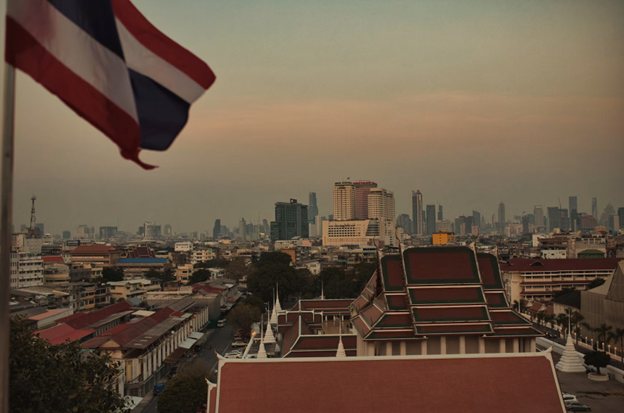
The next attempt of peace process is about to start. Credit: astronaud2
Negotiating Peace in the Far South, Anutin Style
May 22, 2026 / 7 minutes of reading
The Kissinger Conundrum
Thailand’s new negotiating team for the far south – formed under the new government – moved quickly by inviting senior military officers from the Philippines and Indonesia to Bangkok to share lessons from the Mindanao and Aceh peace processes with the Thai army.
The new Thai team is led by a civilian, Thanut Suvarnananda, the country’s chief of the National Intelligence Agency (NIA), which has been central to the efforts in resolving this long-running conflict between the Malays of Patani and the Thai state.
Progress has not come easily. As a key stakeholder, the army has never accepted the idea of engaging separatists on equal terms.
The military continues to believe the insurgency can be defeated through force alone. It has also spoken of winning the hearts and minds of local Malays, but that goal has remained out of reach.
As Henry Kissinger once observed, military forces can clear an area, but without a political plan, insurgent networks simply reconstitute themselves once the troops withdraw.
The new team’s most pressing challenge is persuading the Thai military to abandon this all-or-nothing approach.
Part of the problem is a fundamental mismatch in how each side frames the conflict. The military treats the insurgency as a security matter, while the insurgents view their struggle as political. Without a revised counterinsurgency strategy that addresses this gap, the stalemate and violence will continue.
Why Bangkok Refuses to “Negotiate”
But even if the Thai army abandons its zero-sum mindset, the question of concessions remains. Thailand has shown little willingness to give ground. In fact, all previous chief representatives, with the exception of Dr Mark Thamthai, refused to use the word “negotiation” in reference to the peace talks, fearing it would grant the Melayu rebels too much recognition and legitimacy.
One advantage the Mindanao and Aceh peace initiatives had that Thailand lacks is the direct involvement of the international community. The Malaysian mediator at the time, Tengku Datu Abdul Ghafar Tengku Mohamad , was backed by the International Contact Group (ICG), a body comprising states and international NGOs that played a direct and decisive role in steering the Mindanao peace process toward final peace agreement. Aceh process had similar support and arrangement.
The Thai initiative once included five international observers, a concession to Barisan Revolusi Nasional Melayu Patani (BRN), the long-standing separatist movement that commands nearly all the combatants on the ground. However, the process failed to make effective use of their expertise, as their role was kept narrowly limited.
A further advantage the Mindanao and Aceh processes shared was genuine political will—a commitment from their respective governments to make concessions. Thailand’s peace process, formally launched on 28 February 2013, has never progressed beyond the confidence-building measure (CBM) stage to address substantive issues.
The Thai process ground to a halt under Paetongtarn Shinawatra’s administration, which refused to resume talks unless BRN first ended all forms of violence. BRN countered that any reduction in violence – or ceasefire – would itself need to be negotiated, and that an international monitoring team working alongside local CSOs would have to be permitted to observe the process.
Both sides held firm until Paetongtarn was removed from office on ethical grounds in August 2025, paving the way for Anutin Charnvirakul’s first government – a three-month caretaker administration – that established a new negotiating team.
Buzzwords vs Autonomy
BRN viewed Anutin’s initiative as a hollow gesture, given that his government would only be in office for three months. Nevertheless, the two sides met three times during that brief window.
Their final meeting took place on 8-9 January 2026 in Malaysia, which unfortunately did not go well. Two days later, BRN blew up 11 petrol stations, along with the attached convenience stores, across the Malay-speaking south. The signal was unmistakable: BRN would not be treated as a prop. The rebels resented being exploited to bolster Anutin’s political image.
A BRN officer dismissed Anutin’s decision to form a peace negotiation team as “pretentious.” Critics argue the move was a public relations stunt to portray Anutin as a man of action during his brief three-month government. In contrast, his predecessor, Paetongtarn, sent no representatives to the negotiating table.
The Thai delegation introduced the buzzword “end state” during three meetings but failed to define any concrete government concessions. While Anutin’s faction heavily promoted the phrase, BRN interprets “end state” strictly as “self-governance”.
For BRN, this requires a regional assembly that grants the Patani people self-determination, local tax collection rights and a formal power-sharing mechanism with Thailand’s central government.
A second message carried comparable importance: BRN has expressed dissatisfaction with ongoing discussions that lack a substantive and actionable agenda. To BRN, the talks should progress beyond CBM and address concrete issues. Topics such as self-governance, power-sharing and the establishment of a regional assembly must be included in the dialogue.
Before that can happen, BRN must consult its constituency – the people of Patani – to determine whether its demands align with the community’s aspirations.
This process, known as public consultation, is one of three core agenda items that have been on the negotiating table for some time. The other two are cessation of violence and a political solution to the conflict. All three were enshrined in the Joint Comprehensive Plan towards Peace (JCPP), the agreed roadmap for the peace process.
Since Anutin took office in August 2025, the JCPP has been rebranded as the Peace Dialogue Plan Implementation Framework (PDPIF), signalling a rhetorical shift from “planning” to “implementation”.
Information Operations
There has been a discussion among the Thai defense planners about using Thai CSOs to replace the five international observers. How far their involvement would extend remains unclear, but the most credible CSOs – those with strong ties to the Malay community and the respect of BRN – will likely refuse to participate.
The military and local CSOs have long been at odds, locked in a battle over control of the conflict’s narrative. The CSOs have faced persistent harassment through legal proceedings and disinformation campaigns on social media platforms, orchestrated by military actors who regard CSO criticism as a security threat.
Several CSO leaders face criminal charges simply for using terms such as Bangsa Patani (the Patani nation) or advocating the right to self-determination for the people of this historically disputed region. Groups like The Patani and the Civil Society Assembly for Peace (CAP) are among those affected, alongside human rights defenders who face ongoing death threats because of toxic nationalism and coordinated attacks by pro-government accounts operating across social media and through information operations (IO).
BRN, however, has stated it will continue to insist on international community participation as observers of any official talks.
While the number of violent incidents has fallen sharply – from 1,400 in 2007 to 150 in 2025 – the outlook for the new negotiating team is not encouraging. The first four months of 2026 alone saw a surge in violence to 258 incidents.
Squeezing the Narrative as Violence Escalates
The decline in incidents from 2007 to 2025 was driven by an expanded security presence with Paramilitary Rangers deployed to remote areas, which significantly reduced response times to insurgent activity.
But the statistics alone do not capture the full picture. Insurgents have compensated for fewer attacks by maximising psychological impact. The era of roadside improvised explosive devices (IEDs) that went largely unnoticed is over.
Today’s attacks are designed to be seen, heard and felt – above all by policymakers in Bangkok. Besides the attacks on the 11 petrol stations, in July 2025, government bomb squad unearthed 11 EIDs in Krabi and Phuket—two of Thailand’s top destinations on the Andaman coast.
The then defence minister Phutham Wechayachai was reluctant to link the IEDs to the insurgency in the far south even though the arrested culprits were from the region. He urged reporters to exercise caution in their coverage. Security officials, however, said the bomb circuits and design suggested BRN involvement.
Another high-profile incident is the 9 March 2025 attack on the Sungai Kolok district office by a 10-strong BRN unit, killing two Defence Volunteers (DVs) and injuring eight others. The assault ended with a car bomb that ripped through the compound moments after the combatants retreated.
As things stand, the Thai army opposes any formal commitments—no MoUs, no ceasefire agreements. Any suggestion of granting BRN a degree of legitimacy, or even acknowledging the political dimension of its activities, is likely to be rejected. Many Thai military officials continue to regard BRN simply as criminals.
As for the so-called peace talks, many observers regard Thailand’s participation as insincere. The prevailing view is that Bangkok’s sole objective is to reduce violence to a manageable level. There is no genuine appetite to make concessions to BRN or the Malays of Patani, or to explore a framework for peaceful coexistence between the far south and the rest of the country.
This article is published under a Creative Commons Licence. Republications minimally require 1) credit authors and their institutions, and 2) credit to STRAT.O.SPHERE CONSULTING PTE LTD and include a link back to either our home page or the article URL.