search


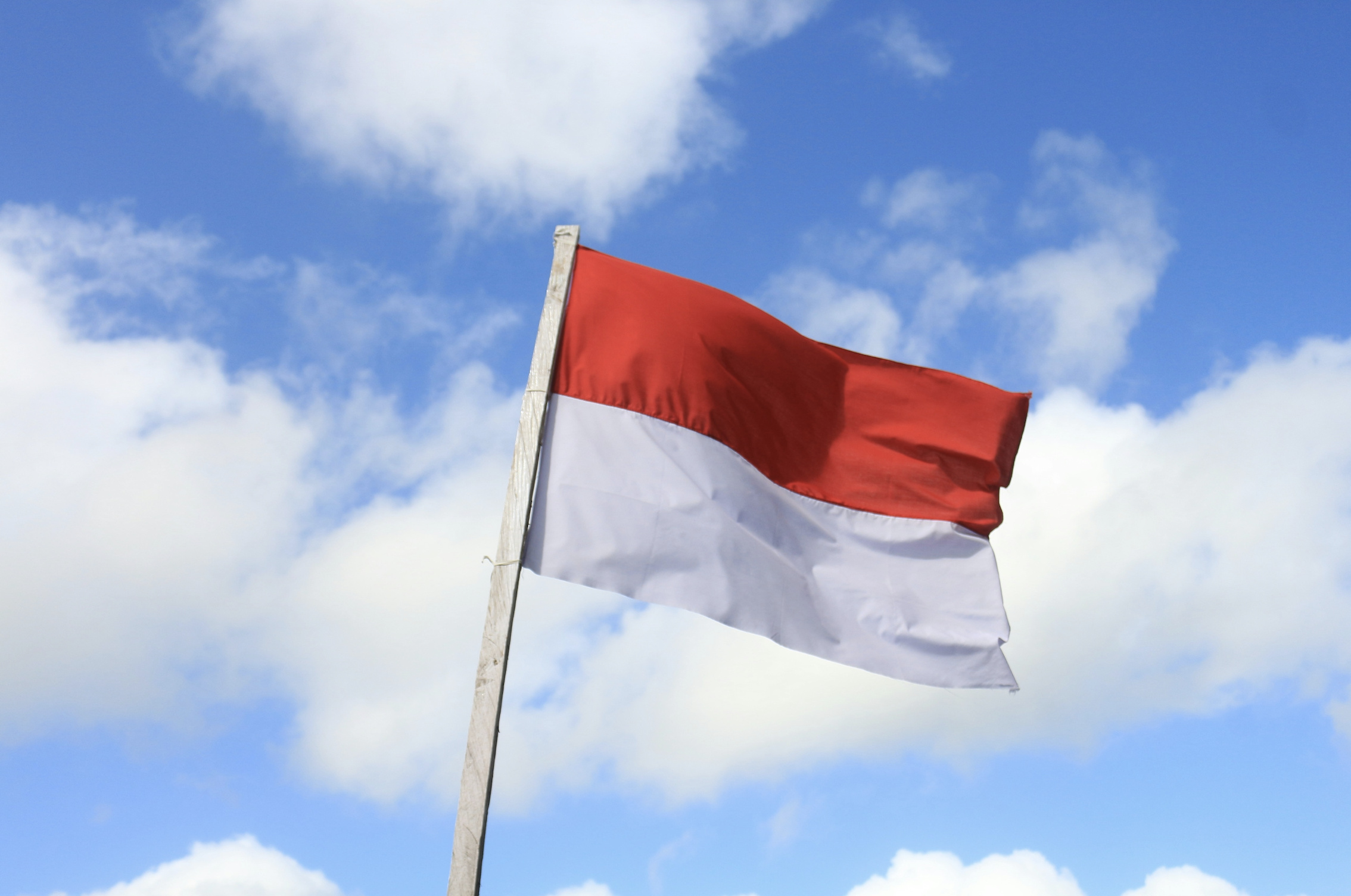
Can Thailand’s bamboo diplomacy help the country weather the ongoing war in West Asia? Credit: Google Gemini
The Bamboo in the Gale
March 27, 2026 / 7 minutes of reading
Bamboo Diplomacy
For decades, Thai foreign policy has been defined by a poetic metaphor, “bamboo diplomacy” (phai-loo-lom). Like the bamboo stalks that line the Chao Phraya River, Bangkok’s strategy has been to bend with the prevailing winds of global power—resilient, rooted and, above all, determined to never break by picking the wrong side.
This brand of strategic hedging has served the country well. By maintaining a calculated equidistance between Washington and Beijing – and treating distant geopolitical fires as “not our problem” – Thailand has masterfully avoided entanglement in value-laden conflicts.
But as West Asia teeters on the edge of a large-scale war, the winds seem to be shifting from a breeze to a gale. Consequently, the “bamboo” can no longer bend just as it did in the past due to severe structural strain.
The Myth of “Cost-Free” Neutrality
Thailand’s traditional “friend to all, enemy to none” rhetoric is increasingly being criticised as a relic of a simpler era. While the bamboo metaphor was once considered a comfortable ambiguity, the space for such hedging is shrinking.
In a world hardening into a fragmented, polarising international order, sitting on the fence is becoming a precarious and expensive position to maintain.
Unlike the abstract diplomatic manoeuvring of the US-China rivalry in Southeast Asia, an escalation in West Asia strikes directly at Thailand’s non-negotiable national interest.
On the economic front, any closure to maritime choke points downgrades Thailand’s neutrality into a secondary concern behind economic survival due to the country’s heavy reliance on exports, which contribute approximately 60 to 70% of Thailand’s GDP in the last four years, above the global average of 41.20% in 2024.
The shuttering of the Strait of Hormuz, thus, poses a direct impact on Thailand’s economy. If the war prolongs and pressures Iran to involve its affiliate militia – the Houthis – in Yemen, it could lead towards a similar closure of the Bab al-Mandab Strait off the coast of Djibouti.
A simultaneous disruption of both choke points could create a major supply chain shock that affects Thailand’s GDP three times worse than it does today, with its energy supply being especially vulnerable.
Regarding energy, the ongoing war poses three risks for Thailand. The immediate risk is the price shockas the war drives global oil prices upward. The following risk is the oil supply shock, with disruptions to shipping routes reducing oil availability. The most severe risk, which could materialise if the war prolongs and escalates horizontally, is the strategic shock, in which multiple chokepoints are affected simultaneously, leaving Thailand to rely on limited reserves for maintaining short-term energy stability.
Thailand’s domestic oil reserves are relatively limited compared to those of major oil-producing countries. Thailand possesses approximately 0.24 billion barrels of proven oil reserves, most of which are located in offshore fields in the Gulf of Thailand.
Given this limited resource base, Thailand has long relied heavily on imported crude oil to meet domestic demand. Consequently, more than 80-90% of Thailand’s oil consumption depends on imports, making the country structurally vulnerable to fluctuations in global energy markets.
Current petroleum stockpiles in Thailand can support national demand for roughly 38 days, or about 60 days when oil already in transit is included.
The war also significantly impacts Thailand’s migrant workers. The West Asia region has long served as one of the most important overseas labour markets for Thai nationals. Iran’s retaliatory strikes, thus, have been a growing concern for the safety of these Thai workers.
There are currently 77,495 registered Thai workers employed across Israel, the United Arab Emirates and Saudi Arabia.
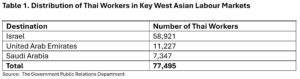
With a significant number of Thai workers in West Asia, this war has a face and a name. Bangkok can no longer claim this war a distant crisis when its own citizens are in the crosshairs. Along with Thailand’s shrinking space for hedging, its strategic neutrality is becoming less sustainable, given intensifying external pressures and domestic constraints.
A Stress Test for the Kingdom
With these significant pressures on Thai diplomacy, Bangkok is forced to move beyond reflexive ambiguity and towards strategic neutrality, one that requires clearer signalling and a more rigorous calculation of risks.
Recent history, including lessons learned from vaccine diplomacy during the pandemic, suggests that overreliance on a single partner leads to a myopic and inflexible foreign policy. If Thailand continues to operate its bamboo diplomacy on autopilot, it risks becoming a bamboo swirling in the wind, directionless and vulnerable.
As the West Asia crisis accelerates the dilemma of how to remain a friend to all in a polarised world, the question for Thai policymakers is no longer about how to avoid the wind but how to re-engineer the hedge.
Thus, can Thailand move towards a more proactive, risk-aware version of its traditional diplomacy, or will the pressure of global escalation cause the bamboo to snap?
From Passive Bending to Proactive Engagement
In response to these challenges, it is high time that Bangkok reconstruct its diplomatic identity through strategic neutrality. The traditional logic of bamboo diplomacy – bending with the wind to survive shifting geopolitical pressures – remains relevant, but it now requires recalibration.
Neutrality in the 21st century can no longer be sustained solely through silence, ambiguity or cautious distance. Instead, it must be supported by proactive engagement that protects national interest while contributing constructively to international stability.
In the late 20th century, Thailand pioneered the constructive engagement policy that favoured proactive dialogue over isolation, particularly in its regional diplomacy. The principle behind this approach was that engagement and dialogue were more productive than isolation or confrontation.
Today, however, this concept must be reconstructed in response to a far more complex and fragmented global order. Instead of merely bending with the winds, Thailand could utilise its diplomatic position as a “friend to all” to support humanitarian initiatives, stabilisation efforts, and economic co-operations that mitigate the human and economic costs of conflict.
In this sense, neutrality should not function as a passive shield but as an active diplomatic instrument that allows Thailand to maintain balanced relations while contributing to regional resilience.
To make the reconstructed constructive engagement more than just a diplomatic buzzword, Thailand must leverage its global reputation as the kitchen of the world. It should be noted that food security has increasingly become a geopolitical issue, particularly during wartime disruptions to global supply chains.
By utilising its food security prowess for peace, reinforced by its strength in agricultural production and food processing, Bangkok can move from a bystander to a vital humanitarian partner who provides essential supplies to civilian populations affected by the violent conflict in West Asia.
For instance, Thailand can initiate a food-for-peace humanitarian framework, coordinating with international organisations and regional partners to supply shelf-stable and halal-certified food products to populations caught in the crossfire.
By feeding the hungry on every side of the regional divide, Thailand could prove that its neutrality is not a lack of interest but a commitment to human life. It moves the concept of “friendship” from a diplomatic communique to a pallet of rice in a displacement camp. Pursuing this strategy would demonstrate that Thailand’s neutrality status is not an indifference but a principled commitment to human security.
Moreover, Thailand can utilise its high-standard halal processing capabilities that allow it to establish deep engagement with the Gulf states and Iran on a technical and humanitarian level that bypasses the value-laden political traps of the West. In this way, economic diplomacy and humanitarian cooperation can serve as stabilising mechanisms within Thailand’s broader strategy of strategic neutrality.
Conclusion
A constructive engagement driven by the friend logic means being present when problems and troubles are affecting one’s friend(s). This reconstructed approach would enable the bamboo to be rooted with a clearer intent.
As the crisis in West Asia deepens, Thailand may soon discover that its bamboo diplomacy is entering a new era. For decades, flexibility had ever allowed Bangkok to navigate great-power competition and global turbulence with remarkable skill. But in a more polarised world, neutrality may require more than quiet flexibility.
The question, therefore, is not whether bamboo diplomacy should disappear. Instead, it should evolve. The bamboo must still bend. The real question is whether it will bend with intention and purpose or simply be carried by the storm.
This article is published under a Creative Commons Licence. Republications minimally require 1) credit authors and their institutions, and 2) credit to STRAT.O.SPHERE CONSULTING PTE LTD and include a link back to either our home page or the article URL.