
The Hedging Trap
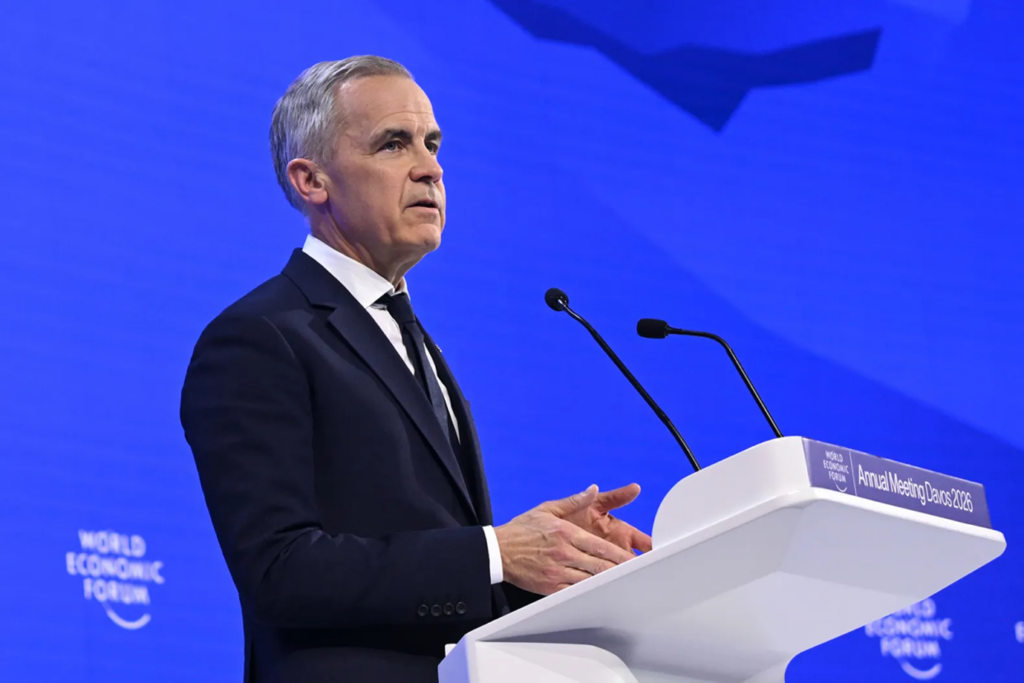
At the recently concluded World Economic Forum in Davos, Canadian Prime Minister Mark Carney propounded a more provocative and unspoken take on a reframing of the stance of middle powers within the current state of international relations.
Middle powers, he argued, do not stabilise the international system by hedging endlessly or positioning themselves as neutral intermediaries. However, global stability comes from the discipline of states consistently and respectfully binding themselves to the workings of the international global order, absorbing short-term costs and offering predictability in an increasingly multipolar world.
This was not simply a clarion call for such rhetorics as ideological alignment or moral posturing. Instead, Carney’s speech was a realistic pivot on how great powers redefine the international order (some more opportunistically). As such, the strategic value of middle powers lies in their willingness to treat commitments as constraints rather than conveniences.
Carney’s framing is uncomfortable for Malaysia and ASEAN. Malaysia (and Southeast Asia as a whole) largely positions itself as an active upholder of the Non-Aligned Movement (NAM). During Malaysia’s helming of its chair in 2025, ASEAN also led to the diplomatic agility and convening power of the regional bloc. On the same breadth, however, these same qualities providing agility present a risk of producing an entirely adverse outcome, that is, an ASEAN that is consensus-based but increasingly shaped by external forces rather than redefining neutrality.
The question is no longer whether ASEAN remains relevant, but whether it is becoming something closer to a geopolitical coworking space.
The “Coworking Space” Metaphor
The ASEAN approach has historically derived its strength from openness and ambiguity. Consensus decision-making, non-alignment and an emphasis on process have allowed it to convene competing powers and avoid overt confrontation. These features have enabled ASEAN to survive periods of intense geopolitical rivalry and should not be dismissed lightly.
Therefore, the root problem is not that ASEAN conv
Meetings proliferate. Declarations multiply. Yet when the curtains draw, the distance or divide between process and consequence grows wider save for truly meaningful commitments.
This is where the “coworking space” metaphor becomes analytically relevant. Like a shared office environment, ASEAN offers neutral space, procedural access and reputational benefits. Everyone – should they be interested – can be offered a seat at the table.
Nevertheless, no state is required to commit beyond attendance. Responsibility for outcomes remains diffused. The infrastructure is valuable and brings together great powers while reconciling their relationships with middle powers, but it does not enforce discipline for the international global order.
This shift does not reflect irrelevance. On the contrary, ASEAN is in high demand. However, over-usability without authority carries risks. When an institution becomes primarily a platform rather than a rule-shaper, it risks professionalising flexibility at the expense of institutional gravity.
Carney’s argument rests on a simple but demanding premise. Middle powers cannot outcompete great powers materially, but they can reduce uncertainty through credible self-constraint.
The Canada Model
Within this framework, Canada’s posture under Carney is not neutrality but consistency. Commitments across trade, climate, security and finance are treated as mutually reinforcing rather than siloed. Red lines are not always explicitly drawn, but they are legible. Most importantly, reversals on international commitments carry reputational and political costs that send a message to partners and adversaries alike. A self-constrained model does not preclude flexibility but offers solace.
Carney’s intervention invites a comparison. Canada’s credibility as a middle power does not stem from hosting dialogue or maintaining maximal manoeuvring space. It stems from being predictably constrained. Partners know what Canada will not do, what it is willing to bear costs for and where its commitments are likely to endure beyond electoral cycles.
ASEAN’s ambiguity, by contrast, is often treated as an end in itself. Non-alignment becomes synonymous with optionality. Commitments are framed cautiously to preserve consensus, sometimes to the point where external actors struggle to identify substantive limits. Over time, ambiguity that is not backed by institutional consolidation risks being interpreted as indecision.
This also explains why hedging, long treated as a prudent middle-power strategy, is increasingly strained. Hedging worked best in an environment where issue areas could be compartmentalised—where security, trade, technology and regulation could be managed in parallel without forcing alignment across domains.
The Breaking Point of Strategic Hedging
That assumption no longer holds water. Today’s strategic competition is cross-cutting; supply chains and digital standards alike. In such conditions, attempting to hedge everywhere often results in being credible nowhere and ironically self-seeking in nature. What once preserved manoeuvring space now risks signalling indecision, particularly to actors seeking reliable partners rather than flexible interlocutors. Hedging has not become illegitimate, but it has become more costly, demanding a degree of internal coherence and prioritisation that many middle powers have yet to institutionalise.
The issue is not rhetorical ambition but coherence. How often do Malaysia’s regional commitments translate into binding domestic frameworks? Where do partnerships generate enforceable expectations rather than aspirational signalling? To what extent are policy choices aligned across ministries, rather than managed in parallel?
Carney’s midd
By committing more deeply in specific domains, states can increase credibility overall even if it narrows short-term options. For ASEAN, the lesson is similar but more complex. ASEAN’s diversity and consensus-based structure make wholesale institutional hardening unrealistic. Where ASEAN chooses to lead, it must move beyond hosting and toward structuring, clarifying implementation pathways, consequences for non-compliance and the limits of ambiguity.
Without this shift, ASEAN risks becoming indispensable but inconsequential: a venue everyone uses, but few take seriously as a source of constraint. In a geopolitical environment defined by sharper competition and thinner trust, that is a precarious position.
Carney’s framing also challenges a deeper assumption about middle powers. Influence is often equated with room to manoeuvre. Yet as great powers become less predictable, manoeuvring room without credibility becomes less valuable. What others increasingly seek is not mediati
This is where ASEAN’s neutrality narrative begins to fray. Neutrality without institutional depth does not insulate middle powers from pressure; it delays confrontation without resolving it.
Canada’s experience suggests that choosing constraints earlier may preserve autonomy later by reducing the frequency and intensity of external testing.
From Hosting to Structuring
None of this implies that ASEAN should replicate Canada’s posture. The contexts are fundamentally different. But the underlying principle that middle powers derive influence from disciplined self-binding rather than unlimited flexibility is transferable
The strategic risk for ASEAN is not marginalisation but dilution. By becoming a permanent coworking space for global powers, ASEAN may retain visibility while losing leverage. The process will continue, but authority will thin. Malaysia, operating within this environment, will face increasing pressure to choose where credibility matters most.
Carney’s Davos address should therefore be read less as a prescription than as a provocation. It asks whether middle powers want to be endlessly usable or selectively reliable. In a world where great powers increasingly treat rules as optional, the middle powers that matter may be those willing to treat commitments as costly and therefore credible. For Malaysia and ASEAN, the strategic question is no longer whether flexibility is useful. It is whether flexibility without discipline can sustain influence. The answer, increasingly, appears to be no.
