Introduction
Southeast Asia is now one of the world’s most climate-exposed regions. From flash floods in Bali to droughts in the Mekong Delta, extreme weather is disrupting agriculture and rural livelihoods.
Agriculture sits at the centre of a paradox. It contributes to emissions while also being among the first to suffer from climate shocks. Agricultural activities that sustain rural livelihoods now face the impacts of the climate crisis it helped create.
Building resilience in agriculture is, thus, not a choice but a necessity. One promising approach is circular agriculture, a system that reduces waste, recycles resources, and integrates crops and livestock to strengthen both productivity and sustainability. Essentially, circular agriculture helps build our resilience.
Resilience is not just about crops or animals—it is also about people. In the context of Southeast Asia, the region needs a dual strategy: 1) biological resilience, which relates to climate-adaptive crops and livestock, and; 2) social resilience, which concerns farmers’ capacity to sustain their work and income under pressure.
Biological Resilience
Resilience in agriculture is not just about surviving climate shocks but adapting to them. Agricultural practices must shift toward climate adaptation. Building biological resilience in agriculture requires two parallel strategies.
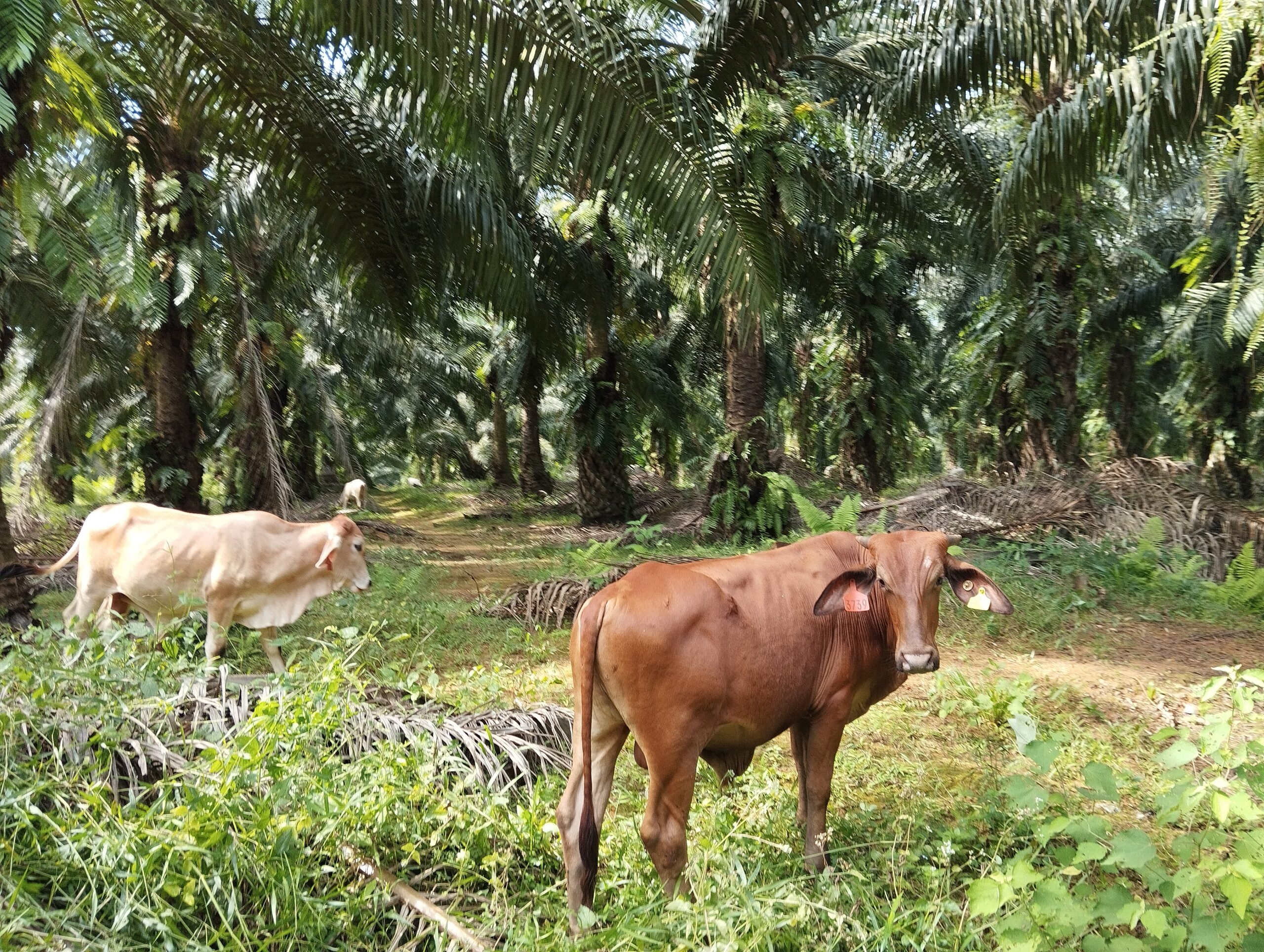
Firstly, developing and deploying climate-adaptive varieties and breeds, such as heat-tolerant rice, drought-resilient maize, and cattle breeds capable of co
Across Southeast Asia, research institutions are already advancing this agenda. Each country has drought-tolerant rice varieties to heat-resilient maize hybrids. For livestock, crossbreeding programmes that combine productivity with adaptability are widely adopted in several countries.
Secondly, management practices must also adapt to changing conditions. Adaptive management practices help farmers reduce risk and maintain productivity despite rising uncertainty.
In crop systems, many Southeast Asian growers are already shifting their planting schedules to match changing rainfall patterns, helping them avoid losses when the seasons come late or end early. In livestock systems, adapting means improving how animals are fed, bred, and housed so they can better cope with heat and disease. Wastes, remains and leftovers are also not thrown away—they are turned into resources.
These changes show that climate adaptation is not just about survival but also how to make farms more efficient by devising creative strategies in response to limiting circumstances.
Social Resilience
On the social side, resilience depends on people’s ability to anticipate, absorb and adapt to risk. Diversification is key to this process. Farmers who rely on a single crop or commodity are highly vulnerable to market volatility, pest outbreaks and extreme weather events.
Diversifying what farmers grow and produce helps them spread risk and keep their livelihood steady. By combining crops and livestock, they can build self-sustaining systems. This way, farms rely less on costly external inputs and more on the resources they already have.
This approach strengthens not just household income but also communal cohesion. This is because circular agriculture’s paradigm acknowledges that everything on a farm connects, one that emphasises on balance and renewal. When farmers share resources, they build networks of mutual support that help others.
In the traditional model of farming, fertilisers, feed and fuel are brought in, and whatever remains is simply thrown away. Circular agriculture takes a different approach by following the same rhythm as nature, where nothing is wasted. Everything that leaves the field can be used again to support the next cycle of production.
With these cycles, circular agriculture reduces both environmental impact and economic inefficiency, helping farmers achieve sustainability through smarter resource use and sharing.
In practice, circular agriculture can transform smallholder systems across Southeast Asia. On a small farm in Java, for instance, rice straw that would once have been burnt can be turned into feed for cattle, while the animals’ manure is returned to the fields to enrich the soil. Some farmers also raise fish in their paddy fields, making better use of their land, add
Such models can thrive when communities are involved in designing and managing them. Farmer cooperatives that share resources, labour, and knowledge can reduce transaction costs and enhance access to markets. Government programmes and NGOs can further amplify this impact by providing training, certification and access to green financing for circular practices.
Scaling Up
Implementing such practices at scale demands institutional support and investment. We need real-world adoption, ensuring research outputs do not just sit in academic journals but reach the hands of farmers. Besides, scaling up requires strong extension systems that connect scientists, policymakers and farmers.
Scaling this approach in Southeast Asia means combining local wisdom with scientific innovation. Farmers already practise elements of circularity; what is missing is institutional and technological support to scale up, along with clear incentives that make these efforts worthwhile.
Circular agriculture fits neatly within regional priorities. ASEAN has committed to strengthening food security and climate adaptation. Meanwhile, the Food and Agriculture Organization (FAO) has promoted agroecological and circular approaches across Asia. The challenge now is turning frameworks into practice.
This means developing affordable small-scale technologies, building markets that value sustainably produced food and providing robust extension services. Furthermore, innovation in laboratories and research centres is only the first step—promising technologies need effective dissemination and adoption. It also means creating financing mechanisms that reward farmers who adopt climate-smart, circular practices.
Climate solutions do not always need to come from international negotiations or high-tech laboratories. Sometimes, they lie in the quiet, often overlooked practices of rural communities; practices that we should recognise, support and elevate.
The climate crisis is not just a technological or policy challenge but a test of collective will. Strengthening agriculture resilience in Southeast Asia requires all hands on deck—from the lab to the field, from policymakers to farmers and from consumers to corporations.
Every actor in the food system must see resilience not as a distant goal but as a shared responsibility grounded in daily choices of what we produce, how we consume and how we value nature’s cycles.
Circular agriculture offers a way forward precisely because it links these layers together. It connects scientific innovation with traditional knowledge and environmental protection with economic opportunity.
Conclusion
By closing resource loops and promoting efficiency, circular agriculture helps farmers reduce dependence on external inputs while nurturing ecosystems that sustain future production. More importantly, it empowers rural communities to take ownership of adaptation.
For Southeast Asia, adopting circular agriculture is a political and moral choice. It signals that the region is ready to move beyond extractive development models toward ones that regenerate land, livelihood and trust in local systems.
The road ahead will not be simple. Building truly sustainable food systems will take smart policies that makes sustainable choices practical for everyone, not just ideal in theory. But the payoff is worth it; food systems that are more resilient, more inclusive and strong enough to withstand the climate shocks. As environmentalist James G Speth once said, “I used to think the top environmental problems were biodiversity loss, ecosystem collapse, and climate change. But I was wrong. The top environmental problems are selfishness, greed, and apathy.”