search


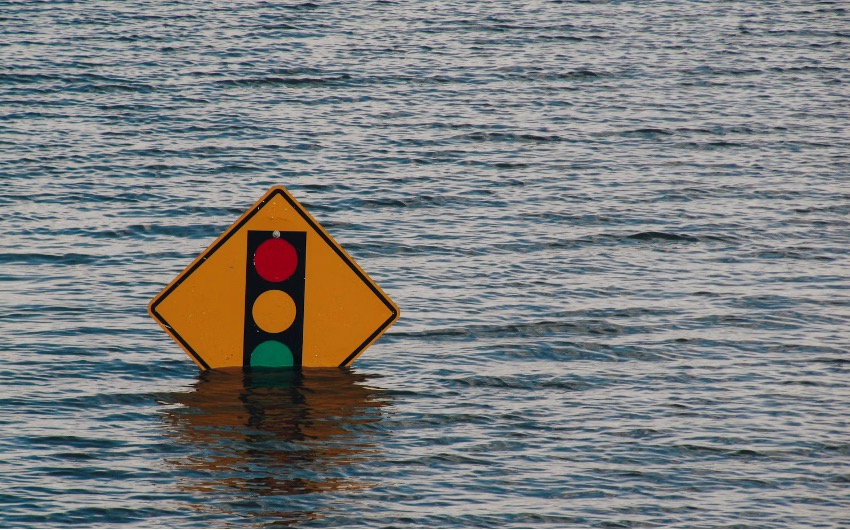
Is UNCLOS at risk? Great power defiance threatens maritime law. Credit: Shifaaz Shamoon/Unsplash
Reform UNCLOS Before It Is Too Late
- July 2, 2025
- 8 minutes of reading
Is UNCLOS at risk? Great power defiance threatens maritime law. Credit: Shifaaz Shamoon/Unsplash
Introduction
As many as 169 states have agreed, in whole or in part, to the provisions of the 1982 United Nations Convention on the Law of the Sea (UNCLOS), which provisions cover such maritime aspects as definition of territorial waters, Exclusive Economic Zones (EEZs), deep sea mining, and marine environmental management and requirements.
However, UNCLOS still faces significant challenges from the bending and manipulation of political rules for strategic maritime interests, particularly by great powers. Can UNCLOS survive this and maintain its integrity?
To be fair, great power abuse is a common phenomenon in international affairs, typically when these powers ignore or break international law when rules and regulations no longer serve their interest. The invasion of Iraq by the United States and Russia’s annexation of Crimea are the most obvious examples.
In the maritime domain, China has also gained notoriety. Although a signatory to UNCLOS, China has made extensive claims over 90% of the South China Sea, in violation of the convention.
Despite The Hague’s 2016 tribunal ruling that China’s activities in the region were inconsistent with international law, the Middle Kingdom has ignored this stipulation and continued asserting its power and presence there, showcasing China’s non-compliance with international law.
Meanwhile, the United States is often cited as the first country accused of “deviance” in the maritime sector. Curiously, the United States has never ratified UNCLOS, arguing that it observes most of its provisions as customary international law.
This, however, has added more complexity to the subject matter. While the United States has openly challenged and criticised China’s maritime claims, the United States is doing so without any legal obligation to comply with the very set of rules that regulate maritime conduct: UNCLOS. Such situations not only make the US criticism of China hollow and unreasonable but also ultimately undermine the supremacy of UNCLOS.
Is UNCLOS Relevant?
Despite all this, UNCLOS remains central to maritime governance. Its standing has not faded; instead, nations still turn to it as a trusted legal and diplomatic shield to protect their interests.
The treaty is especially a powerful tool for smaller and mid-sized maritime powers, spelling out their territorial boundaries and economic rights.
UNCLOS stipulations relating to the management of territories and resources under the EEZ, for example, are crucial for coastal states like Indonesia and the Philippines, enabling them to develop the fishing industry and offshore energy exploration as well as to maintain authority over the maritime area.
Indonesia, for instance, routinely cites UNCLOS when arguing for its rights in the Natuna Sea and when confronting illegal foreign trawlers. The Philippines also leaned on the treaty when it legally contested China’s sweeping claims in the South China Sea; The Hague’s 2016 ruling, though ignored by Beijing, gave Manila a renewed diplomatic standing.
UNCLOS also sits at the heart of modern maritime activity. Nearly every navy, port authority and ocean protection body looks to its core rules to steer daily operations. The treaty serves as a framework for settling sea boundary disputes, overseeing commercial traffic and safeguarding marine ecosystems.
Even countries that have yet to ratify it – like the United States – tend to apply its provisions in practice, because they are regarded as universal standards, such as in the case of Freedom of Navigation Operation (FONO). This widespread acceptance indicates that UNCLOS has become woven into the fabric of seaborne governance and that its legal blueprint still shapes conduct on the world’s oceans.
UNCLOS, crucially, still equips states with mechanisms to address breaches. Although the 2016 ruling failed to compel Beijing to alter its conduct, it armed the Philippines and other Southeast Asian governments with a robust legal rationale and an international backing.
The ruling also highlighted the continuing relevance and operational capacity of international judicial bodies such as the Permanent Court of Arbitration (PCA) and the International Tribunal for the Law of the Sea (ITLOS).
Rule violators, therefore, remain vulnerable to diplomatic censure and damage to their global standing. Regional forums – such as ASEAN, the African Union, as well as broader entities like the European Union – have leaned on these legal judgements to rally members and forge common action. The case of the 2016 South China Sea arbitral ruling gave a solid footing to ASEAN to push back against China’s assertiveness.
As the international scene shifts towards a multipolar balance, where no one or two powers alone dominate global politics, UNCLOS remains highly relevant. Nations like India, Brazil, South Africa, Indonesia and Turkey now press firmly to uphold their sea-based interests. To defend their claims, they often turn to UNCLOS as an impartial, rule-bound forum, sidestepping the need for the bigger militaries or economic threats that stronger states wield.
India, for example, anchors its Indian Ocean strategy in UNCLOS and champions legal cooperation across those waters.
The treaty still matters because it offers order, equity and a common framework for maritime conduct. It enables smaller states to claim entitlements, pressures violators to back down and remains vital to the broader international system. Amidst rising geopolitical strains, its legal and political weight is perhaps greater than at any time in recent memory.
Risks
If the legal framework established by UNCLOS falls apart, its consequences would ripple across the geopolitical, trade and ethical dimensions.
Absent a strong, agreed-upon ocean rule book, nations may resort to a maritime order forged by power rather than by shared principle. Seas that ought to operate under common rules could devolve into battlegrounds where power trumps fairness at every turn. The notion of EEZ loses all meaning when treaties are honoured only at the whim of the strongest.
Such a collapse would generate a dangerous legal and moral void. States might begin to stake claims on water and seabed without worrying about legal pushback. Questions over territorial belts, shipping corridors and mineral-rich floors would be settled not in neutral tribunals but in face-to-face standoffs. Tension could easily escalate into shooting conflicts in already volatile arenas such as the South China Sea, the Eastern Mediterranean or the Arctic.
Smaller countries would bear the brunt of this disorder. Lacking the shield UNCLOS provides, they become easy targets for bullying by much larger navies. Nations like the Philippines, Kenya or Vietnam would be outgunned, diplomatically isolated, and left largely on their own as they try to defend their ocean rights.
Moreover, UNCLOS’ failure would send a loud message that even the strongest treaties cannot rein in powerful countries. With the world in the geopolitical flux that it is in today, who can guarantee that nations would not also unravel other equally important treaties, such as climate pacts, cyber rules or nuclear control?
Weakening one fence encourages others to rust. In short, the fate of the oceans now doubles as a test of international law in a world of shifting power.
The economic costs would be harsh as well. Roughly 80% of daily trade sails through route lines drawn by UNCLOS. Countries that depend on steady sea links – including landlocked nations that rely on coastal neighbours – quickly become unintended victims of an ocean run wild.
If those sea lanes turn risky because of piracy, border fights or aggressive warships, traffic would slow down. Insurers would jack up premiums, traders would pass along the bills and poorer countries, which can absorb them the least, would suffer first.
At the same time, crime at sea would spike. Gaps in rules invite illegal fishing, piracy, smuggling and human trafficking to flourish. With no common authority to monitor the waters, criminal networks would move into empty zones and deepen regional unrest.
UNCLOS may seem like a set of technical regulations, yet it also stands as an emblem of cooperative statecraft. Should the treaty collapse, the world would suffer a loss of legal certainty and, more seriously, a blow to confidence in rules as a viable method of ordering global affairs.
Strategic Policy Measures
Defending UNCLOS in today’s turbulent world demands coordinated action that blends legal initiatives, active diplomacy and timely reforms of key institutions. Such a structured policy framework enables coastal states to counter the rising trend of great powers ignoring the treaty with greater collective strength.
A central tactic is to enhance the role of international legal tribunals, particularly the ITLOS. Despite lacking an enforcement entity, their judgements nonetheless carry considerable diplomatic authority. Each of their rulings creates an official record of misconduct, aids affected states in forming coalitions and influences how the broader global community interprets behaviour at sea.
The Hague’s 2016 arbitral ruling in the Philippines v China case illustrates this clearly, as it empowered smaller nations by publicly reaffirming their entitlements despite Beijing’s assertiveness.
Beyond legal action, boosting Maritime Domain Awareness (MDA) is equally important.
The main obstacle to enforcing UNCLOS in remote waters is simply the inability to monitor what occurs there. Governments need to fund satellite-monitoring networks, synchronised naval patrols and regional data-sharing hubs—assets that help officials spot and record illegal fishing, maritime blockades and boundary intrusions.
Verified proofs like clear satellite photos or videos make it easier to raise international awareness and apply diplomatic pressure. Without visibility and trust in the data, holding wrongdoers accountable is much harder.
Another key measure is to persuade the United States to ratify UNCLOS, as its refusal to ratify it formally weakens both its credibility and its leadership.
The United States regularly contests China’s moves in the South China Sea, yet its outsider status can make those legal claims seem selective. Signing the treaty would ground the United States’ policies in the prevailing legal system and renew global confidence in the rules-based maritime order.
Finally, introducing a routine compliance review group under UNCLOS would boost accountability. Officials could adapt a format like the Universal Periodic Review (UPR) – a mechanism of United Nations Human Rights Councils – to check how each nation observes the maritime law.
Led by a rotating team of legal scholars and career diplomats, the exercise would yield regular, public reports on compliance. Though no binding penalties would attach, the spotlight on habitual offenders tends to spur states to avoid reputational harm.
UNCLOS still sits at the heart of ocean governance. Its durability hinges on countries defending its rules, updating them when needed and jointly confronting those who breach them. The sea is a shared global commons. Treating it fairly and according to law is a duty that cannot be postponed.
The views expressed are those of the authors and do not necessarily reflect those of STRAT.O.SPHERE CONSULTING PTE LTD.
This article is published under a Creative Commons Licence. Republications minimally require 1) credit authors and their institutions, and 2) credit to STRAT.O.SPHERE CONSULTING PTE LTD and include a link back to either our home page or the article URL.