search


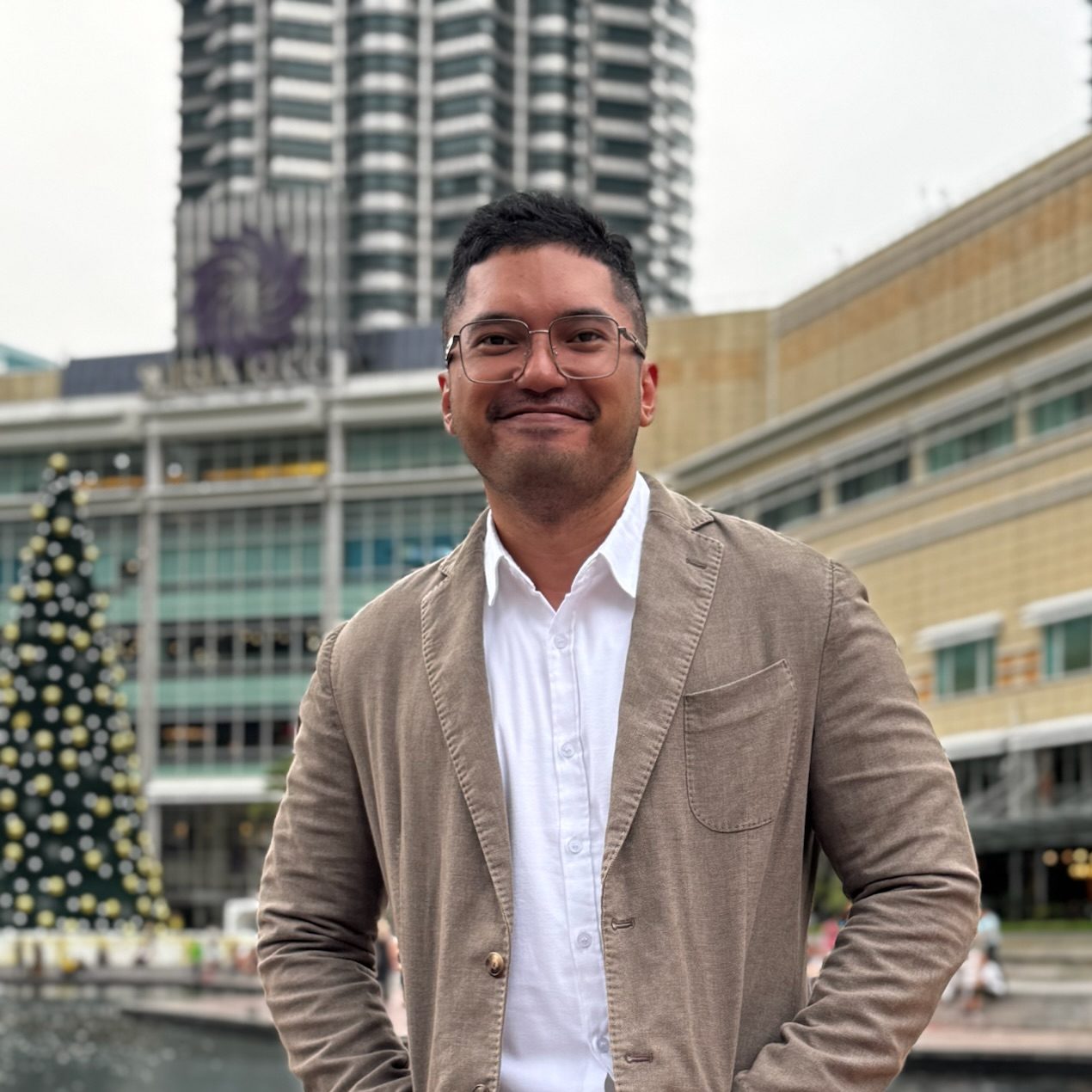
Makassar in the morning. Credit: snapshotsfromspira
We Look Like Muslims Already, but Where is the Substance?
May 1, 2026 / 8 minutes of reading
Paradox
A most unfortunate development—an ex-president of my alma mater, International Islamic University Malaysia (IIUM), was recently charged in an alleged conspiracy to trade in securities without a licence.
The concerned Tan Sri (for he is a Tan Sri) is alleged to have defrauded Malaysians in the sum of RM300m, despite his stellar credentials as one of the country’s top Islamic finance darlings. He has pleaded not guilty and is currently awaiting trial, but this has not stopped the court of public opinion from hurling derogatory names at him, such as an “ummah scammer”.
If found guilty, he is looking at a potential fine of RM10m or a 10-year imprisonment or both.
Faith- or religion-linked fraud cases are not an anomaly these days. Another fake sharia-compliant investment scheme has reportedly misled over 200 clients, causing losses amounting to RM80m. A slightly unrelated case, but still within the topic, involves the four-decade-long scandal of uncertified imported meat that was packaged with a counterfeit halal logo in an apparent attempt to dupe Muslim consumers in the country.
Meanwhile, the Indonesian authorities recently raided the office of an Islamic fintech company for alleged fraud, embezzlement and falsified documents. Frauds committed by umrah and hajj travel companies are also rampant in Indonesia; throughout 2026 alone, the police have processed 42 of such cases, which have caused an accumulated loss of Rp92.6b.
The proliferation of Islamic products, brands and services in Muslim-majority countries is precipitated by rapid economic development, stable national politics, and growing awareness of the Islamic identity. However, as the Islamic lifestyle and economy bloomed, so did the occasions to misuse the opportunity that these two created.
I am certain cases like this have raised the eyebrows of not a few, but fewer would openly discuss it with other people. Those who falsely claim to champion Islam are tarnishing the religion, despite its divinely revealed knowledge and associated virtues.
I do not claim to know the inside of the head of these perpetrators, but their actions seem to suggest an audacity, if not a pride, in their belief that the mighty standards and crushing responsibilities that come with the label “Islam” might not be applicable to them.
Tirade
Grounded firmly in social justice, Islam prescribes standards and rules of the highest order, commanding its followers to be vicegerents of God on this earth (khilafah fil-arḍ) while protecting the five core necessities: religion, life, intellect, lineage and property (maqasid al-shari’ah).
The questionable actions of these individuals, thus, represent a gross violation of everything that Islam stands for, made worse by their claim of being Islamic or sharia-approved.
As a vast and rich system of ethics, Islam bestows upon those who claim it a perceived aura of respectability and morality. When one says he is a Muslim, it is not just an affirmation of one’s identity. It is a declaration of sorts, a pronouncement that one belongs to a group of people who abide by a certain set of rules and are committed to achieving the best possible for humanity as well as all of God’s creations on earth.
Consider, for example, my recent encounter with a Grab driver in Kuala Lumpur who got so emotional he was almost yelling at me.
Upon his realisation that I am an Indonesian, he started venting his frustrations about why some Muslims like to preach that pork and alcohol are haram but are nonchalant about accepting bribes and taking in duit haram (forbidden money). The original conversation continued longer and grew more complicated as we were trying to reach another stratsea editor’s house for my next appointment, but this was the crux of the man’s tirade.
Putting aside the driver’s raw emotion, it reminded me that we Muslims – when we claim we are Muslims – have a great responsibility to uphold high standards in our conduct and protect the name of Islam. That even a non-Muslim Grab driver expected this from us suggests that our religious identity is not something to trifle with.
Islamisation
As a Muslim, millennial Indonesian, my past life was significantly influenced by several key events and developments.
My parents were part of that group who grew strong consciousness of Islam after Soeharto changed his attitude towards the religion in his waning years. The country’s conservative turn further solidified my identity (resulting in my enrolment in Islamic schools almost exclusively), but it was my years in IIUM that crystallised my religious foundation. It was here when Islamisation was introduced to me in full force, thanks to IIUM’s agenda of approaching life, knowledge and thoughts from the Islamic perspective.
As a campaign, Islamisation was a comprehensive process that all students were encouraged to study and embrace in all aspects of their lives. IIUM taught us students to not just focus on the outward appearances but also to internalise Islamic values, knowledge and virtue in preparation for us to become the vicegerents of God upon graduation. It was balanced out, however, with a warning to approach thoughts, trends and knowledge relating to Islam with a more critical mindset, as blind acceptance of anything labelled “Islamic” could be harmful.
Things became more complicated once one graduated, as the Islamic worldview as taught in IIUM – which appeared like the natural order of things – often conflicted with the reality on the ground.
Detritus
One saw people in modest Muslim attire shouting at their children in malls. One prayed in a floating masjid, only to see that rubbish and detritus had accumulated in the sea below, which water had turned brown due to pollution. One complained about old newspaper garbage that congregants left behind after finishing Eid prayers, despite cleanliness being one of Islam’s central tenets.
One watched news about a pesantren owner harassing his santri, or a company parading a religious label hiding nefarious practices of sexual and physical abuse of children.
Perhaps worst of all, one witnessed a genocide unfolding in Gaza, only to see religious organisations backing a platform crafted by countries that allowed that genocide to occur in the first place.
This points to the puzzling question whether the Islamisation process is incomplete, as the adoption of Islamic appearance and outward identity is not necessarily coupled with the increase in piety. In other words, while more individuals are now confident in displaying their Islamness, whether they also fully embrace Islamic values and principles remains an elusive matter.
On that matter, measuring piety is challenging in itself. Gemini suggests observing one’s ritual adherence, financial commitment to religious obligations, altruism level and such. But at the end of the day, we never know what is in someone else’s heart, and one does not need to be religious to be a good person.
Such is a question that has long beset the “surface vs substance” debate about religious identity in Muslim-majority communities.
This paradox also unfurls in various domains; for example, Indonesia always prides itself as the biggest Muslim country, but it is home to the rudest netizens in the world. Malaysia is also a proud Muslim nation, but mind-bending scandals of different heights – like the 1MDB case – have been committed by individuals who have exploited the label “Islam” itself.
The renowned Egyptian Islamic scholar Muhammad Abduh once quipped, “I went to the West and saw Islam, but no Muslims; I got back to the East and saw Muslims, but not Islam.” That this statement is still relevant over a hundred years later suggests something is missing in the way we progressed.
Islamicate
Herein lies the central quiz. Are we Islamic because we look like Muslims or because we embrace Islamic values? Do we strive to affirm our identity by appearing Islamic, or do we prioritise becoming good individuals as modelled by the Islamic framework?
Furthermore, despite decades of development in the Islamic economy, education and politics, why is the concept of ummah still elusive? In addition, why are social ills still rampant and fraud cases involving the label Islam still widespread?
Cases mentioned above only hurt the name of Islam, encouraging people to build prejudice against the religion and falsely associate Muslims with backwardness. In this context, then, Islamophobia by others might not emerge from a place of hate but from misperceptions caused by grave errors and mistakes committed by Muslims themselves.
The aforementioned Grab driver is a case in point—I sensed he does not hate Muslims, but I also believed he is perplexed by the paradoxical behaviours of certain Muslims that are at odds with Islamic tenets and principles.
So how do we go about from here? I do not claim to have the answer. The increasing visibility of Islamic identity in countries like Malaysia and Indonesia has been argued to be an instance of Islamicate instead of a completed Islamisation project. The former suggests that this phenomenon has less to do with Islamic theology and orthodoxy and is more associated with the normative practices of the Muslims themselves.
Perhaps understanding the difference is crucial in devising a remedy, especially if the Islamicate in this instance is not meant to penetrate deeply into the metaphysical aspects of the Islamic faith and belief but is only reserved to reaffirm the identity of the followers. After all, Muslims need validation as well.
On a personal level, I would revert to what my IIUM philosophy lecturer told me when I brought this issue up to his attention last Ramadhan. “You’re only human,” he said, which suggests to me that I must not be too hard on myself in setting up standards.
Still, I would close this discourse with yet another question: is it better to be a loud Muslim with a shallow understanding of Islam or a quiet one that upholds its values and principles?
My introversion makes me a biased observer on this matter, but if my experience with the Grab driver tells me anything, it is that someone always expects more from one who calls themselves a “Muslim”.
This article is published under a Creative Commons Licence. Republications minimally require 1) credit authors and their institutions, and 2) credit to STRAT.O.SPHERE CONSULTING PTE LTD and include a link back to either our home page or the article URL.