
Introduction
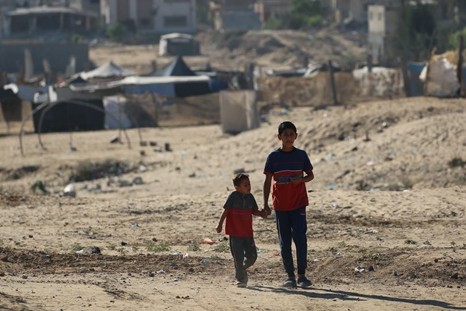
In recent months, the world has witnessed several remarkable developments in the Middle East, particularly in relation to Israel’s ongoing military aggression in the Gaza Strip.
Israel’s unilateral action against the Islamic Republic of Iran and the United States’ bombing of Iranian nuclear facilities in three sites have expanded the conflict into a regional one, implicating entities beyond Israel and Gaza. Moving forward, on 8 September 2025, Israel launched an attack on Qatar,
The conflict between Israel and Palestine, as well as Israel and Arab countries, started a long time ago, primarily after the creation of the state of Israel in 1948. For many scholars, the 7 October attack simply marks the defining moment that prodded Prime Minister Benjamin Netanyahu to launch a disproportionate attack against the Palestinians in the Gaza Strip.
Observations
With these in mind, five major observations are worth mentioning.
The first is the issue of trust, credibility and leadership.As the United States continues to support Israel in the latter’s campaign in Gaza, the credibility and legitimacy of both Israel and the United States are questioned by global onlookers.
Secondly, the expansion of the war and Iran’s involvement. Iranians have been dragged into the conflict when Israel launched a surprise unilateral assault on Iran’s fuel enrichment plant in Natanz and its nuclear facility in Isfahan on 13 June 2025. This prompted a 12-day war that involved the bombing of military and nuclear complexes as well as the assassination of Iranian nuclear scientists and political figures.
Thirdly, the widespread call for the recognition of Palestinian statehood. Today, over 140 nations are joining the call for the recognition of Palestine as a state, further isolating the United States and its allies on the question of Israel.
Fourthly, the Arab centrality and multilateral diplomatic action. The unequivocal rejection by se
Lastly, the efficiency of global legal institutions.The conflict has put into question the purpose and effectivity of international legal institutions, which are mandated to protect innocent civilians caught in warfare. Yet, Israel’s operations since 2023 in Gaza have killed more than 60,000 Palestinians, while Israel’s unilateral attacks against Iran and recently Qatar have been widely condemned by the international community as a clear violation of international law. The impun
Impacts on the Philippines
Given the regional strategic and economic value attached to the region, any geopolitical and security disturbance in the Middle East will directly or indirectly impact countries anywhere in the globe, including the Philippines.
Philippine interests vis-à-vis the Middle East are centred on three matters. One, its massive importation of crude oil from Gulf countries. Two, its enduring policy of labour migration to the Middle East and North Africa (MENA) region. Three, the crucial role of the Islamic countries and institutions, particularly the Organization of Islamic Conference (OIC), in facilitating peace negotiations in the Southern Philippines since the mid-1970s.
All these three elements have historically shaped the Philippines’ engagement in the MENA region and its relations with regional countries.
Crude Oil Imports via the Strait of Hormuz
The Philippines, like other economies in the Asia Pacific, imports a considerable amount of crude oil from the Gulf Cooperation Council (GCC). Saudi Arabia remains the largest supplier of crude oil to the country, while Kuwait, the United Arab Emirates, Oman and Iraq are also major sources of crude oil imports.
The Department of Energy reported that in 2023, 100% of the country’s total crude imports originated from the Middle East, of which half was sourced from Saudi Arabia alone.
All crude oil shipments from the GCC to the Philippines pass through the narrow Strait of Hormuz. Hence, any military control over the Strait significantly impacts the delivery of crude oil to the Asia-Pacific region, including the Philippines, which may lead to a global energy crisis and a further escalation of military conflict.
Filipino Labour Migrants in the MENA Region
Since mid-1975, the Philippines has been sending workers to the MENA region due to employment shortages at home and the heightened demand for foreign labour in the host countries. From a well-declared temporary solution to unemployment at home to a much-institutionalised labour policy that encourages labour migration, the country now sends 2.26% of its people abroad to work, according to 2023 estimates. The Middle East hosts over 46% of overseas Filipino workers. The bulk of them are employed in Saudi Arabia, the United Arab Emirates, Kuwait and Qatar.
In addition, over 2.2 million Filipinos reside in the MENA region as of 2020. Israel is home to around 30,000 Filipinos, Iran hosts 1,184 while Palestine accommodates 411. As the current conflict expands to other Arab countries, more Filipinos in the region find themselves in dangerous situations.
Relations with the Muslim World
Although there are no discernible concerns to the relations at the state level, and that the government maintains cordial diplomatic relations with countries in the Middle East
Domestically, the increasing support of Filipinos toward the Palestinians in Gaza should be given attention by both local and national authorities. It indicates a demand and an expectation that might determine the basis for future the Philippines-Arab relations and the Philippines-Israel relations.
Beyond its strategic interests in the Middle East, the Philippines has greater obligations to humanity and the international order. As a country that champions hum
Conclusion
The turbulence in the Middle East has far greater implications beyond Israel and Gaza. The presence of strategic commodities – such as crude oil and gas – and the geopolitical location of the Middle East suggest that a prolonged crisis would only hamper international commerce, expose the global market to oil price volatility, and weaken the purchasing power of small but heavily oil-dependent economies in the Asia Pacific, including the Philippines.
On the geopolitical front, the crises will also open a ripe opportunity for forging new alliances and challenging the dominance of the Western geopolitical and financial infrastructure.
Due to the significant impact of the crisis on the Philippines, the government needs to put the Middle East region into its core strategic and security consideration at all times. This means that the Middle East region should not only be treated as an energy source and labour destination. The government must elevate its Middle East engagem
