
Introduction
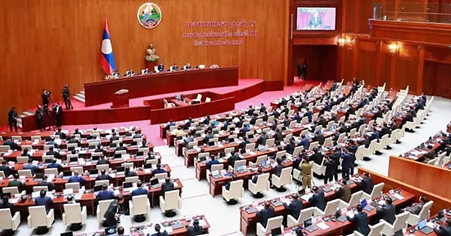
On 22 February 2026, Laos successfully held concurrent elections for the 10th Legislature and the Fifth Provincial People’s Councils. Official results were released on 2 March.
As far as one can see, the ruling Lao People’s Revolutionary Party (LPRP) has remained in power. The recent elections followed the conclusion of the 12th National Congress of the LPRP in early January, which re-elected Thongloun Sisolith as the party’s general secretary for a second term.
History of Lao Elections
The first representative election to the legislature was held in 1951 under the quasi-monarchical Royal Lao Government. There was a total of seven multiparty elections held before the communist takeover in 1975. None of these elections, however, were conducted in a free and fair manner, as the royalist government strove to restrict the effective participation of the Pathet Lao, an armed communist movement.
The expansion of the National Assembly (NA) in 1958 led to fratricidal conflict between the royalist, non-partisan and Pathet Lao factions that eventually paved the way for the LPRP’s consolidation of power in national politics.
After the proclamation of the People’s Democratic Republic, the LPRP introduced popular elections for the district, provincial and local assemblies in 1988 and for the national legislature in 1989. However, only LPRP or LPRP-approved candidates are permitted to participate in these elections.
Indeed, Laos has seen no organised opposition since the small-scale protests and low-intensity insurgencies of the late 1990s to mid-2000s. In this context, Lao politics is highly predictable: elections are typically non-pluralistic and non-competitive, consistently returning the LPRP to power with candidates who rarely challenge party policies in the legislature.
Nevertheless, the regime has tolerated the occasional emergence of independents and non-party candidates who have sometimes won representation in the NA.
Lao Elections in 2026
In this election, the LPRP approved a slate of 243 candidates to contest the 175-seat NA and 1,041 candidates for the 745-seat Provincial People’s Councils (PPC).
The difference between the two institutions is that the former deliberates on national legislative matters, while the latter serves as the representative state bodies of the 17 provinces and capital.
It should be noted that this year’s elections featured 19 more candidates for the NA and 253 more candidates for the PPC compared to the 2021 election. This expansion follows the increase of NA seats from 164 to 175 and of PPC seats from 492 to 745. In this context, a single member of parliament (MP) represents around 50,000 Lao citizens.
The 10th NA will be responsible for electing top state leaders and confirming the Five-Year National Socioeconomic Development Plan (NSDP) for 2026-2030, which is expected to pass without opposition. More than 4.76 million voters were eligible to cast their ballots this year.
With regard to women’s representation, the party has set a target of 30% across state and party organs under the 2021 NSDP. Before the 2026 election, women accounted for 16.9% of the Central Executive Committee, 21.95% of NA lawmakers, 30.48% of PPC members, 27.27% of ministers and cabinet positions, and 11.89% of local administrative posts.
Prominent election issues revolved around national debt and the economy. For a while, the government has been struggling with debt pressures, infrastructural financing commitments and an uncertain graduation from the United Nations’ Least Developed Countries list.
While its public debt hovered around 88% of GDP in 2025, which is a marked decrease from 116% in 2022, the high debt servicing costs nonetheless leave Laos with fewer opportunities to borrow for infrastructural development as well as to invest in public services like education and healthcare, which are important sources of performance legitimacy for the party.
While it has managed to regain some macroeconomic stability, the persistent debt distress has made Laos structurally more exposed than Vietnam and Cambodia—two countries that are rapidly consolidating their trade partnership in the region.
Megaprojects like the China-Laos Railway have fulfilled Laos’s ambition of becoming a land-linked country, but at a steep cost to its fiscal health. Indeed, authoritarian developmentalism is no longer a sure path to success, even if regional “democratising” spillovers no longer worry Vientiane elites.
Another election issue concerned the needs of the emerging youth population. With Laos having reached its half centennial in 2025, younger citizens who did not go through revolution or war are now increasingly assessing regime legitimacy through material security rather than revolutionary sacrifice.
Indeed, Laos has one of the youngest populations in Southeast Asia, with some 59% of its total population aged 25 and below. Their demographic importance is reflected in the greater political engagement seen in online spaces and the presence of younger candidates compared to previous elections.
Unsurprising Outcome
Despite these spoilers to autocratic rule, the latest elections have returned the ruling party to power—again, without open political opposition. There are reports indicating that women’s representation has increased to 29.71% in the NA, though not much more can be said about these elections given the lack of coverage surrounding them.
Until there is a more detailed breakdown of election results, it is impossible to tell whether voters have ever expressed their dissent by deliberately invalidating their ballots or abstaining from the vote altogether.
So why does the regime continue to hold elections when they have no intention of losing?
To be sure, these polls, like the many before them, are performative elections, but they serve a useful function from the perspective of the regime.
First, these elections can be used to gauge public preferences based on limited choice. Because limited intra-party competition supplies a modest degree of choice to voters, it can help the party to determine the popularity of its representatives and gain valuable information about regime support at the local level. In addition, they also reveal the strength of factions within the party and where alternative centres of power may lie within the regime.
Second, elections can also be used to evaluate public approval for important political events, such as the five-year party congresses. It is perhaps no accident that parliamentary elections are held after each party congress, where a positive outing can be interpreted as a form of public endorsement of the policy and leadership decisions made at the sessions.
The voting pattern that emerges from these events may also allow the regime to identify supporters and opponents as well as to coordinate expectations regarding the distribution of patronage. Notably, soft-liners may use elections to alter the balance of power vis-à-vis the hardliners within the regime. By taking advantage of popular mobilisation and newly emergent societal forces, these soft-liners can cultivate mass support and turn the tide against the dominant elites within the ruling coalition.
Wither Opposition?
Because LPRP dominance appears virtually assured, recent indications suggest the party may be growing more tolerant of political opposition in the country. As pointed out by commentators elsewhere, it would appear that a wave of discontent in June 2022 was the precursor to the premature exit of former prime minister Phankham Viphavanh from office.
More recently, open public dissent surrounding the election exit of a popular legislator, who is only one of six non-communist members permitted to sit in the NA, was somehow “allowed” to escape the harsh censorship of the Lao National Internet Committee.
With modernisation rapidly underway, one might also expect that the expansion of the middle class may eventually lessen political acquiescence to the regime and lead to more open demands for media and civic freedoms.
Yet, none of these observations can be taken as concrete evidence of looming political change. Like other authoritarian regimes, the LPRP may liberalise or even democratise because the costs of doing so may appear relatively low. By institutionalising a limited form of pluralism, the regime may not be looking toward liberal reform but rather to enhance its institutional capacity to monitor rivals and manage dissent.
The expansion of the NA and the PPCs in this election may likewise indicate a strategy to increase the co-optation capacity of the legislature, which would further increase the spoils of office and divide the opposition.
