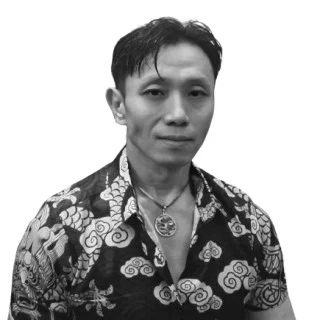
Hands-on Leader
Commotion swept through social media in Indonesia in late June. A rented house used for a teenagers’ Christian spiritual retreat in Cidahu, Sukabumi, West Java, had been stormed by local residents, interrupting the activities.
Many netizens, particularly those coming from minority religious groups, called out West Java’s majority Muslims for being “intolerant”. Others questioned why the province’s governor, Kang Dedi Mulyadi, had not spoken up in reaction to the
Dedi, Indonesia’s newest political sensation, has been compared to former president Joko “Jokowi” Widodo in his popular appeal. Like Jokowi, Dedi also sports his own signature acronym, KDM, short for Kang (a Sundanese appellation for an adult male) Dedi Mulyadi.
Within days, KDM paid a call to the site of the incident to take in the damage done to the property and to soothe the frayed nerves of the local Christian community.
Seven of the dozens of local residents captured on CCTV harassing the event participants were arrested by the police and arraigned as suspects.
By and large, Indonesian netizens praised KDM’s efforts, citing the arrest as “evidence” of KDM’s effective leadership in tackling a concerning issue. Others, however, were not so impressed, pointing out that there had been more than seven responsible for the incursion.
Evidently, KDM was walking on something like a tightrope to reassure both his minori
While promising the perpetrators would feel the full weight of the law – a gesture to the minority Christians – KDM also pulled off a face-saving act
Indonesian Populism
This is how Indonesian populism works: When a conflict breaks out, politicians must restore peace by saving the face of all the parties involved. Moreover, the balance of power between the majority and the minority must be seen to survive intact.
Political theorist Jan-Werner Müller describes populism as an attitude or stance opposed to pluralism. Within the Indonesian context, however, populist politicians have to make concessions to uphold the cohesion of Indonesia as a pluralistic society, albeit without offending the majority.
KDM’s understanding of this concept has been honed by decades of experience as a career politician.
Like Jokowi, KDM started from the bottom. Between 2003 and 2008, he was vice-regent of Purwakarta before successfully running for the office of regent. In 2018 he ran as vice-governor of West Java but was defeated.
Having started out in Golongan Karya (Golkar), KDM then switched to Gerakan Indonesia Raya (Gerindra), which is the party of the incumbent President Prabowo Subianto. As the Gerindra candidate, he won the West Java governorship in 2024.
Again, like Jokowi before him, KDM has also made maximum use of social media platforms to project an image of himself as a problem-solver.
Often unflatteringly labelled as a “content governor” for his frequent postings on social media, KDM has nevertheless garnered a sizeable online following: more than 3 million followers on Instagram, almost 7 million on his YouTube channel, 5.4 million on TikTok and 12 million on Facebook.
In a public poll released last May, his approval rating as governor stood
Populist politicians like KDM typically like to be seen as effective intermediaries between the political elite and ordinary people, making centres of power more accessible.
These politicians inadvertently thrive on the dysfunctions within Indonesia’s own representative democracy, under which most citizens have at best limited and in some cases non-existent avenues for making their aspirations or grievances known to policy makers.
Indikator Politik released its findings in January that public confidence in the House of Representatives (DPR) was the second lowest out of the 11 political institutions measured, only ranking better than political parties, which came last.
There is a pervasive belief among Indonesians that the political elite, including parliamentarians and political parties alike, only feign their care about the people’s everyday issues whenever an election is coming up, while leaving them to their own devices for the rest of the time.
This lack of access to power centres has led the public to rely on non-traditional means of voicing their aspirations, including social media and populist politicians ready to make use of trending issues.
The symbiotic relationship between popular politicians and social media in Indonesia was well-documented in Jokowi’s rise to the top from being the mayor of Surakarta (2005-2012), the governor of Jakarta (2012-2014) and eventually the president (2014-2024).
In 2012, data at the Ministry of Communications and Information (Kominfo) put the number of social media users in the country at 63 million or 24,23% of the population. By 2019, the number had jumped to 150 million, encompassing 56% of Indonesians.
With current statistics making Indonesia the fourth largest country in the world for social media users at around 167 million users, “medsos”, as it is known locally, becomes the chosen platform for rising politicians to maximise their public outreach and image-building.
Quest for the Just Prince
In Indonesia, growing political stature is often embellished with elements from the national mythology. Populist leaders are often associated with the mythic figure of the Ratu Adil or the Just Prince.
Ratu Adil has been an enduring theme in Indonesian mythology, dating back to the so-called Joyoboyo prophecies of the 11th century, which foretold the advent of a just ruler-saviour in times of hardship for the people.
Throughout Indonesian history, belief in the prophecy has manifested itself at different times but has invariably conveyed the same essence of social justice for the many.
In the 18th-century colonial Indonesia, Prince Diponegoro, who led a rebellion against the Dutch, was hailed by his followers as Ratu Adil. The republic’s first President Sukarno was once thought to be one, too. More recently, Jokowi was often identified as Ratu Adil by his supporters.
The Ratu Adil status tends to be applied only temporarily to Indonesian rulers until they start to disappoint their followers.
This had been the fate of Jokowi, whose 10-year rule ended on a less exalted note when he was accused of nepotism for paving the way for his eldest son to run on Prabowo’s successful presidential ticket.
But the yearning for Ratu Adil endures, and Dedi Mulyadi is the latest contender for the title. For year
The figure of Ratu Adil is synonymous with a degree of rebelliousness against the status quo in the pursuit of justice for his or her people.
In real terms, this often translates into anti-normative bombast and bravado, or what Indonesians like to call “out of the box solutions” to existing problems.
This is something KDM has also tried to exhibit. Earlier in May, he courted controversy when he suggested that husbands in economically disadvantaged families should be obliged to undergo vasectomies as a condition for receiving state benefits.
Although his middle-class supporters warmed to the idea on social media, it was widely criticised by others. At first, KDM tried to defend his stance by claiming that the idea had occurred to him after meeting poor families with as many as 11 children.
When, however, Muslim clerics of the Indonesian Council of Ulema (MUI) condemned the scheme, the governor backtracked and denied it was ever an official policy.
Another unorthodox idea involved dispatching youth delinquents and “effeminate boys” to military boot camps to teach them “discipline and morals”.
While KDM ended up offending civil society groups with this idea, he was more in tune with the conservative sentiments of the Indonesian public. A public poll carried out by radio station Suara Surabaya found 82% of the respondents agreeing with KDM’s “brave solu
KDM’s Political Colour
Of the two major streams in Indonesian politics, the nationalist-religious and political Islam, KDM unreservedly stands with the former.
His championing of “moderate Nusantara Islam”, as espoused by Nahdlatul Ulama, Indonesia’s largest Muslim mass organisation, goes back a long way.
In 2016, as the regent of Purwakarta, KDM sanctioned the construction of a series of wayang statues in a bid to “preserve the Sundanese culture” but met strong opposition from local members of the Islamic Defenders’ Front (FPI), which deemed them un-Islamic.
Refusing to back down, KDM went ahead with the project. The conflict came to a head when one of the statues was torched by unidentified arsonists.
Almost a decade on, now as West Java Governor, KDM has once again butted heads with conservative Muslims over the renaming of a hospital managed by his provincial government.
On 6 July 2025, the governor announced he would rename Bandung’s Al-Ihsan Regional General Hospital as Welas Asih Regional General Hospital, reasoning that the new name would be “universally understood” and “more inclusive”. “Welas asih” means “compassion” in English.
The move drew protests, however, from Aliansi Ulama dan Tokoh Jabara (the Alliance of West Java Ulema and Eminent Persons) as well as FPI, which demanded that the hospital revert to its old name.
KDM’s identification with the “Nusantara Islam” vision remains a distinguishing feature from his counterparts, such as former governor Ridwan Kamil (West Java) or Governor Khofifah Indar Parawansa (East Java).
KDM’s own governorship of West Java, which had 35 million registered voters in 2024, and his ethnicity as a Sundanese, Indonesia’s second largest ethnic group, may prove tangible political assets, should he ever wish to throw his hat in the ring at the national level.
His Achilles’ heel, like Jokowi’s, appears to be his lack of command of a political party, but a recent development could be a game-changer for him.
Polit
In January, the Constitutional Court (MK) struck down the old presidential threshold, under which a presidential candidate had to be endorsed by a political party or a coalition of parties with at least 25% of the total number of seats in DPR or parties with 20% of the total of valid votes in the previous legislative election.
Now, even a minor party in parliament will be able to nominate its own presidential candidate without coalescing with others.
However, as KDM is a card-carrying member of Gerindra, his political future may be tied to that of the party’s founder and chairman, Prabowo, who is expected to run again in 2029.
Unless he chooses to ditch Gerindra for a new party, KDM’s chances for a debut in the 2029 presidential race are uncertain. Another possible scenario may see him teaming up with his party boss for 2029, if his popular appeal continues to soar.
The abolition of the presidential threshold also frees up Gerindra’s own choice of the president’s running mate for his second run, and there is no reason why Gerindra might no
If KDM’s long political odyssey has any lessons to help us predict the future, one is that he is fully prepared to bide his time and is definitely in for the long haul. His success is ultimately a reminder that Indonesian-style populism is deeply entrenched in the country’s political system, birthing one contender after another, hope springs eternal, for the title of Ratu Adil.