
The Struggle to Produce the Fall
In an era when democratisation is either stalled or in retreat across much of the world, there seems to be one country that is bucking the trend.
Among the eight countries in South Asia, Bangladesh stands out as the only case in recent years where a popular uprising has led to the overthrow of an authoritarian regime. Its prospects for democratic change may find some parallels in Southeast Asia, now partway through its third decade of democratisation.
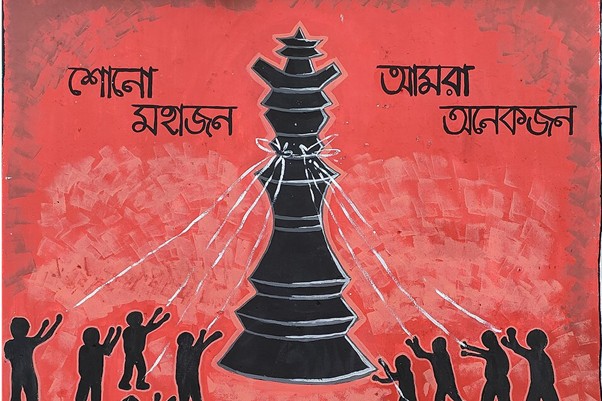
In Bangladesh, as in Indonesia and the Philippines, the “sultanisation” of the regime – characterised by the increasingly arbitrary and family-based rule of Sheikh Hasina, its former prime minister – grew so intolerable that it triggered a pro-democracy uprising in July last year, halting what appeared to be the country’s inevitable march towards complete authoritarian consolidation into a de facto “one-party state”.
Here, regime change played out in textbook fashion—Filipinos would certainly recognise the parallels between the “July Revolution” and their own “People Power Revolution” almost four decades earlier. In both cases, a large-scale social movement was able to push forward a bottom-up “replacement” at precisely the same time the incumbent was quickly losing popular legitimacy from massive corruption, policy mismanagement and election abuse.
There were two important factors that led to this outcome. Initially driven by university students in the administrative heart of Dhaka, the movement’s “disaffecting” sequence rapidly swelled to include numerous cohorts of left-wing groups, teacher unions, religious organisations, political parties and former ranking generals. This sequence created the necessary conditions for a broad-based opposition movement to arise and credibly challenge the regime.
Following this, the regime suffered a split in the authoritarian coalition, with important divisions forming between the ruling elite and the military class. The military’s defection “by omission”, or refusal to use violence against dissenters, was thenceforth a critical juncture—one that was likely unanticipated by the regime’s hard-liners who thought that the full
Several factors help explain this confidence, but perhaps none are as significant as the fact that the army chief was Sheikh Hasina’s own family member. In addition, security forces had previously (and reliably) foiled attempts to undermine the ruling government, with some important precedents being the coup attempt in 2012 and the early quota reform movement in 2024.
In other words, the regime’s downfall was precipitated by the classic “false confidence” of dictators.
The Struggle After the Fall
While this sequence may generate some optimism – especially to those well aware of the Latin American and Southern European experience – replacement-type transitions are also some of the rarest and most vulnerable to failure.
If the classic cases of Portugal, Italy and Argentina could be of any indication, it is that every transition to democracy is heavily contingent on military choices and the relative balance of power between pro-democratic moderates and anti-democratic maximalists.
Like in Southeast Asia’s “pioneering” democratisers, Bangladesh’s civil society is rather weak and divi
Worse still, an “uncivil” society, like those found in Thailand and Myanmar, may become emboldened to collude with established elites to advance their own illiberal agendas. Under this scenario, a pool of elites from the old authoritarian diaspora may regain their statuses and emerge as viable contenders for power.
The speculation that traditional parties with dubious commitments to democracy could lead upcoming elections underscores this concern, particularly when viewed alongside the recent uptick in religious activism by certain Islamist quarters that have links to the previous ruling party.
Civil-Military Relations
Unlike social forces, the military remains a wild card in Bangladesh.
Like in Thailand, the military organisation is extremely powerful, and it appears now to be growing increasingly impatient. This crucial institution, which sided with pro-democratic forces when it refused orders to repress them, has been relentlessly pressuring Muhammad Yunus – the interim chief minister – to hold elections by the end of the year as opposed to his own target of June 2026.
At the same time, Yunus is also being pressed by the army chief and a host of other political factions to drop the controversial Rakhine corridor project alleged to have been approved unilaterally in exchange for US support.
This pushback from the military extends beyond the corridor issue, as the army chief has also voiced strong opposition to the launch of Starlink and the potential foreign management of Chattogram Port—the country’s largest and most geostrategically important seaport.
Historical experience suggests that political crises provide a tantalising opportunity for the military to arbitrate directly in state affairs. As we recall, the Thai army used a similar justification when it staged its September 2006 and May 2014 coups against Thaksin and Yingluck Shinawatra’s caretaker governments, both with the support of various conservative, reactionary, and monarchist groups within the society.
Bangladesh may be facing a similar risk. Recent developments have given rise to credible indications that a military coup against the interim government could be imminent. This would not be extraordinary given the armed forces’ long record of coup-making and assuming the reins of government, having initiated at least 29 coups and counter-coups in addition to directly ruling the country twice between 1977 and 1990.
Thailand – a notoriously coup-prone country – has had 19 modern military and attempted coups by comparison.
The only recourse to a potential return to direct military rule is that, unlike in Thailand, the Bangladeshi military today neither has explicit links with a powerful interest group nor enjoys the support of any mass coalition amenable to long-term military governance.
While it took over government from 2006 to 2008, it did so as a temporary caretaker government imbued with the legitimate support of civil society and international donors. Henc
Nonetheless, the recent squabble between Yunus and the military underscores the fragility of this ragtag alliance.
As we recall in Indonesia, tensions between President BJ Habibie and the military leadership were so grating at one point that a change in government was even favoured by the latter. In Myanmar, the Tatmadaw was so spooked out by the popularity of elected civilian forces that
Much of Bangladesh’s civil-military dynamics mirror that of Indonesia, Thailand and Myanmar at varying points in time. Being the most powerful non-nuclear weapons state in South Asia, the military enjoys much repute and prestige both domestically and internationally.
A crisis or fallout of some sort may well force it to take matters into its own hands, especially if far-reaching reforms e
Uncertainty Ahead
Today, the talk of the town is for Yunus to quickly hold elections so that a fresh mandate could be obtained. While he is hesitant to call one in the absence of fuller democratic reforms, the current “war-like” situation on the ground may leave him with little choice.
The military at its current state is more than capable of overseeing free and fair elections, as it had done after it relinquished its caretaking role in 2008. Yet, given the flawed nature of the country’s existing democratic institutions, it is likely that this scenario would only restore procedural democracy rather than introduce any new substantiveness to it.
Despite public concerns about delayed elections, most transitions to democracy have been, and sometimes necessarily must be, protracted in practice. Some cases in Southeast Asia illustrate this point.
In post-Suharto Indonesia, the “experimental” transition process unfolded across the three presidencies of Habibie, Wahid and Megawati before consolidation could begin under Yudhoyono.
Throughout this period, a slew of new regulations and constitutional amendments had to be introduced before a Schumpeterian-type democracy with credible parties, parliament and elections could emerge out of the fallen New Order. In this circumstance, legislative elections were held a little over a year after Suharto’s resignation, with the first direct presidential elections being called only in 2004.
In Thailand, a rare palace intervention during the events of “Black May” in 1992 forced the military to retreat to the barracks. After a five-year period, under which a succession of unstable civilian governments were elected into power, a “People’s Constitution” was finally drafted in 1997, hailed at the time for being the most democratic in the country’s history.
The kingdom’s electoral democracy, primarily underwritten by the military’s unwillingness to directly intervene in civilian affairs, was able to persist for nine whole years until it succumbed to yet another coup in 2006, though for reasons that are probably too sui generis to be generalisable.
Nevertheless, significant uncertainty persists in Bangladesh. One major spoiler is that there appears to be little consensus among conservative and status quo factions over the nature of the new regime they want to institute, and when.
As Samuel Huntington famously observed, this “struggle after the fall” is a recurring challenge for transitions by replacement, and Bangladesh is no exception. Beyond election timing, Southeast Asia’s experience suggests that satiating the military and forging “solidarity” pacts could be just as important for democratic change. After all, revolutions may bring down autocrats, but it is compromise that builds democracies.
